

研究社 新英和中辞典


調べた例文を記録して、効率よく覚えましょう
Weblio会員無料で登録できます
 履歴機能
過去に調べた単語を確認できる
履歴機能
過去に調べた単語を確認できる
 語彙力診断
診断回数が4回に増加
語彙力診断
診断回数が4回に増加
 マイ単語帳
便利な学習機能付き
マイ単語帳
便利な学習機能付き
 マイ例文帳
文章で意味を理解できる
マイ例文帳
文章で意味を理解できる
Eゲイト英和辞典

tall
音節tall発音記号・読み方tɔ́ːl変化~・er; ~・est
覚え方(細長く,垂直に伸びて)高い
形容詞
副詞
覚え方(細長く,垂直に伸びて)高い
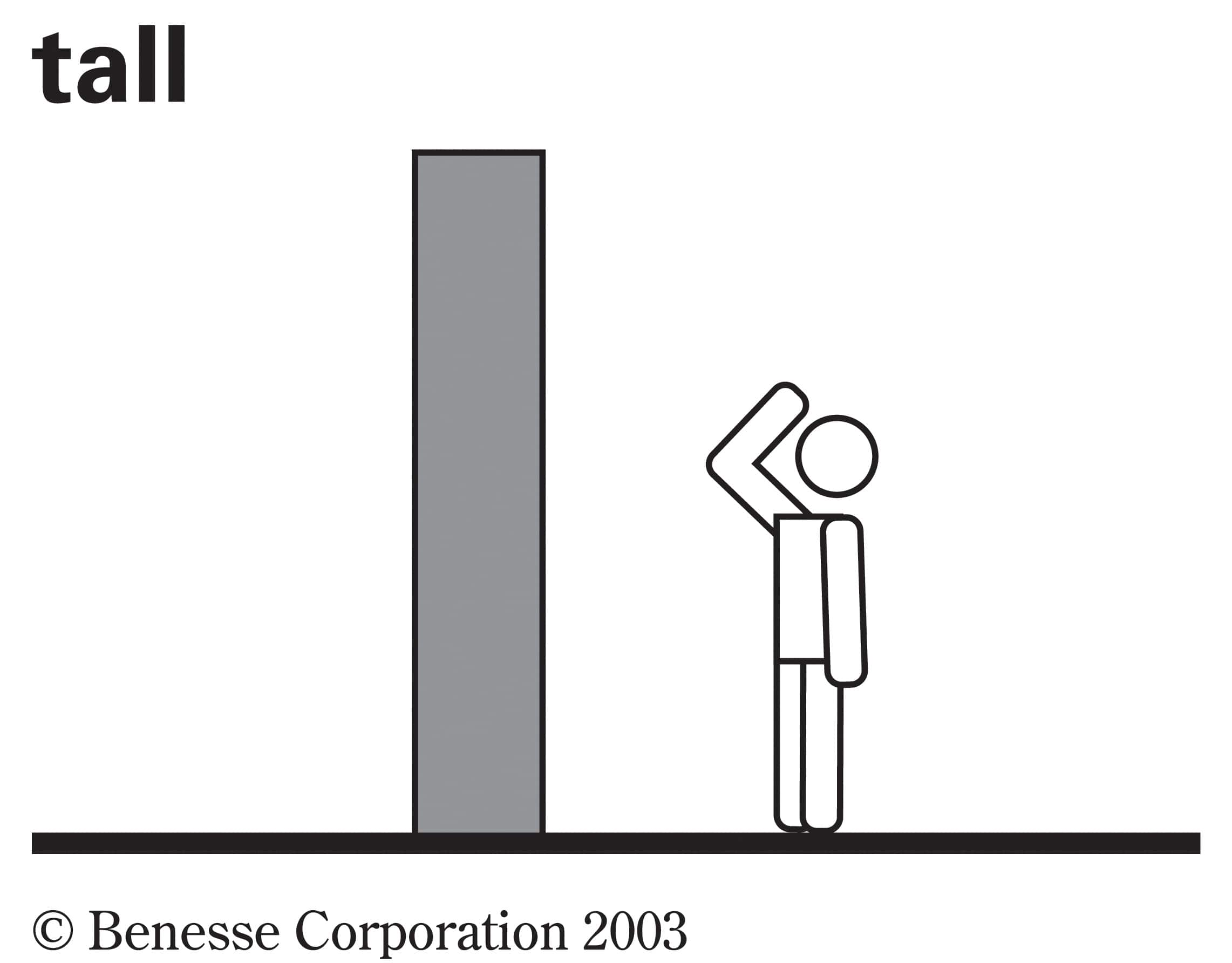 |
形容詞
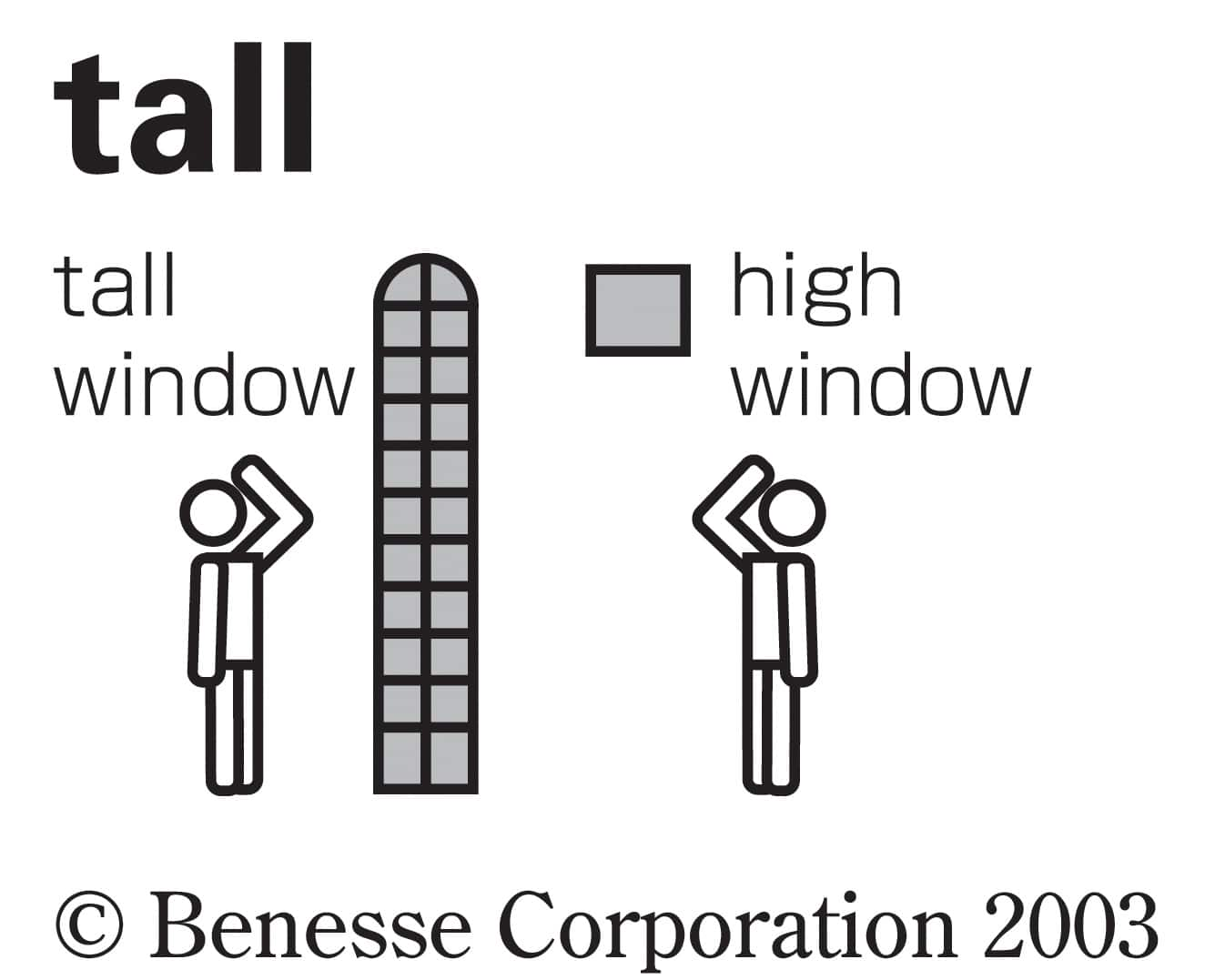
副詞
ネットワーク高い 「高い」に当たる基本的な形容詞はhighとtallである tall:下からある高さまでの「距離」に焦点が当たり,すらりとしているものを描写するのに使われる high:「位置の高さ」に焦点が当たる /a tall window細長く,高い窓/a high window高い位置にある窓 tallの反意語はshort「長さが短い」であり,highの反意語はlow「高さが低い」となる |
ライフサイエンス辞書

T-ALL
関連語
- acute T-cell leukemia, precursor T-cell lymphoblastic leukemia-lymphoma, T-cell acute lymphoblastic leukemia, T-cell acute lymphocytic leukemia
T-ALL
- 概念ツリー
tall
日本語WordNet(英和)

tall
形容詞
- 用例
名詞
Wiktionary英語版
出典:Wiktionary
tall
出典:『Wiktionary』 (2026/05/09 23:08 UTC 版)
語源
From 中期英語 tall, talle, tal (“seemly, becoming, handsome, good-looking, excellent, good, valiant, lively in speech, bold, great, large, big”), from 古期英語 *tæl, ġetæl (“swift, ready, having mastery of”), from Proto-Germanic *talaz (“submissive, pliable, obedient”), from Proto-Indo-European *dol-, *del- (“to aim, calculate, adjust, reckon”).
Cognate with Scots tal (“high, lofty, tall”), Old Frisian tel (“swift”), Old Saxon gital (“quick”), Old High German gizal (“active, agile”), Gothic 𐌿𐌽𐍄𐌰𐌻𐍃 (untals, “indocile, disobedient”).
The Oxford English Dictionary notes: "The sense development [of tall] is remarkable, but is paralleled more or less by that of other adjectives expressing estimation, such as buxom, canny, clean, clever, cunning, deft, elegant, handsome, pretty, proper; German klein, as compared with English clean, presents the antithesis to modern tall as compared to tall in early 中期英語. It has been conjectured that in the sense 'high of stature' it is a different word, adopted from the Welsh tal in some sense; but the latter is, according to Professor Rhŷs, merely a 16th-century borrowing of the English word (in Owen Pughe's Dictionary erroneously mixed up with the genuine Welsh word tal (“end, brow, forehead”), with which it has no possible connection.)"
発音
形容詞
tall (comparative taller, superlative tallest)
- (literal) Having a top that is far up (contrast: deep ('having a bottom that is far down' ).)
- (of a person or two-footed creature) Having great vertical extent (usually reckoned from the bottom of the feet to the very top of the head) when standing. (For instance, somebody with a height of over 6 feet would generally be deemed tall.)
- (of an inanimate thing, such as a building, hill, lamp, etc.) Having its top a long way up; having a great vertical (and often greater than horizontal) extent.
-
2018, Tim Flannery, Europe: A Natural History, page 55:
-
To him it seemed that the Bornean rainforests, the tallest on Earth, were places that had: 'remained untouched and unchanged since remote geological epochs[.]'
-
-
- (specialized, chiefly US, of a cup of coffee) Smaller than grande, usually 8 ounces (~ 230 ml).
- (of a story) Hard to believe, such as a tall story or a tall tale.
- Old senses that arose before the height-related senses
- (obsolete) Obsequious; obedient.
- (obsolete) Seemly; suitable; fitting, becoming, comely; attractive, handsome.
- (obsolete) Bold; brave; courageous; valiant.
- (archaic) Fine; proper; admirable; great; excellent.
派生語
- big and tall
- cut down the tall poppy
- feel eight feet tall
- feel nine feet tall
- feel ten feet tall
- feel twelve feet tall
- keep it tall
- mackerel sky and mare's-tails make tall ships carry low sails
- megatall
- plain tall
- ride tall in the saddle
- stand tall
- supertall
- tall bluestem
- tall-case clock
- tall, dark and handsome
- tall drink
- tall drink of water
- tall fescue
- tall glass of water
- tallgrass
- tallie
- tall in the saddle
- tallish
- tall man
- tall meadowrue
- tallness
- tall nightshade
- tall oaks from little acorns grow
- tall oil
- tall one
- tall order
- tall pawn
- tall pocosin
- tall poppy
- tall poppy syndrome
- tall reed
- tall ship
- tallsome
- tall story
- tall tale
- tall thistle
- tally
- untall
- walk tall
名詞
- (possibly nonstandard) Someone or something that is tall.
-
2009, Arianne Cohen, The Tall Book: A Celebration of Life from on High, page 197:
-
The industries that best accommodate talls are those that have faced personal injury lawsuits.
-
- A clothing size for taller people.
-
Do you have this in a tall?
-
- A tall serving of a drink, especially one from Starbucks, which contains 12 ounces.
Weblio例文辞書



- Copyright (c) 1995-2026 Kenkyusha Co., Ltd. All rights reserved.
- Copyright © Benesse Holdings, Inc. All rights reserved.

- © 2000 - 2026 Hyper Dictionary, All rights reserved
- Copyright (C) 2026 ライフサイエンス辞書プロジェクト
- 日本語ワードネット1.1版 (C) 情報通信研究機構, 2009-2010 License All rights reserved.
WordNet 3.0 Copyright 2006 by Princeton University. All rights reserved. License

- Copyright (C) 1994- Nichigai Associates, Inc., All rights reserved.
「斎藤和英大辞典」斎藤秀三郎著、日外アソシエーツ辞書編集部編
- Wiktionary
- Text is available under Creative Commons Attribution-ShareAlike (CC-BY-SA) and/or GNU Free Documentation License (GFDL).
Weblio英和・和英辞典に掲載されている「Wiktionary英語版」の記事は、Wiktionaryのtall (改訂履歴)の記事を複製、再配布したものにあたり、Creative Commons Attribution-ShareAlike (CC-BY-SA)もしくはGNU Free Documentation Licenseというライセンスの下で提供されています。
- CMUdict
- CMUdict is Copyright (C) 1993-2008 by Carnegie Mellon University.
