

研究社 新英和中辞典


調べた例文を記録して、効率よく覚えましょう
Weblio会員無料で登録できます
 履歴機能
過去に調べた単語を確認できる
履歴機能
過去に調べた単語を確認できる
 語彙力診断
診断回数が4回に増加
語彙力診断
診断回数が4回に増加
 マイ単語帳
便利な学習機能付き
マイ単語帳
便利な学習機能付き
 マイ例文帳
文章で意味を理解できる
マイ例文帳
文章で意味を理解できる
Eゲイト英和辞典

main
音節main発音記号・読み方méɪn
主要な,主な
コア根幹を成す
形容詞
名詞
主要な,主な
コア根幹を成す
形容詞
名詞
1(ガス・水道の)主管,本管;(電気の)本線
2((おもに英))a((the~s))【単数・複数】水源;(水道・ガスの)元栓;(電気の)主電源
b((~s))((形容詞的に))本管[本線]から供給される
3主要部;力
4((the~))((詩))大海,大海原
2((おもに英))a((the~s))【単数・複数】水源;(水道・ガスの)元栓;(電気の)主電源
b((~s))((形容詞的に))本管[本線]から供給される
3主要部;力
4((the~))((詩))大海,大海原
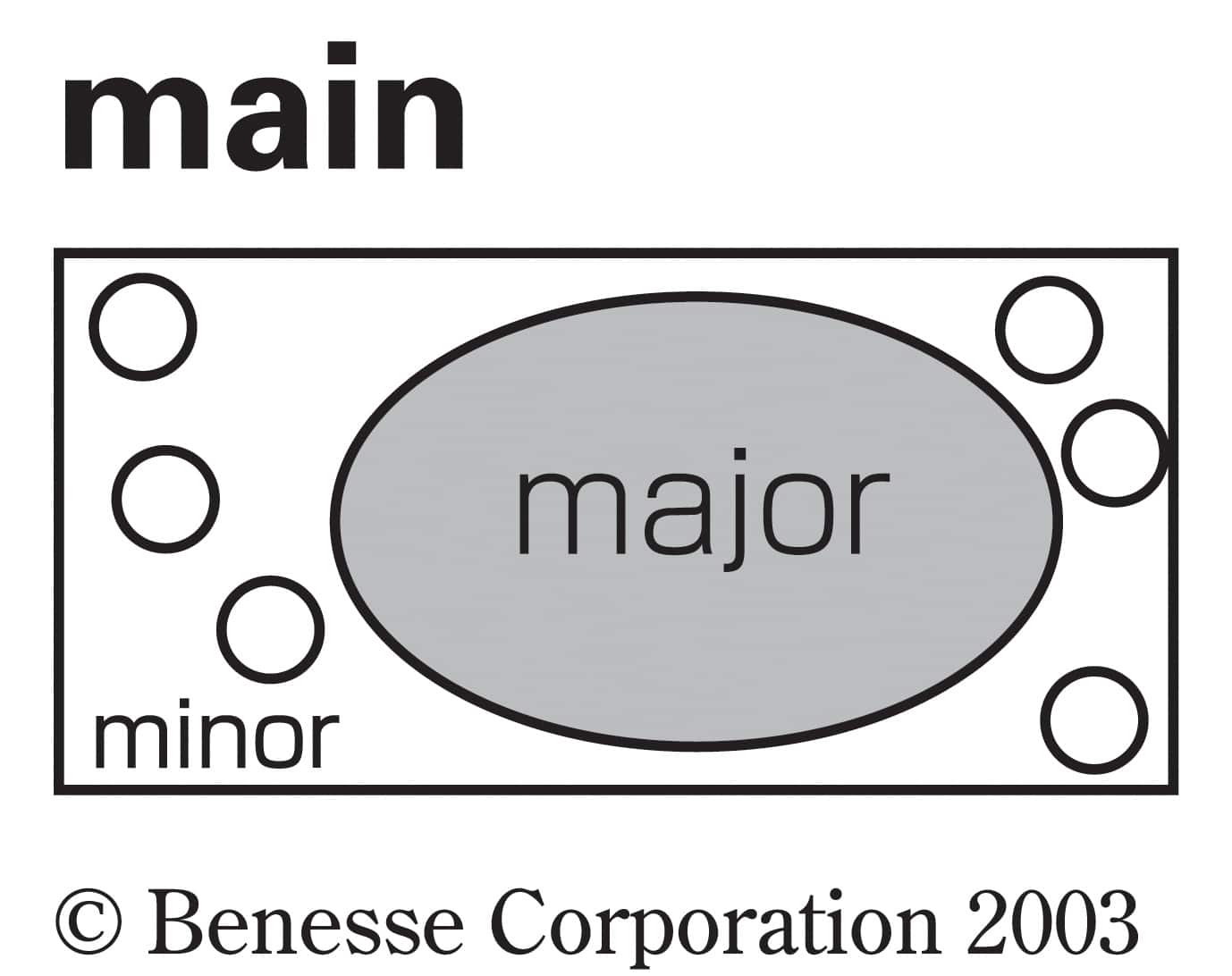
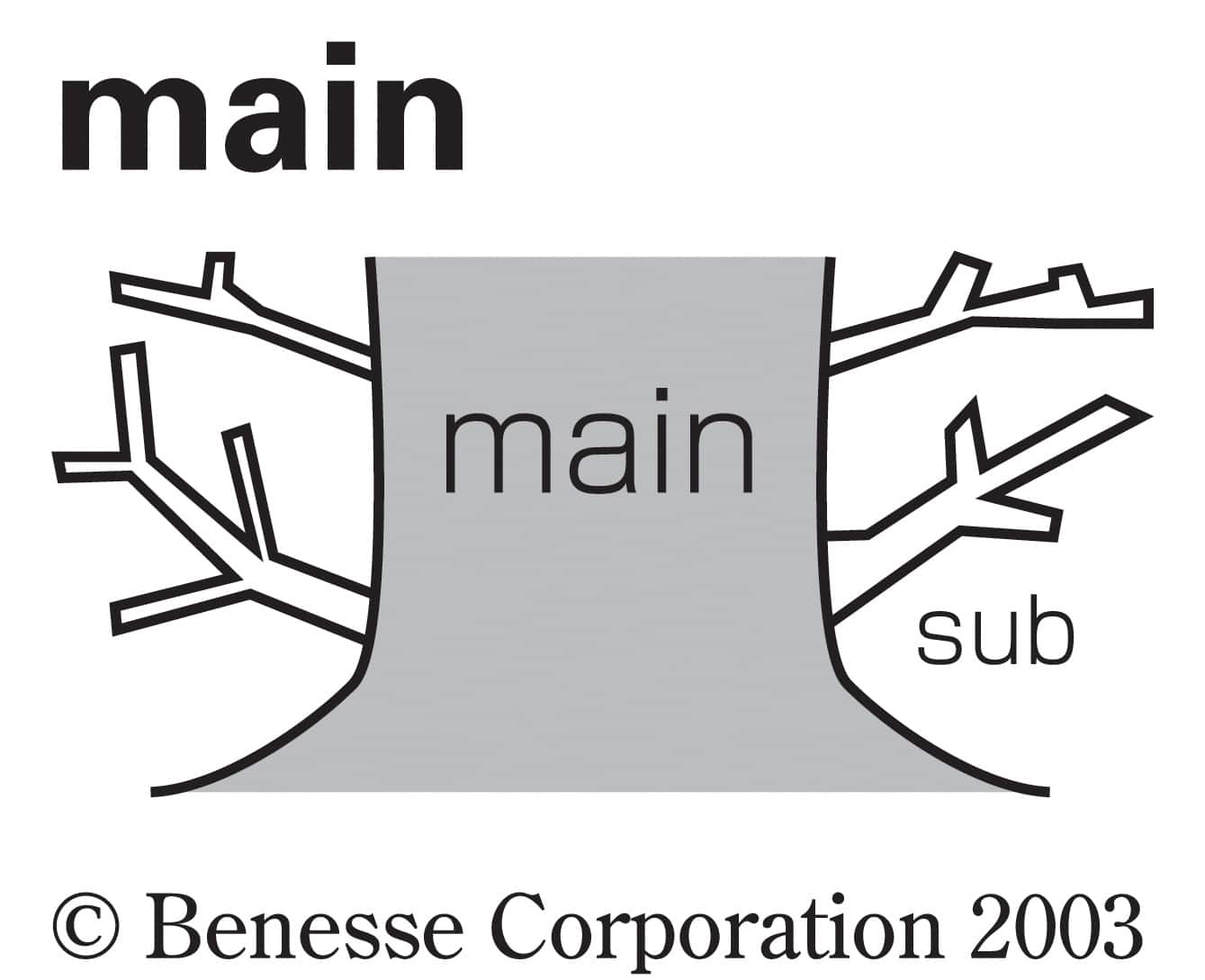
ネットワークmainとmajor いずれも「重要な」「主要な」などと訳されるが,mainは枝葉ではなくて「幹の」という意味合い.一方majorは「大部分を占める」という意味合いで,両者には違いがある.そこで,a main issueは枝葉のこと(sub)ではなく,「根幹の問題」という意.a major issueは,比較において他の小さなこと(minor)よりも「大きな問題」という意 |
  |
ハイパー英語辞書

main
形容詞
名詞
- 用例
- Be careful crossing the main road.
| 印欧語根 | ||
|---|---|---|
| magh- | 可能にすること、力を持つことを表す(may, magicなど)。mainの由来として、力。machineなどの由来として、からくり。 | |
main
名詞
- 用例
| 印欧語根 | ||
|---|---|---|
| magh- | 可能にすること、力を持つことを表す(may, magicなど)。mainの由来として、力。machineなどの由来として、からくり。 | |
main
日本語WordNet(英和)

main
形容詞
- 用例
- 用例
- by main strength 全力を尽くして
名詞
Wiktionary英語版
出典:Wiktionary
main
出典:『Wiktionary』 (2026/01/14 05:42 UTC 版)
発音
- (Received Pronunciation, General American) enPR: mān, IPA: /meɪn/
- 韻: -eɪn
- 異形同音異義語: mane, Maine
語源 1
From 中期英語 mayn, main, maine, mæin, meyn, from main (noun) (see further at etymology 2); compare 古期英語 mæġen (“strong, main, principal”) (used in combination) and Old Norse megn, megenn (“strong, main”).
The word is cognate with Old High German megīn (“strong, mighty”) (modern German Möge, Vermögen (“power, wealth”)), and also akin to 古期英語 magan (“to be able to”). See also may.
形容詞
main (not comparable)
- Of chief or leading importance; prime, principal. [from 15th c.]
-
1664, John Tillotson, “Sermon I. The Wisdom of Being Religious. Job XXVIII. 28.”, in The Works of the Most Reverend Dr. John Tillotson, Late Lord Archbishop of Canterbury: […], London: […] B. Aylmer, […]; [a]nd W. Rogers, […], published 1696, →OCLC:
-
Religion direct us rather to ſecure inward peace than outward eaſe, to be more careful to avoid everlaſting and intolerable torment than ſhort and light afflictions which are but for a moment; […] In a word, our main intereſt is to be as happy as we can, and as long as is poſſible; and if we be caſt into ſuch circumſtances, that we muſt be either in part and for a time or elſe wholly and always miſerable, the beſt wiſdom is to chuſe the greateſt and moſt laſting happiness, but the leaſt and ſhorteſt miſery.
-
- Chief, most important, or principal in extent, size, or strength; consisting of the largest part.
-
2013 August 3, “The Future of Oil: Yesterday’s fuel”, in The Economist, volume 408, number 8847, archived from the original on 1 August 2013:
-
The dawn of the oil age was fairly recent. Although the stuff was used to waterproof boats in the Middle East 6,000 years ago, extracting it in earnest began only in 1859 after an oil strike in Pennsylvania. […] It was used to make kerosene, the main fuel for artificial lighting after overfishing led to a shortage of whale blubber. Other liquids produced in the refining process, too unstable or smoky for lamplight, were burned or dumped.
-
- (archaic, of force, strength, etc.) Full, sheer, undivided. [from 16th c.]
-
1825 June 22, [Walter Scott], chapter IV, in Tales of the Crusaders. […], volume I (The Betrothed), Edinburgh: […] [James Ballantyne and Co.] for Archibald Constable and Co.; London: Hurst, Robinson, and Co., →OCLC, page 71:
-
Wounded and overthrown, the Britons continued their resistance, clung round the legs of the Norman steeds, and cumbered their advance; while their brethren, thrusting with pikes, proved every joint and crevice of the plate and mail, or grappling with the men-at-arms, strove to pull them from their horses by main force, or beat them down with their bills and Welch hooks.
-
- (dialectal) Big; angry.
- (nautical) Belonging to or connected with the principal mast in a vessel.
- (obsolete) Great in size or degree; important, powerful, strong, vast.
派生語
- drain the main vein
- left main
- Main Arm
- main asteroid belt
- main battle tank
- main belt
- main bitch
- mainboard
- mainboom
- main building
- mainchain
- main chance
- main character
- main character syndrome
- main clause
- main contractor
- main course
- maincrop
- main curtain
- maindeck
- main deck
- main diagonal
- main dish
- main drag
- main drape
- main earth
- main event
- mainfall
- mainframe
- main frame
- main gear
- main group
- main group element
- main guard
- main house
- mainly
- main man
- main market
- main meal
- main memory
- main menu
- main page
- mainpiece
- mainpin
- main pot
- mainpriv
- main rag
- Main Ridge
- main road
- mainsail
- main sequence
- main-sequence
- mainshaft
- main sheet
- mainshock
- mainspace
- mainspan
- main stage
- mainstage
- Main Standard Time
- mainstay
- mainstem
- mainstream
- main thing
- main verb
- main wheel
- nonmain
- on main
- Percy Main
- Upper Main Arm
副詞
main (comparative more main, superlative most main)
- (British, dialectal) Exceedingly, extremely, greatly, mightily, very, very much.
-
1778, Richard Brinsley Sheridan, “The Camp: A Musical Entertainment”, in The Dramatic Works of Richard Brinsley Sheridan. With a Memoir of the Author (Dove’s English Classics), London: Printed and published by J. F. Dove, […], published c. 1813–1828, →OCLC, act I, scene ii, page 309:
-
Why, it's main jolly to be sure, and all that so fair.
-
動詞
main (third-person singular simple present mains, present participle maining, simple past and past participle mained)
- (transitive, slang) Ellipsis of mainline (“to inject (a drug) directly into a vein”).
- (transitive, gaming) To mainly play a specific character or side, or with specific equipment, during a game.
- (obsolete) To convert (a road) into a main or primary road.
-
1904, Arthur Underhill, Charles Otto Blagden, et al., editors, An Encyclopaedia of Forms and Precedents Other than Court Forms, volume 6, London: Butterworth, →OCLC:
-
When a rural district council considers that a highway in its district ought to become a main road by reason of its being a medium of communication between great towns, or a thoroughfare to a railway station, or otherwise, it may apply to the county council for an order "maining" the road under s. 15 of the Highways and Locomotives (Amendment) Act, 1878 (41 & 42 Vict. c. 77), as amended by s. 3 (viii.) of the Local Government Act, 1888 (51 & 52 Vict. c. 41), and the county council may make an order accordingly.
-
-
1927, The Municipal Journal and Public Works Engineer, volume XXXVI, London: Municipal Journal, →OCLC:
-
The borough did not have an opportunity of conferring with the County Council, but the County Council requested particulars of district roads in the borough which the Council suggested should be mained.
-
-
語源 2
From 中期英語 mayn, main, maine, mæine, mæȝen, from 古期英語 mæġen (“strength”), from Proto-Germanic *maginą (“strength, power, might”), *maginaz (“strong”), from Proto-Indo-European *megʰ- (“be able”).
The word is cognate with Old High German magen, megin, Old Norse magn, megn, megin, Old Saxon megin. More recent senses are derived from the adjective.
名詞
- (not in generic modern use) That which is chief or principal; the chief or main portion; the bulk, the greater part, gross.
-
1718, Humphrey Prideaux, The Old and New Testaments Connected in the History of the Jews and Neighbouring Nations, from the Declension of the Kingdoms of Israel and Judah to the Time of Christ, 3rd edition, volume II, part I, London: Printed for R. Knaplock […] and J[acob] Tonson […], →OCLC, part II, book II, page 96:
-
Antiochus […] thought it a proper time for him to attempt the recovery of Syria; and Hermias his prime Miniſter preſſed hard for his going in perſon to this war, contrary to the Opinion of Epigenes his General; who thought it chiefly concerned him to ſuppreſs the Rebellion of Alexander and Molon in the East; and therefore adviſed him to march immediately in perſon with the main of his Army for the ſubduing of thoſe Rebels, before they ſhould gather greater ſtrength in the revolted Provinces againſt him.
-
-
1803, Francis Bacon, “The History of the Reign of King Henry the Seventh”, in The Works of Francis Bacon, Baron of Verulam, Viscount St. Alban, and Lord High Chancellor of England. In Ten Volumes, volume V, London: Printed for J. Johnson [et al.]; […], →OCLC, page 8:
-
But the King [Henry VII of England], […] preferring his affection to his own line and blood, […] resolved to rest upon the title of Lancaster as the main, and to use the other two, that of marriage, and that of battle, but as supporters, the one to appease secret discontents, and the other to beat down open murmur and dispute; […]
-
- (video games) The primary character that one plays in a video game in which one can play more than one character.
- (Internet slang) A main account.
-
- A large cable or pipe providing utility service to an area or a building, such as a water main or electric main. [from 17th c.]
-
1778 April 3, “Appendix. Report from the Committee on the State of the Pavements, &c. in the Streets of Dublin”, in The Journals of the House of Commons, of the Kingdom of Ireland, […], volume XX, Dublin: Printed by Abraham Bradley and Abraham Bradley King, […], published 1782, →OCLC, page 539:
-
[T]he Contract with the Pipe-water Pavior was, as he recollects, to keep the Pavement in Repair for ſix Weeks; did oblige the Contractor to repair many Places in that ſix Weeks; there was a Part of the new Main failed in Dame-ſtreet; was obliged to take up three or four Pieces in Length, in conſequence of a Sewer being made there, which undermined the Main, and put it out of its Place; […]
-
-
1876 June 19, Guildford Barker Richardson (interviewee), “Mr. Guildford Barker Richardson, Called in; and further Examined”, in Report from the Select Committee on the Metropolis Gas (Surrey Side) Bill; together with the Proceedings of the Committee, and Minutes of Evidence (Reports from Committees: Seven Volumes; 4), volume XI, [London]: Ordered, by the House of Commons, to be printed, published 28 July 1876, →OCLC, paragraph 4780, page 335:
- (informal) Ellipsis of main course (“the principal dish of a meal”).
- (now poetic) The high seas. [from 16th c.]
-
1796, “It Was A' For Our Rightful King”, Robert Burns (lyrics):
-
My love, and native land, fareweel! / For I maun cross the main...
-
-
1907, Rudyard Kipling, “The Sons of Martha”, in Rudyard Kipling’s Verse: Inclusive Edition 1885–1918, London: Hodder and Stoughton Ltd., published 1927, →OCLC, pages 436–437:
-
The Sons of Mary seldom bother, for they have inherited that good part; / But the Sons of Martha favour their Mother of the careful soul and the troubled heart, / […] / It is their care that the wheels run truly; it is their care to embark and entrain, / Tally, transport, and deliver duly the Sons of Mary by land and main.
-
- (now archaic, US dialectal) The mainland. [from 16th c.]
-
1624, Francis Bacon, “Considerations Touching a War with Spain. Inscribed to Prince Charles, An. 1624.”, in The Works of Francis Bacon, Baron of Verulam, Viscount St. Alban, and Lord High Chancellor of England, volume III, London: Printed for J[ohn] Walthoe, […], published 1740, →OCLC, page 526:
-
In the year that followed of 1589, we gave the Spaniards no breath, but turned challengers, invaded the main of Spain. In which enterprize, although we failed of our end, which was to ſettle Don Antonio in the kingdom of Portugal, yet a man ſhall hardly meet with an action that doth better reveal the great ſecret of the power of Spain: […]
-
-
1624, Anthony Bagnall, Nathanaell Powell, Anas Todkill, “Chapter V. The Accidents that Hapned in the Discovery of the Bay of Chisapeack”, in Iohn [i.e., John] Smith, The Generall Historie of Virginia, New-England, and the Summer Isles: […], London: […] I[ohn] D[awson] and I[ohn] H[aviland] for Michael Sparkes, →OCLC, 3rd booke, page 56:
-
- (nautical) Ellipsis of mainsail. [from 17th c.]
- (obsolete, except in might and main) Force, power, strength, violent effort. [from 9th c.]
派生語
- amain
- fire main
- for the main
- gas main
- in the main
- main brace, mainbrace
- maincrop
- main drag
- mainer
- mainframe
- mainful
- mainland
- mainline, main line
- main man
- mainmast
- mainplane
- mains
- mainsail
- mainsheet
- mainspring
- main street, Main Street, mainstreet
- maintop
- maintopmast
- main-truck
- mainyard
- midmain
- might and main
- rising main
- Spanish Main
- water main
語源 3
Uncertain; probably from the adjective main. Evidence is lacking for a derivation from French main (“hand”).
名詞
- (obsolete, gaming) A hand or match in a game of dice.
- (obsolete, gaming) The largest throw in a match at dice; in the game of hazard, a number from one to nine called out by a person before the dice are thrown.
-
1598, Richard Barckley, “To the Reader”, in A Discourse of the Felicitie of Man: Or His Summum Bonum, London: Printed [by Richard Field] for VVilliam Ponsonby, →OCLC; republished as “To the Reader”, in A Discovrse of the Felicite of Man. Or His Summum Bonum, newly corrected and augmented edition, London: Printed [by James Roberts] for VVilliam Ponsonby, 1603, →OCLC:
-
1848 November – 1850 December, William Makepeace Thackeray, chapter 44, in The History of Pendennis. […], volume (please specify |volume=I or II), London: Bradbury and Evans, […], published 1849–1850, →OCLC:
-
I had such a run of luck last night, with five for the main, and seven to five all night, until those ruffians wanted to pay me with Altamont’s bill upon me. The luck turned from that minute. Never held the box again for three mains, and came away cleared out, leaving that infernal cheque behind me.
-
-
- (obsolete, gaming) A stake played for at dice.
-
c. 1597 (date written), [William Shakespeare], The History of Henrie the Fourth; […], quarto edition, London: […] P[eter] S[hort] for Andrew Wise, […], published 1598, →OCLC, [Act IV, scene i]:
-
- (obsolete, gaming, sports) A sporting contest or match, especially a cockfighting match.
- A banker's shovel for coins.
参照
- ^ “main, adj.”, in MED Online, Ann Arbor, Mich.: University of Michigan, 2007, retrieved 3 June 2018.
- ^ “main, n.”, in MED Online, Ann Arbor, Mich.: University of Michigan, 2007, retrieved 3 June 2018.
- ^ John A. Simpson and Edmund S. C. Weiner, editors (1989), “main, sb.”, in The Oxford English Dictionary, 2nd edition, Oxford: Clarendon Press, →ISBN, page 216, columns 1–2.
- ^ John A. Simpson and Edmund S. C. Weiner, editors (1989), “main, sb.”, in The Oxford English Dictionary, 2nd edition, Oxford: Clarendon Press, →ISBN, page 217, column 1.
Further reading
 main (disambiguation) on Wikipedia.Wikipedia
  Main (power) in the Encyclopædia Britannica (11th edition, 1911)


参考
- main de fer
- main droite
- main-gauche
- main gauche
- ouster le main
Weblio例文辞書

main
1
例文
main
2
3
例文
4
5
6
例文
the top
7
例文
the chief points―the main points
8
例文
the nominative case
9
10
例文
the main-top
12
13
14
15
例文
16
例文
the positive degree
17
例文
the principal
19
例文
main and branch
例文
the main course
例文
the main course
25
例文
the main post
26
29
30
主要部分.
例文
the main part
Weblio例文辞書はプログラムで機械的に意味や英語表現を生成しているため、不適切な項目が含まれていることもあります。ご了承くださいませ。


- Copyright (c) 1995-2026 Kenkyusha Co., Ltd. All rights reserved.
- Copyright © Benesse Holdings, Inc. All rights reserved.
- © 2000 - 2026 Hyper Dictionary, All rights reserved

- Copyright (c) 1995-2026 Kenkyusha Co., Ltd. All rights reserved.

- Copyright (C) 1994- Nichigai Associates, Inc., All rights reserved.

- All Rights Reserved, Copyright © Japan Science and Technology Agency

- Copyright (C) 2026 ライフサイエンス辞書プロジェクト
- 日本語ワードネット1.1版 (C) 情報通信研究機構, 2009-2010 License All rights reserved.
WordNet 3.0 Copyright 2006 by Princeton University. All rights reserved. License

- Copyright(C)2002-2026 National Institute of Information and Communications Technology. All Rights Reserved.

- Copyright © 2026 CJKI. All Rights Reserved

- Copyright (C) 1994- Nichigai Associates, Inc., All rights reserved.
「斎藤和英大辞典」斎藤秀三郎著、日外アソシエーツ辞書編集部編
- Wiktionary
- Text is available under Creative Commons Attribution-ShareAlike (CC-BY-SA) and/or GNU Free Documentation License (GFDL).
Weblio英和・和英辞典に掲載されている「Wiktionary英語版」の記事は、Wiktionaryのmain (改訂履歴)の記事を複製、再配布したものにあたり、Creative Commons Attribution-ShareAlike (CC-BY-SA)もしくはGNU Free Documentation Licenseというライセンスの下で提供されています。
- CMUdict
- CMUdict is Copyright (C) 1993-2008 by Carnegie Mellon University.
