

研究社 新英和中辞典

Over (to you)!
over
o・ver /óʊvɚ|ˈəʊvə/

1 [位置を表わして]:
a [離れた真上の位置を表わして] …の上方に[の], …の頭上[真上]に[の] 《★under の反対語; 【類語】 ⇒above》.
b [接触した位置を表わして] …の上をおおって.
c 〈ものが〉(おおいかかるように)…の上へ; …へ突き出て.
2 [しばしば all over で]
a 〈場所〉一面に,…の上をあちこち.
b …の全部を,…の隅々まで.
3 [動作の動詞を伴って] …を越えて.
4 〈海・川・通りなど〉の向こう側に[の].
5 [範囲・数量を表わして] …を超えて.
6 a [支配・優位を表わして] …を支配して; …の上位に,…にまさって.
b …を克服して,…から回復して.
7 a 〈時期など〉…中,…の間.
b 〈距離など〉…にわたって.
c …を通して.
8 a …に関して.
b …のことで.
9 …しながら,…に従事して.
10 〈電話など〉によって,…で.
1 a 上(のほう)に,高所に.
b 上から下へ; 突き出て.
2 一面に,全面に.
3 a 遠く離れた所に,あちらに; (街路・川・海などを)越えて,向こうへ.
b こちら側へ,(話し手の)家に.
c 他人へ,他方へ.
4 ひっくり返して; 逆さまに.
5 終わって,済んで,過ぎて (cf. ALL over 【成句】 (1)).
6 初めから終わりまで,すっかり.
7 繰り返して.
8 a あふれて.
b 余分に,余って.
c 超過して,超えて.
9 《主に米国で用いられる》 (ある期間中[まで])ずっと.
10 [通例 not over で] 《主に英国で用いられる》 過度に,あまりに.
前置詞
/
![[N16-A12D]](https://cdn.weblio.jp/e7/wbr/CHUJITEN/N16-A12D_F-000000_B-FFFFFF.png)
![[N16-A12B]](https://cdn.weblio.jp/e7/wbr/CHUJITEN/N16-A12B_F-000000_B-FFFFFF.png) /
/
/
- 用例
-
- 用例
-
- have a shawl over one's shoulders 肩にショールをかけている.
- 用例
-
- the house over the street 通りの向こうの家.
- 用例
-
- 用例
-
- 用例
-
- over a period of time ある期間にわたって.
副詞
- 用例
-
- all the world over 世界中いたる所に (cf. over 前置詞 2a).
- 用例
-
- 用例
-
- 用例
-
- read a newspaper over 新聞にすっかり目を通す.
【語源】
over‐
調べた例文を記録して、効率よく覚えましょう
Weblio会員無料で登録できます
 履歴機能
過去に調べた単語を確認できる
履歴機能
過去に調べた単語を確認できる
 語彙力診断
診断回数が4回に増加
語彙力診断
診断回数が4回に増加
 マイ単語帳
便利な学習機能付き
マイ単語帳
便利な学習機能付き
 マイ例文帳
文章で意味を理解できる
マイ例文帳
文章で意味を理解できる
Eゲイト英和辞典

over-
over
音節o・ver発音記号・読み方óʊvər
覚え方(弧を描くように)…を覆って
前置詞
Ⅰ上を越えて
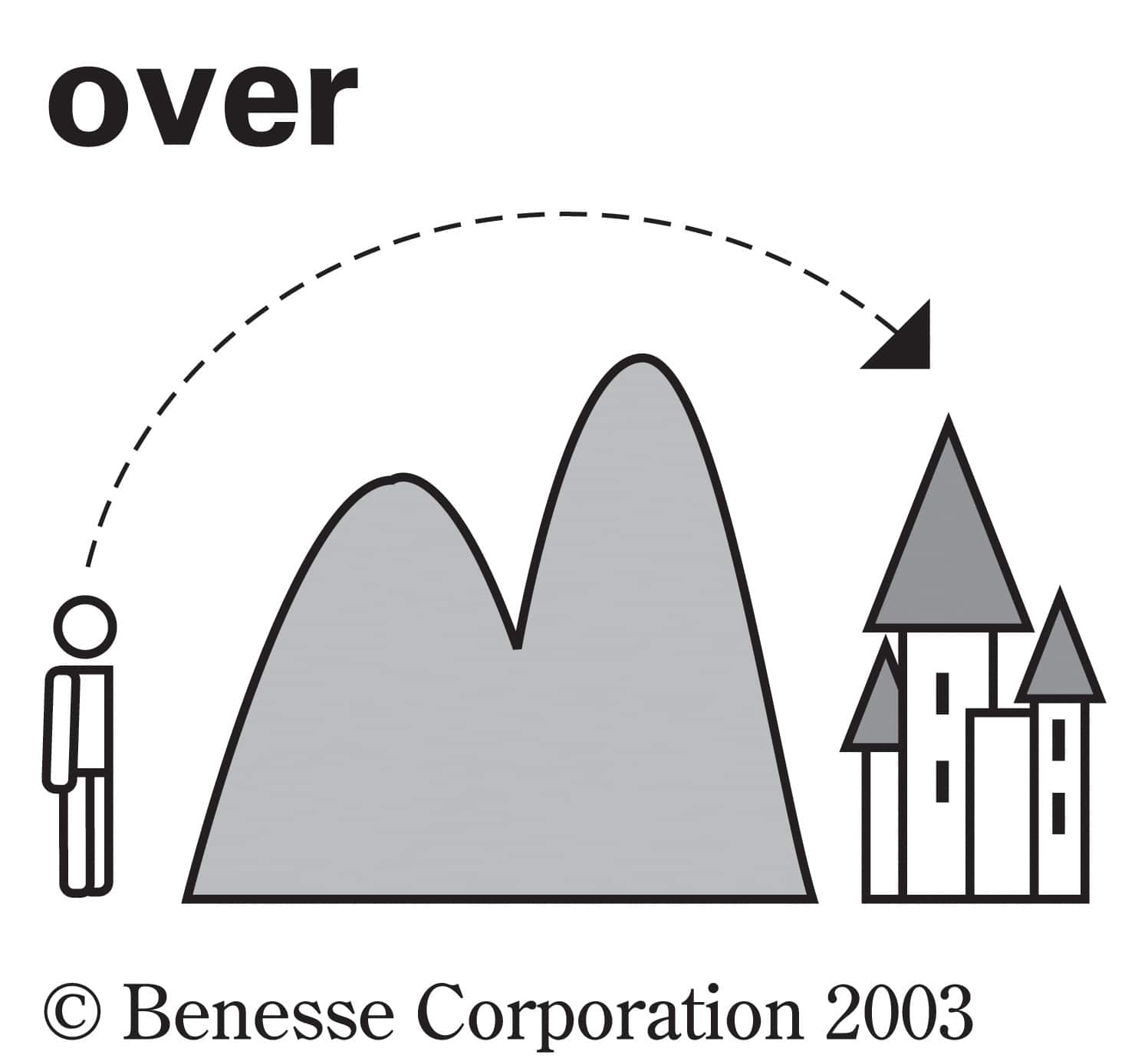
1…を越えて⇒『across, beyond』【ネットワーク】
2(液体が一杯で)…からあふれて,こぼれ出て
3(ある基準)を越えて
4a(話題を行き来しながら)…をめぐって,…に関して,…が原因で
b(何かをはさんで)…しながら
c(何かの上を行き来して)…を手段に
5(ある期間)にわたって,ずっと
Ⅱ真上に[を]
6…の(真)上に[を],…の上空に[を]
Ⅲ全体を覆う
7a(水平の向きで)…を覆って;…に架かって
b(垂直の向きで)…を覆って
8…を支配下に置いて;…を差し押さえて,…に優先して;≪スポーツ≫…を下して
Ⅳ越えた向こうに
9…の向こうに⇒『across, beyond』【ネットワーク】
10(困難など)を乗り越えて;…を忘れて
Ⅴその他
11≪数≫…で割って
副詞
成句all over
①到る所,一面に
②完全に終わって
成句(all) over again⇔over and again
もう一度,繰り返して
成句over against ...
①…と向かい合って
②…と比較して
成句over and above ...
さらにその上に…
成句over and done with
(いやな事が)すっかり終わって[片付いて]
成句over and out
≪無線≫これで交信終了します
成句over and over (again)
何度も
成句over there
向こうに
成句over with
((米))終わって,片付けて
形容詞
名詞
動詞
他動詞
覚え方(弧を描くように)…を覆って
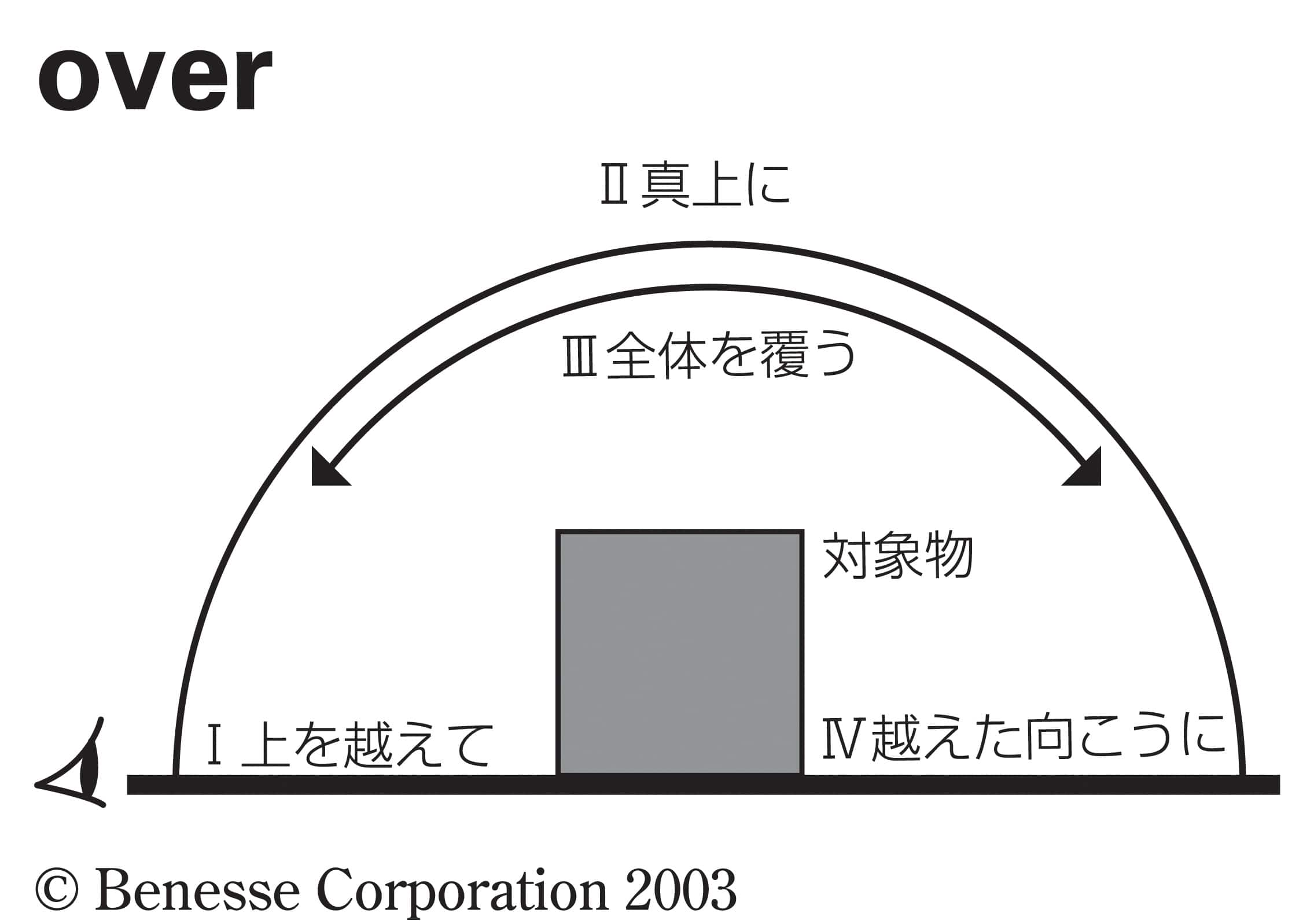 |
Ⅰ上を越えて前置詞
├…を越えて▷1
└…からあふれて▷2
(基準)を越えて▷3
├…をめぐって▷4a
└…しながら▷4b
Ⅱ真上に[を]前置詞
└…の真上に[を]▷6
Ⅲ全体を覆う前置詞
├…を覆って▷7
└…を支配下に置いて▷8
Ⅳ越えた向こうに前置詞
├…の向こうに▷9
└…を乗り越えて▷10
├…を越えて▷1
└…からあふれて▷2
(基準)を越えて▷3
├…をめぐって▷4a
└…しながら▷4b
Ⅱ真上に[を]前置詞
└…の真上に[を]▷6
Ⅲ全体を覆う前置詞
├…を覆って▷7
└…を支配下に置いて▷8
Ⅳ越えた向こうに前置詞
├…の向こうに▷9
└…を乗り越えて▷10
前置詞
Ⅰ上を越えて
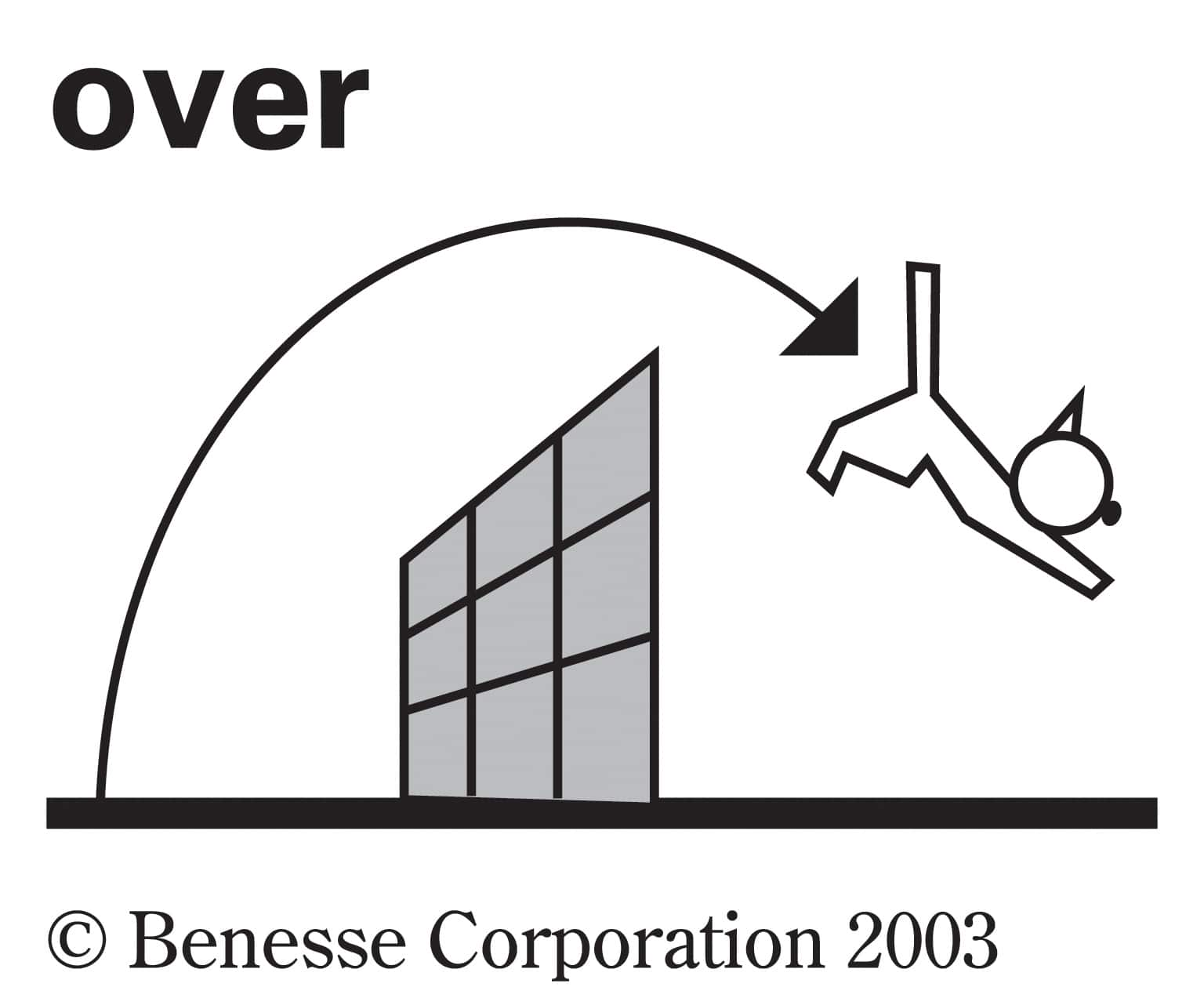
1…を越えて⇒『across, beyond』【ネットワーク】
 |
2(液体が一杯で)…からあふれて,こぼれ出て
3(ある基準)を越えて
4a(話題を行き来しながら)…をめぐって,…に関して,…が原因で
b(何かをはさんで)…しながら
c(何かの上を行き来して)…を手段に
5(ある期間)にわたって,ずっと
Ⅱ真上に[を]
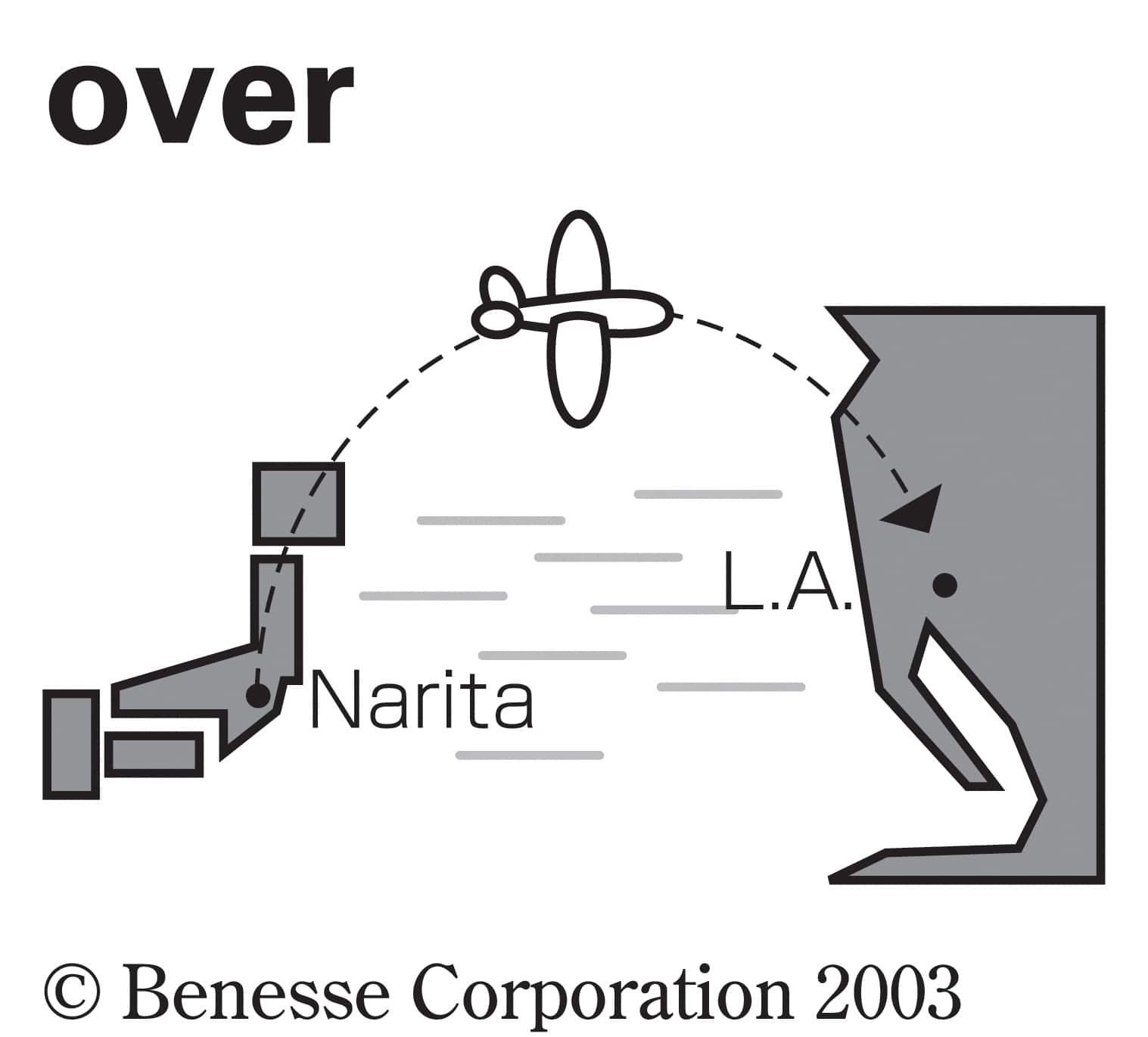
6…の(真)上に[を],…の上空に[を]
 |
Ⅲ全体を覆う
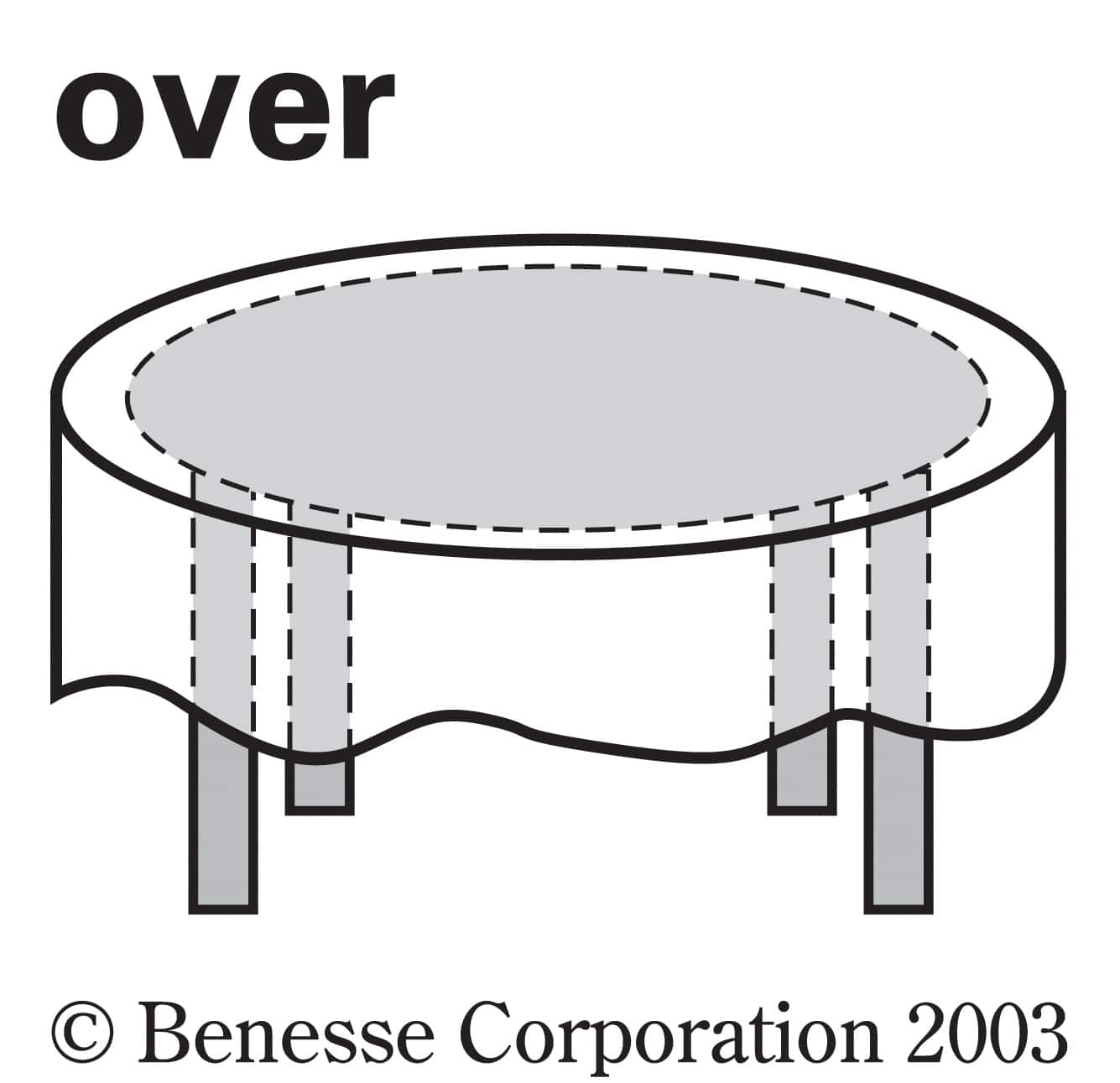
7a(水平の向きで)…を覆って;…に架かって
 |
b(垂直の向きで)…を覆って
8…を支配下に置いて;…を差し押さえて,…に優先して;≪スポーツ≫…を下して
Ⅳ越えた向こうに
9…の向こうに⇒『across, beyond』【ネットワーク】
10(困難など)を乗り越えて;…を忘れて
Ⅴその他
11≪数≫…で割って
副詞
1上に[を],真上に[を]
2(弧を描くように)aこぼれて,あふれて
b倒れて
cひっくり返して,折り返して
3(弧の動きを反復させるように)a転がって
b繰り返して,やり直して
4(全体を覆うように)一面に,くまなく,あちこちを
5(移動の行程を弧を描くようにして)aこちら側へ
b向こう側へ
c向こう側に渡って,越えて
d(所有権などが)移って
6(ある基準を越えて)a越えて,超過して
b過度に(形容詞,副詞を修飾する)
c((米))ある期間を越えて,ある期間を通じて
7終えて
2(弧を描くように)aこぼれて,あふれて
b倒れて
cひっくり返して,折り返して
3(弧の動きを反復させるように)a転がって
b繰り返して,やり直して
|
4(全体を覆うように)一面に,くまなく,あちこちを
5(移動の行程を弧を描くようにして)aこちら側へ
b向こう側へ
c向こう側に渡って,越えて
d(所有権などが)移って
6(ある基準を越えて)a越えて,超過して
b過度に(形容詞,副詞を修飾する)
c((米))ある期間を越えて,ある期間を通じて
7終えて
|
成句all over
①到る所,一面に
②完全に終わって
|
成句(all) over again⇔over and again
もう一度,繰り返して
成句over against ...
①…と向かい合って
②…と比較して
成句over and above ...
さらにその上に…
成句over and done with
(いやな事が)すっかり終わって[片付いて]
成句over and out
≪無線≫これで交信終了します
成句over and over (again)
何度も
成句over there
向こうに
成句over with
((米))終わって,片付けて
形容詞
名詞
動詞
他動詞
Weblio実用英語辞典

over
「over」は「~の上に」「終わって」「向こうに」などの意味を持つ英単語である。
前置詞:~の上に、~を越えて、~以上、〜の間じゅう、〜をめぐって
副詞:終わって、過ぎ去って、向こうに、頭上に、一面に
1. The plane flew over the mountains.(飛行機は山々を越えて飛んだ。)
2. We talked over a cup of coffee.(私たちはコーヒーを飲みながら話した。)
3. He is over forty years old.(彼は40歳を超えている。)
4. They argued over the terms of the contract.(彼らは契約条件をめぐって議論した。)
5. The festival lasted over a week.(その祭りは1週間以上続いた。)
1. The game is over.(試合は終わった。)
2. Christmas is over.(クリスマスは過ぎ去った。)
3. He lives over the hill.(彼は丘の向こうに住んでいる。)
4. The stars were shining over our heads.(星が私たちの頭上に輝いていた。)
5. Snow covered the ground all over.(雪が地面を一面に覆った。)
「over」とは・「over」の意味
over前置詞:~の上に、~を越えて、~以上、〜の間じゅう、〜をめぐって
副詞:終わって、過ぎ去って、向こうに、頭上に、一面に
overの用法
前置詞
~の上に、~を越えて、~以上、〜の間じゅう、〜をめぐって「over」が前置詞として使われる場合、空間的な位置関係や時間的な期間、数量の超過などを示す。具体的な例を以下に示す。
・例文1. The plane flew over the mountains.(飛行機は山々を越えて飛んだ。)
2. We talked over a cup of coffee.(私たちはコーヒーを飲みながら話した。)
3. He is over forty years old.(彼は40歳を超えている。)
4. They argued over the terms of the contract.(彼らは契約条件をめぐって議論した。)
5. The festival lasted over a week.(その祭りは1週間以上続いた。)
副詞
終わって、過ぎ去って、向こうに、頭上に、一面に「over」が副詞として使われる場合、何かが終了したり、ある場所を越えていることや、広がっている様子を示す。具体的な例を以下に示す。
・例文1. The game is over.(試合は終わった。)
2. Christmas is over.(クリスマスは過ぎ去った。)
3. He lives over the hill.(彼は丘の向こうに住んでいる。)
4. The stars were shining over our heads.(星が私たちの頭上に輝いていた。)
5. Snow covered the ground all over.(雪が地面を一面に覆った。)
ハイパー英語辞書

日本語WordNet(英和)

over
副詞
- 用例
形容詞
名詞
Wiktionary英語版
出典:Wiktionary
over-
出典:『Wiktionary』 (2025/04/28 21:36 UTC 版)
語源
From 中期英語 over-, from 古期英語 ofer-, from Proto-Germanic *uber, from Proto-Indo-European *upér. Cognate with Dutch over-, German über-, Swedish över-, Welsh gor-, Spanish sobre-, Armenian վեր- (ver-), Persian ابر (abar-). Doublet of super-, sur-, and hyper-. More at over.
発音
-
- (Received Pronunciation) IPA: /ˈəʊ̯və/, [ˈəʊ̯.və]
- (General American, Canada) IPA: /ˈoʊ̯vəɹ/, [ˈoʊ.vɚ]
- (General Australian) IPA: /ˈəʉvə/, [ˈɐʉ̯.vɐ]
- (New Zealand) IPA: /ˈɐʉ̯və/, [ˈɐʉ̯.vɐ]
- (Scotland) IPA: [ˈo̝.vər]
- (India) IPA: [ˈoː.bʱə(ɾ)]
接頭辞
over-
- Above, or higher.
- overbar, overlook
- Superior.
- Excessive; excessively.
- overkind, overloud, overstate
- Surrounding or covering.
- (augmentative) Exceptional; extremely or intensely.
使用する際の注意点
Comparison of relative combinations (two separate words, hyphenated or a single compound word) does not easily fit a pattern; terms become compound words as they are broadly accepted.
同意語
派生語
overabsorb
overabsorption
overabstemious
overabstract
overabuse
overaccelerate
overacceleration
overaccent
overaccentuation
overacceptance
overaccessorise
overaccessorize
over-accommodating
overaccommodation
overaccommodative
overaccomplishment
overaccumulate
overaccumulation
overaccuracy
overaccurate
overacquired
overactivate
overactivated
overactivation
overactor
overactuated
overaddicted
overaddiction
overadditive
overaddress
overadjust
overadjusted
overadminister
overadministration
overadoration
overadored
overadorn
overadornment
overadrenalized
overadvantage
overadvantaged
overadventurous
overaerate
overaeration
overaggravate
overaggravation
overaggregation
overaggression
overagonize
overalert
overalign
overalignment
overalkylation
overallocate
overallocated
overambition
overamped
overamperage
overamplification
overamplified
overanaesthetise
overanaesthetize
overanalysis
overanesthetize
overannotation
overanticoagulated
overanticoagulation
overapologise
overapologize
overapology
overapplication
overappraise
overapprehensive
overapproximation
overapt
overargue
overargumentative
overarousal
overaroused
overarrange
overarrangement
overarticulate
overarticulation
overartificial
overassemble
overassert
overassertion
overassertive
overassess
overassessment
overassist
overassured
overattached
overattachment
overattend
overattention
overattentive
overattenuated
overattribution
overavaricious
overballast
overbank
overbar
overbarred
overbarren
overbashful
overbathe
overbattered
overbattle
overbeaming
overbeat
overbed
overbeetling
overbejeweled
overbejewelled
overbelief
overbet
overbias
overbiased
overbide
overbigness
overbind
overblacken
overblanket
overbleach
overblind
overblithe
overbloom
overboast
overboastful
overbody
overboot
overbossy
overbounteous
overbowering
overbowl
overbrace
overbrake
Over
出典:『Wiktionary』 (2024/09/18 10:42 UTC 版)
固有名詞
Over
- A village and civil parish in South Cambridgeshire district, Cambridgeshire, England (OS grid ref TL3770).
- A suburban area in Winsford, Cheshire West and Chester district, Cheshire, England (OS grid ref SJ6366).
- A hamlet in Almondsbury parish, South Gloucestershire district, Gloucestershire, England (OS grid ref ST5882)
- A hamlet near Gloucester in Highnam parish, Tewkesbury district, Gloucestershire (OS grid ref SO8119).
- A village in Seevetal, Lower Saxony, Germany.
Weblio例文辞書
over
3
例文
例文
例文
since
例文
例文
around
8
活動中で
例文
11
12
なってゆく
13
14
15
例文
例文
17
19
20
例文
21
例文
to speak with a provincial accent
22
おおわれる
例文
24
例文
a bittern
25
26
例文
a jacket
27
28
29
例文
Weblio例文辞書はプログラムで機械的に意味や英語表現を生成しているため、不適切な項目が含まれていることもあります。ご了承くださいませ。
over ~
例文
例文
around
3
例文
例文
例文
例文
7
活動中で
例文
since
9
11
12
13
しまいまで
14
例文
15
1時に.
例文
18
19
21
つかもうとする
22
23
24
25
あとは
例文
After that...
26
例文
a continuous stretch of something
27
いままでに
28
大勢で
29
大勢で
30
Weblio例文辞書はプログラムで機械的に意味や英語表現を生成しているため、不適切な項目が含まれていることもあります。ご了承くださいませ。


- Copyright (c) 1995-2026 Kenkyusha Co., Ltd. All rights reserved.
- Copyright © Benesse Holdings, Inc. All rights reserved.
- © 2000 - 2026 Hyper Dictionary, All rights reserved

- Copyright (C) 1994- Nichigai Associates, Inc., All rights reserved.

- All Rights Reserved, Copyright © Japan Science and Technology Agency

- Copyright (C) 2026 ライフサイエンス辞書プロジェクト
- 日本語ワードネット1.1版 (C) 情報通信研究機構, 2009-2010 License All rights reserved.
WordNet 3.0 Copyright 2006 by Princeton University. All rights reserved. License

- Copyright(C)2002-2026 National Institute of Information and Communications Technology. All Rights Reserved.

- Copyright © 2026 CJKI. All Rights Reserved

- Copyright (C) 1994- Nichigai Associates, Inc., All rights reserved.
「斎藤和英大辞典」斎藤秀三郎著、日外アソシエーツ辞書編集部編
- Wiktionary
- Text is available under Creative Commons Attribution-ShareAlike (CC-BY-SA) and/or GNU Free Documentation License (GFDL).
Weblio英和・和英辞典に掲載されている「Wiktionary英語版」の記事は、Wiktionaryのover- (改訂履歴)、Over (改訂履歴)の記事を複製、再配布したものにあたり、Creative Commons Attribution-ShareAlike (CC-BY-SA)もしくはGNU Free Documentation Licenseというライセンスの下で提供されています。
- CMUdict
- CMUdict is Copyright (C) 1993-2008 by Carnegie Mellon University.
