

研究社 新英和中辞典

strike
strike /strάɪk/

1 打つ 《★【類語】 strike は打つの意の最も一般的な語; hit は strike と同義だが,やや口語的な言い方; knock はこぶしや固いものでたたく; beat は繰り返し続けざまに打つ; punch はげんこつで殴る》:
a 〈…を〉打つ,たたく,殴る.
b 〔+目的語+前置詞+(代)名詞〕〈…を〉〔こぶし・道具などで〕たたく,打ちつける 〔with〕; 〈こぶし・道具などを〉〔…に〕打ちつける 〔into,on,upon〕.
c 〔+目的語+前置詞+名〕〈人の〉〔体の一部を〕殴る,たたく 〔on,in〕《★【用法】 体の部分を表わす名詞の前に the を用いる》.
d 〔+目的語+from+(代)名詞〕〈…を〉〔…から〕たたき落とす.
e 〔+目的語+down〕〈…を〉殴り倒す,打ち倒す.
f 〔+目的語+補語〕〈人を〉殴って〈…の状態に〉する.
2 a 〈一撃を〉くらわす.
b 〔+間接目的語+直接目的語(+前置詞+名)〕〈…の〉〔体の一部に〕〈一撃を〉くらわす 〔on,in〕《★【用法】 体の部分を表わす名詞の前に the を用いる; 〔+目+前+(代)名〕の文型にはならない》.
3 〔+目的語+前置詞+(代)名詞〕
a 〈刀・おのなどを〉〔…に〕突き刺す,たたきつける 〔in,into〕.
b 〈恐怖・不安などを〉〔人・人の心に〕しみ込ませる 〔in,into,to〕.
4 a 〈…に〉突き[打ち]当てる,衝突する.
b 〈雷・あらしなどが〉〈…を〉襲う.
c 〔+目的語+前置詞+(代)名詞〕〈…を〉〔…に〕打ち当てる,ぶつける 〔against,on〕.
d 〈光が〉〈…を〉照りつける; 〈音が〉〈耳に〉入ってくる.
e 〔+目的語+前置詞+名〕〈光が〉〈人の〉〔顔などに〕照りつける 〔in,on〕《★【用法】 体の部分を表わす名詞の前に the を用いる》.
5 a 〔+目的語(+down)〕〈病気・苦痛などが〉〈…を〉襲う,苦しめる,悩ます 《★しばしば受身で用い,前置詞は with,by; また過去分詞で形容詞的に stricken も用いる; ⇒stricken 2》.
b 〔+目的語+補語〕〈人を〉衝撃で[急に]〈…に〉する 《★通例受身で用いる》.
6 a 〈時計が〉〈時を〉打つ,打って報じる.
b 〈音を〉打ち鳴らす.
7 a 〈火を〉打ち[すり]出す; 〈マッチを〉する.
b 〈メダル・貨幣などを〉打って造り出す,鋳造する.
8 a 〈地下資源を〉掘り当てる,発見する.
b 〈道路などに〉ふと出る.
9 a 〈テントを〉取りはずす; 〈キャンプを〉引き払う (⇔pitch).
b 〈旗・帆などを〉降ろす.
10 ストライキをして〈操業を〉一時停止する; 〈工場に対して〉ストに入る.
11 a 〈ます目を〉斗かき (strickle) でならす,平らにする.
b 〈平均を〉算出する; 〈…を〉決済する,計算する.
c 〔+目的語(+with+(代)名詞)〕〔…と〕〈取引・協定などを〉取り決める,確定する.
12 a 〈態度を〉とる.
b (急に)〈…を〉し始める.
13 a 〈植物が〉〈根を〉張る.
b 〈挿木を〉根づかせる.
14 【陸海軍, 軍事】〈敵などを〉攻撃する.
1 a 〈人の〉心を打つ,〈人を〉感心させる,感銘させる 《★しばしば受身で用いる》.
b 〔+目的語+as補語〕〈人に〉〈…と〉感じさせる,印象づける 《★as補は主格に対するもの; ★受身不可》.
2 a 〈考えが〉〈人の〉心に浮かぶ.
b [It strikes+目+that の形で] 〈…という考えが〉〈人の〉心に浮かぶ,〈…という〉気がする 《★しばしば that を略す》.
1 a 打つ,殴る.
b 〔+at+(代)名詞〕〔…を〕ねらい打つ,殴る.
2 〔動詞(+at+(代)名詞)〕
a 〈ヘビ・トラなどが〉〔…を〕襲う,〔…に〕襲いかかる.
b 〈病気・不幸などが〉〔…を〕襲う,襲来する.
c 〔…を〕襲撃する,攻撃する.
d 〔…の〕根本を衝(つ)く; 〔…を〕根底からくつがえそうとする.
3 a 衝突する,当たる.
b 〔+前置詞+(代)名詞〕〔…に〕突き当たる,衝突する 〔against,on,upon〕.
c 〔動詞(+on+(代)名詞)〕〈船が〉〔岩礁に〕乗り上げる,座礁する.
4 〔+前置詞+(代)名詞〕〈寒さ・光などが〉〔…を〕突き通す,貫く,しみ込む 〔through,into,to〕.
5 〈マッチなどが〉点火する,つく.
6 a 〔+副詞(句)〕(…に)向かう,行く,出発する.
b 〔+副 (+前置詞+(代)名詞)〕〔…に向かって〕進む,出発する 〈out,off〉〔into,through,for〕.
7 a 〈時計・時刻が〉鳴る,打つ.
b 〈時機が〉到来する.
8 〔動詞(+前置詞+(代)名詞)〕〔…を要求して〕ストライキをやる 〔for〕; 〔…に反対して〕ストライキをやる 〔against〕.
9 a 〈植物・切り枝が〉根づく.
b 〈種子が〉発芽する.
10 【釣】〈魚が〉餌に食いつく,当たりがある.
1 打つこと,打撃,殴打.
2 ストライキ,同盟罷業.
3 (油田・金鉱などの)発見; 大当たり,大成功.
4 【野球】 ストライク (⇔ball; ⇒→count1 名詞 5 【解説】).
5 【ボウリング】 ストライク 《第 1 投で全部のピンを倒すこと; その得点; cf. spare 名詞 2,→split 名詞 7》.
動詞 他動詞
A
- 用例
-
- He struck the ball. 彼はボールを打った.
- 用例
-
- He struck the table with his fist.=He struck his fist on the table. 彼はこぶしでテーブルをドンとたたいた.
- 用例
-
- He struck his attacker on the head [in the face]. 彼は彼を襲ってきた人の頭[顔]を殴った.
- 用例
-
- The policeman struck the weapon from his hand. 警官は彼の手から凶器をたたき落とした.
- 用例
-
- strike a person down 人を殴り倒す.
- 用例
-
- strike a blow 一撃を加える.
- 用例
-
- I struck him a blow (on the nose). 彼(の鼻)に一撃をくらわした.
- 用例
-
- He struck his ax into the tree. 彼はおのを木にたたきつけた.
- 用例
-
- The scene struck terror into his heart. 彼はその光景にぞっとした.
- 用例
-
- The ship struck the rocks. 船は岩礁に乗り上げた.
- 用例
-
- Be careful not to strike your head against [on] the beam. 梁(はり)に頭をぶつけないように注意しなさい.
- 用例
-
- The curtain is faded where the sun strikes it. そのカーテンは日光が当たる所が色あせている.
- A shrill voice struck my ear. かん高い声が耳に入ってきた.
- 用例
-
- The sun struck me (full) in the face. 太陽がまっこうから照りつけた.
- 用例
-
B
- 用例
- 用例
-
自動詞
A
B
名詞可算名詞
- 用例
-
【語源】
調べた例文を記録して、効率よく覚えましょう
Weblio会員無料で登録できます
 履歴機能
過去に調べた単語を確認できる
履歴機能
過去に調べた単語を確認できる
 語彙力診断
診断回数が4回に増加
語彙力診断
診断回数が4回に増加
 マイ単語帳
便利な学習機能付き
マイ単語帳
便利な学習機能付き
 マイ例文帳
文章で意味を理解できる
マイ例文帳
文章で意味を理解できる
Eゲイト英和辞典

strike
音節strike発音記号・読み方stráɪk変化~s{~s}; 過去struck{strʌ́k}; 過分struck, strick・en{strɪ́kən}; strik・ing複~s{~s}
覚え方一撃を加える
動詞
他動詞
自動詞
成句strike at ...
①(人・物)に殴りかかる
②(人・原理・主義など)に重大な影響[損害]を与える
成句strike back
〈…に〉殴り返す;〈…に対して〉反撃する,反論する〈at〉
成句strike down
①(人)を打ち倒す,殴り倒す
②((かたい))(病気などが)(人)を倒す,襲う,殺す(通例受け身で用いる)
成句strike in
口を差しはさむ,割り込む
成句strike into ...
突然…を始める
成句strike off
①(枝・首など)を打ち落とす,切り落とす
②(医者・弁護士など)を除名[除籍]する,登録抹消をする(通例受け身で用いる)
成句strike |A| off |B|
A(人・名前など)をB(名簿など)から(線を引いて)削除する
成句strike on ...
①…にぶつかる,当たる
②((口))(よい考えなど)を思いつく
成句strike out
①((strike out))〈…を〉激しく打つ;(特に演説・書籍・新聞などで)〈…を〉非難する〈at/against〉
②((strike out))((かたい))歩き始める,泳ぎ始める;出発する(副詞(句)を伴う)
③((strike out))(文字・名前など)を(線を引いて)抹消する,削除する
④((strike out))≪野球≫三振する;((strike out))(打者)を三振させる
⑤((strike out))((おもに米口))失敗する
成句strike through
(文字など)を(線を引いて)消す,抹消する
成句strike up
①((strike up))(楽団などが)演奏を始める;(演奏・歌が)始まる;((strike up ...))(楽団などが)(曲・歌)を始める;(指揮者が)(楽団など)に演奏を始めさせる
②((strike up ...))(会話・交際など)を〈人と〉始める〈with〉
成句strike upon ...
=strike on ...
成句be struck on ...
((口))(人・物)にひかれている,…がとても気に入っている
成句strike (it) lucky
((口))〈…について〉運がある,幸運に恵まれる〈with〉
成句strike it rich
((口))(思いがけず)大もうけする,突然金持ちになる
成句strike out on |one's| own
自立する
名詞
成句be (out) on strike
ストライキ中である,ストライキをしている
成句go [come] (out) on strike
ストライキをする,ストライキを行う
成句have two strikes against |one|
①≪野球≫ストライクを2つ取られている⇒名詞
4②((米口))ひどく不利な立場にある,厳しい状況に置かれている
覚え方一撃を加える
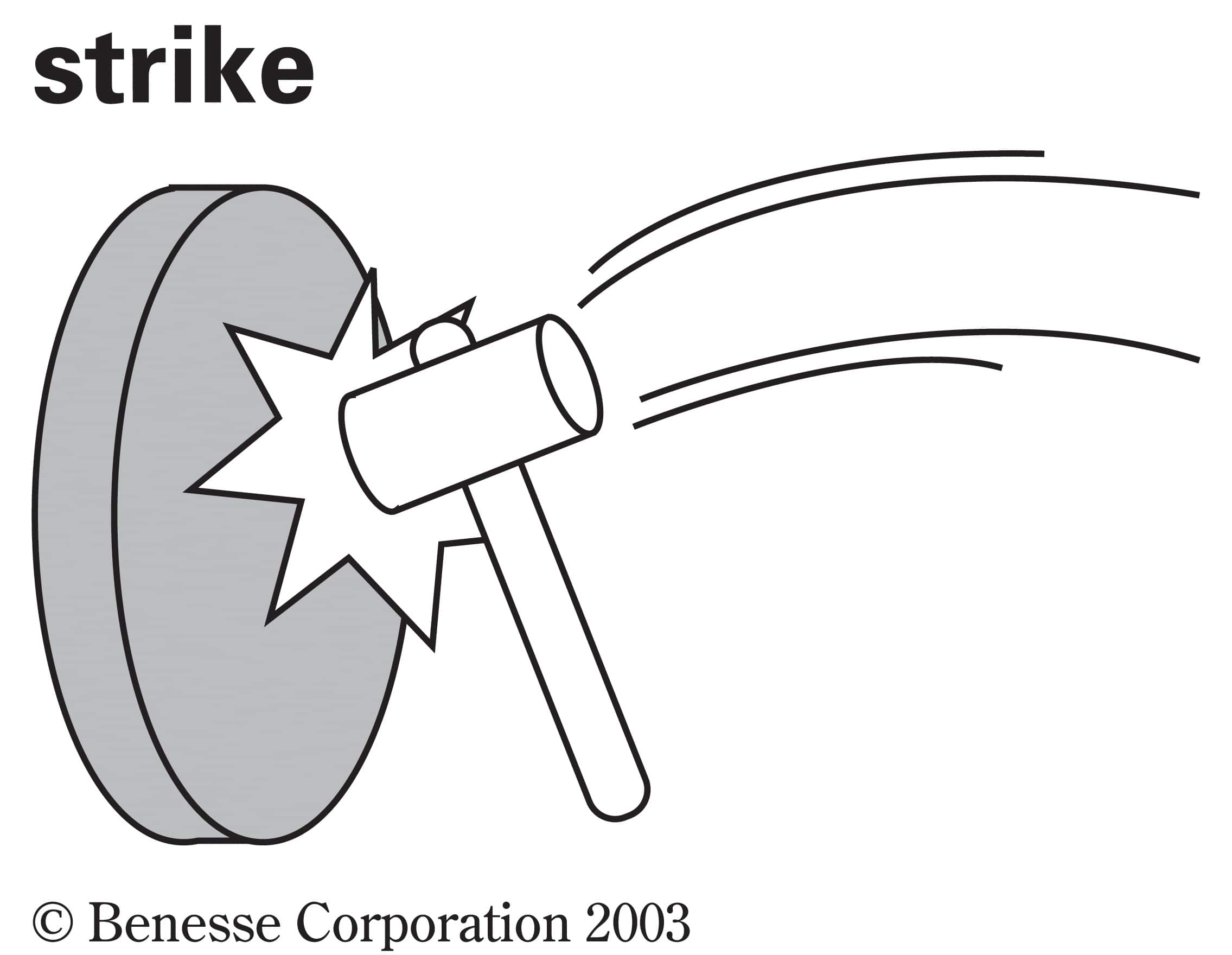 |
Ⅰ一撃を加える動詞
├打つ;攻撃する▷他動詞1a自動詞1
└(くいなどを)打ち込む▷他動詞2
Ⅱ突き当たる動詞
├ぶつかる▷他動詞3自動詞3
├(光などが)当たる▷他動詞4
└(金などを)掘り当てる▷他動詞5
Ⅲ襲う動詞
├(災害・病気などが)襲う▷他動詞6自動詞2
├(考えなどが)心に浮かぶ▷他動詞8
└心を打つ▷他動詞9a
Ⅳ打って作り出す動詞
├(時計などが)(時を)打つ▷他動詞10
├(マッチを)する▷他動詞11
├(貨幣などを)鋳造する▷他動詞12
├(姿勢を)取る▷他動詞13
├(取り引きなどを)取り決める▷他動詞14
└ストライキをする▷自動詞8
攻撃▷名詞2
ストライキ▷名詞3
ストライク▷名詞4
├打つ;攻撃する▷他動詞1a自動詞1
└(くいなどを)打ち込む▷他動詞2
Ⅱ突き当たる動詞
├ぶつかる▷他動詞3自動詞3
├(光などが)当たる▷他動詞4
└(金などを)掘り当てる▷他動詞5
Ⅲ襲う動詞
├(災害・病気などが)襲う▷他動詞6自動詞2
├(考えなどが)心に浮かぶ▷他動詞8
└心を打つ▷他動詞9a
Ⅳ打って作り出す動詞
├(時計などが)(時を)打つ▷他動詞10
├(マッチを)する▷他動詞11
├(貨幣などを)鋳造する▷他動詞12
├(姿勢を)取る▷他動詞13
├(取り引きなどを)取り決める▷他動詞14
└ストライキをする▷自動詞8
攻撃▷名詞2
ストライキ▷名詞3
ストライク▷名詞4
動詞
他動詞
Ⅰ一撃を加える
1a((かたい))(人・物)を打つ,たたく,なぐる;((かたい))(ボールなど)を蹴(け)る;(軍隊などが)(敵など)を攻撃する
b《strike (A)B》(A(人)に)B(打撃)を与える
2〔一撃を加えて突き通す〕a(くい・くぎなど)を〈物に〉打ち込む,たたき込む〈into〉
b(寒気・恐怖心など)を〈人・心に〉打ち込む,入り込ませる〈into〉
Ⅱ突き当たる
3((かたい))(人・物が)(人・物)にぶつかる,突き当たる,衝突する;(人が)(体の一部)を〈物に〉ぶつける,突き当てる〈on/against〉
4(光が)(表面)に当たる;(光・音が)(目・耳)に届く,達する
5(金・石油など)を掘り当てる;(通りなど)に行き当たる
Ⅲ襲う
6((かたい))(災害・病気・不幸などが)(突然)(人など)を襲う;(人)に〈恐怖・驚きなどを〉取りつかせる〈with〉
7《strike A B》((かたい))A(人)を突然B(…の状態)にする(Bは形容詞)
8〔襲うようにして心を打つ〕a(考えなどが)(突然)(人)の心に浮かぶ(進行形にはできない)
b《it strikes A+that節[wh-節]》A(人)が…と[…かと]思い当たる
9a(人・物・事が)(人)の心を打つ,(人)を感銘させる
b《strike A as B》(人・物・事が)A(人)にBであるという印象を与える,A(人)にBであると感じさせる(Bは形容詞名詞,現在分詞)
Ⅳ打って作り出す
10(時計・鐘が)(時)を打つ,打って知らせる;(鍵盤などで)(音)を鳴らす
11(マッチ)をする,すって火をつける;(火)をつける
12(貨幣・メダルなど)を鋳造する,打ち出す
13(姿勢・態度など)を取る,決める
14(取り引き・契約など)を取り決める;(妥協点など)を見い出す
Ⅴ打ち払う
15(帆・旗など)を降ろす;(テントなど)を取り壊す
16((かたい))(名前)を〈名簿などから〉取り去る,削除する〈off/from〉
1a((かたい))(人・物)を打つ,たたく,なぐる;((かたい))(ボールなど)を蹴(け)る;(軍隊などが)(敵など)を攻撃する
|
b《strike (A)B》(A(人)に)B(打撃)を与える
2〔一撃を加えて突き通す〕a(くい・くぎなど)を〈物に〉打ち込む,たたき込む〈into〉
b(寒気・恐怖心など)を〈人・心に〉打ち込む,入り込ませる〈into〉
Ⅱ突き当たる
3((かたい))(人・物が)(人・物)にぶつかる,突き当たる,衝突する;(人が)(体の一部)を〈物に〉ぶつける,突き当てる〈on/against〉
4(光が)(表面)に当たる;(光・音が)(目・耳)に届く,達する
5(金・石油など)を掘り当てる;(通りなど)に行き当たる
Ⅲ襲う
6((かたい))(災害・病気・不幸などが)(突然)(人など)を襲う;(人)に〈恐怖・驚きなどを〉取りつかせる〈with〉
7《strike A B》((かたい))A(人)を突然B(…の状態)にする(Bは形容詞)
8〔襲うようにして心を打つ〕a(考えなどが)(突然)(人)の心に浮かぶ(進行形にはできない)
b《it strikes A+that節[wh-節]》A(人)が…と[…かと]思い当たる
9a(人・物・事が)(人)の心を打つ,(人)を感銘させる
b《strike A as B》(人・物・事が)A(人)にBであるという印象を与える,A(人)にBであると感じさせる(Bは形容詞名詞,現在分詞)
Ⅳ打って作り出す
10(時計・鐘が)(時)を打つ,打って知らせる;(鍵盤などで)(音)を鳴らす
11(マッチ)をする,すって火をつける;(火)をつける
12(貨幣・メダルなど)を鋳造する,打ち出す
13(姿勢・態度など)を取る,決める
|
14(取り引き・契約など)を取り決める;(妥協点など)を見い出す
Ⅴ打ち払う
15(帆・旗など)を降ろす;(テントなど)を取り壊す
16((かたい))(名前)を〈名簿などから〉取り去る,削除する〈off/from〉
自動詞
1〈…を目がけて〉打つ,殴る;〈…を〉攻撃する;〈…に〉襲いかかる〈at〉
2(災害・病気・不幸などが)(突然)襲う,襲来する
3(物などが)〈…に〉ぶつかる,突き当たる〈against/on〉;(光線などが)〈…に〉当たる,〈…を〉照らす〈on/upon〉
4((かたい))〈…を[…へ]〉突き通る,しみ込む〈through[into/to]〉
5((かたい))(ある方向へ)突き進む,向かう
6(時計・鐘などが)打つ,鳴る
7(マッチなどが)点火する,火がつく
8〈…に対して[…を要求して]〉ストライキをする〈against[for]〉
2(災害・病気・不幸などが)(突然)襲う,襲来する
3(物などが)〈…に〉ぶつかる,突き当たる〈against/on〉;(光線などが)〈…に〉当たる,〈…を〉照らす〈on/upon〉
4((かたい))〈…を[…へ]〉突き通る,しみ込む〈through[into/to]〉
5((かたい))(ある方向へ)突き進む,向かう
6(時計・鐘などが)打つ,鳴る
7(マッチなどが)点火する,火がつく
8〈…に対して[…を要求して]〉ストライキをする〈against[for]〉
成句strike at ...
①(人・物)に殴りかかる
②(人・原理・主義など)に重大な影響[損害]を与える
成句strike back
〈…に〉殴り返す;〈…に対して〉反撃する,反論する〈at〉
成句strike down
①(人)を打ち倒す,殴り倒す
②((かたい))(病気などが)(人)を倒す,襲う,殺す(通例受け身で用いる)
成句strike in
口を差しはさむ,割り込む
成句strike into ...
突然…を始める
成句strike off
①(枝・首など)を打ち落とす,切り落とす
②(医者・弁護士など)を除名[除籍]する,登録抹消をする(通例受け身で用いる)
成句strike |A| off |B|
A(人・名前など)をB(名簿など)から(線を引いて)削除する
成句strike on ...
①…にぶつかる,当たる
②((口))(よい考えなど)を思いつく
成句strike out
①((strike out))〈…を〉激しく打つ;(特に演説・書籍・新聞などで)〈…を〉非難する〈at/against〉
③((strike out))(文字・名前など)を(線を引いて)抹消する,削除する
④((strike out))≪野球≫三振する;((strike out))(打者)を三振させる
|
成句strike through
(文字など)を(線を引いて)消す,抹消する
成句strike up
①((strike up))(楽団などが)演奏を始める;(演奏・歌が)始まる;((strike up ...))(楽団などが)(曲・歌)を始める;(指揮者が)(楽団など)に演奏を始めさせる
②((strike up ...))(会話・交際など)を〈人と〉始める〈with〉
成句strike upon ...
=strike on ...
成句be struck on ...
((口))(人・物)にひかれている,…がとても気に入っている
成句strike (it) lucky
((口))〈…について〉運がある,幸運に恵まれる〈with〉
成句strike it rich
((口))(思いがけず)大もうけする,突然金持ちになる
成句strike out on |one's| own
自立する
|
名詞
自立する
1打つこと,打撃,殴打
2〈…に対する〉(軍隊の)攻撃,(特に)空襲〈on/against〉
3ストライキ
4≪野球≫ストライク;≪ボウリング≫ストライク
5(油田・金鉱などの)発見;(事業などの)大当たり,大成功
1打つこと,打撃,殴打
2〈…に対する〉(軍隊の)攻撃,(特に)空襲〈on/against〉
|
3ストライキ
4≪野球≫ストライク;≪ボウリング≫ストライク
5(油田・金鉱などの)発見;(事業などの)大当たり,大成功
成句be (out) on strike
ストライキ中である,ストライキをしている
成句go [come] (out) on strike
ストライキをする,ストライキを行う
成句have two strikes against |one|
①≪野球≫ストライクを2つ取られている⇒名詞
4②((米口))ひどく不利な立場にある,厳しい状況に置かれている
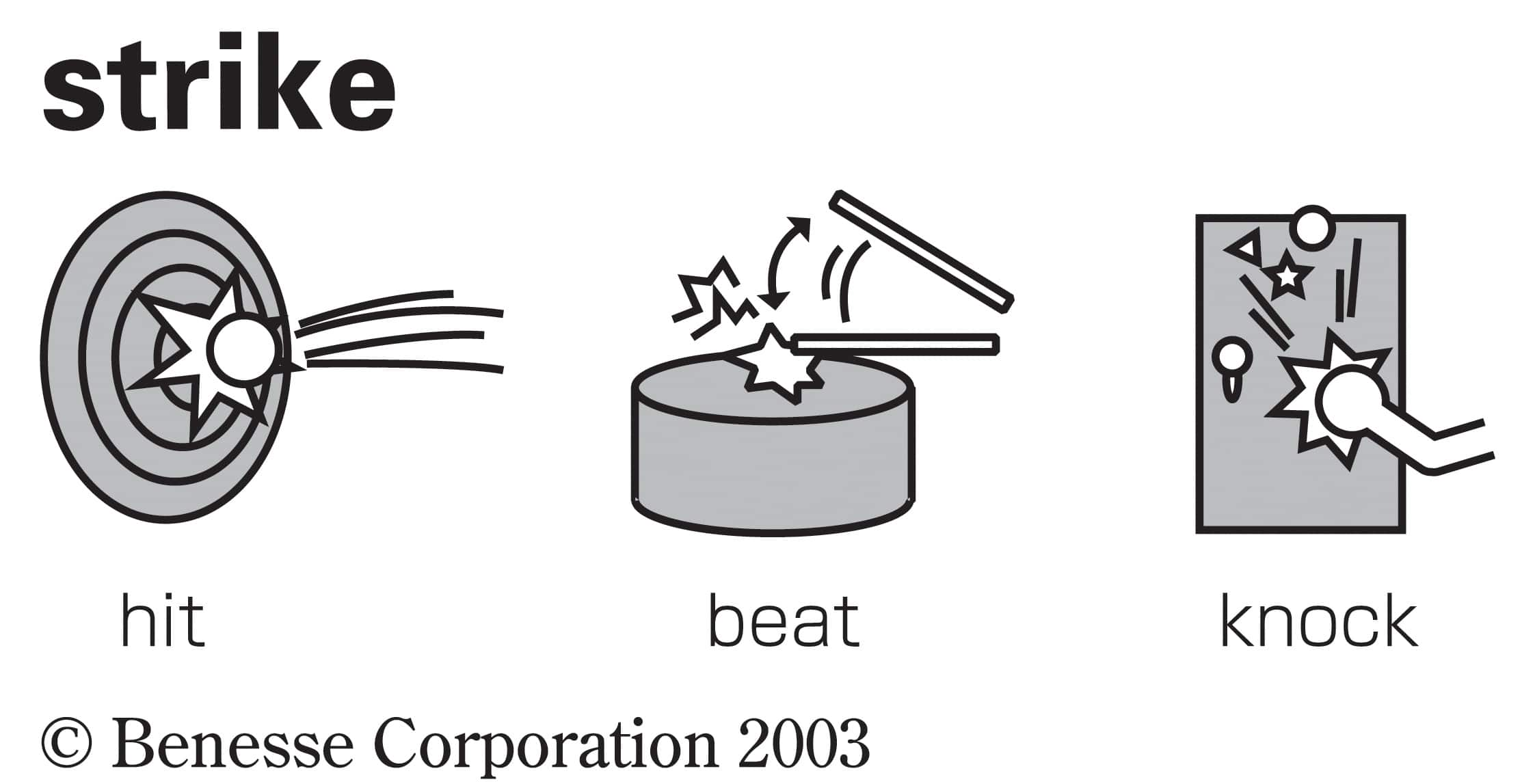
ネットワーク打つ,たたく strike:「打つ」の意の一般的な語.突然あるいは勢いよく強い打撃を与える hit: strikeよりも口語的.ねらいを定めて強い一撃を与える beat:繰り返し続けざまに打つ knock:こぶしや固い物で音を立ててたたく slap:平手でぴしゃりと打つ punch:げんこつで殴る |
 |
Weblio実用英語辞典

strike
「strike」とは打つ、たたく、襲うなどの意味を持つ英単語である。
動詞:打つ、たたく、襲う、ぶつかる、印象を与える、発見する、(時計が)鳴る、(考えなどが)ふと浮かぶ
名詞:打撃、攻撃
過去形:struck
過去分詞:struck、stricken(特に感情や病気に関して用いられる)
strike②
動詞:ストライキする
名詞:ストライキ
1. The boxer struck his opponent with a powerful blow.(ボクサーは相手に強烈な一撃を打った。)
2. The news struck me as surprising.(そのニュースは私に衝撃を与えた。)
3. He struck gold in the river.(彼は川で金を発見した。)
4. The clock struck midnight.(時計が真夜中を打った。)
5. An idea struck me while I was taking a shower.(シャワーを浴びているときにふと考えが浮かんだ。)
1. The strike of the hammer was loud.(ハンマーの打撃音は大きかった。)
2. The military launched an air strike.(軍は空爆を開始した。)
3. The strike against the enemy was successful.(敵に対する攻撃は成功した。)
4. He took a defensive stance to avoid the strike.(彼は打撃を避けるために防御の構えを取った。)
5. The strike from the predator left the prey motionless.(捕食者の一撃により獲物は動けなくなった。)
1. The workers decided to strike for better wages.(労働者たちはより良い賃金を求めてストライキを決行した。)
2. The union called on its members to strike.(組合はそのメンバーにストライキを呼びかけた。)
3. The employees went on strike to protest the layoffs.(従業員たちは解雇に抗議してストライキに出た。)
4. The strike lasted for three weeks.(ストライキは3週間続いた。)
5. The company faced a nationwide strike.(その会社は全国規模のストライキに直面した。)
1. The strike caused a disruption in production.(ストライキにより生産に支障が出た。)
2. The government tried to negotiate an end to the strike.(政府はストライキの終結に向けて交渉を試みた。)
3. The strike was supported by the majority of the workforce.(ストライキは労働力の大多数によって支持された。)
4. The strike involved thousands of workers.(そのストライキには数千の労働者が関与した。)
5. The strike ended with a compromise between the company and the employees.(ストライキは会社と従業員の間の妥協により終了した。)
「strike」とは・「strike」の意味
strike①動詞:打つ、たたく、襲う、ぶつかる、印象を与える、発見する、(時計が)鳴る、(考えなどが)ふと浮かぶ
名詞:打撃、攻撃
過去形:struck
過去分詞:struck、stricken(特に感情や病気に関して用いられる)
strike②
動詞:ストライキする
名詞:ストライキ
strike①の用法
動詞
「strike」が動詞として使われる場合、物理的に何かを打つ、たたく、襲う、ぶつかる行為や、心理的に印象を与える、何かを発見する、時計が鳴る、考えがふと浮かぶといった意味で用いられる。具体的な例を以下に示す。
・例文1. The boxer struck his opponent with a powerful blow.(ボクサーは相手に強烈な一撃を打った。)
2. The news struck me as surprising.(そのニュースは私に衝撃を与えた。)
3. He struck gold in the river.(彼は川で金を発見した。)
4. The clock struck midnight.(時計が真夜中を打った。)
5. An idea struck me while I was taking a shower.(シャワーを浴びているときにふと考えが浮かんだ。)
名詞
「strike」が名詞として使われる場合、打撃や攻撃を意味する。具体的な例を以下に示す。
・例文1. The strike of the hammer was loud.(ハンマーの打撃音は大きかった。)
2. The military launched an air strike.(軍は空爆を開始した。)
3. The strike against the enemy was successful.(敵に対する攻撃は成功した。)
4. He took a defensive stance to avoid the strike.(彼は打撃を避けるために防御の構えを取った。)
5. The strike from the predator left the prey motionless.(捕食者の一撃により獲物は動けなくなった。)
strike②の用法
動詞
「strike」が動詞として使われる場合、労働者が仕事を一時的に中止し、労働条件の改善などを要求するストライキを行うことを意味する。具体的な例を以下に示す。
・例文1. The workers decided to strike for better wages.(労働者たちはより良い賃金を求めてストライキを決行した。)
2. The union called on its members to strike.(組合はそのメンバーにストライキを呼びかけた。)
3. The employees went on strike to protest the layoffs.(従業員たちは解雇に抗議してストライキに出た。)
4. The strike lasted for three weeks.(ストライキは3週間続いた。)
5. The company faced a nationwide strike.(その会社は全国規模のストライキに直面した。)
名詞
「strike」が名詞として使われる場合、労働者が行う仕事の中断を意味する。具体的な例を以下に示す。
・例文1. The strike caused a disruption in production.(ストライキにより生産に支障が出た。)
2. The government tried to negotiate an end to the strike.(政府はストライキの終結に向けて交渉を試みた。)
3. The strike was supported by the majority of the workforce.(ストライキは労働力の大多数によって支持された。)
4. The strike involved thousands of workers.(そのストライキには数千の労働者が関与した。)
5. The strike ended with a compromise between the company and the employees.(ストライキは会社と従業員の間の妥協により終了した。)
科学技術論文動詞集

strike
他動詞
打つ, ぶつかる- 原義は「打つ、行く、進む」。「打つ」という意味の堅い表現の動詞。一般的な用法の主な意味は、「拳やハンマーなどで、(強く)打つ、たたく」、「突き当たる、ぶつかる、衝突する」。科学技術論文では、電子や電磁波が、1.試料を「(強く)打つ」、2.試料に「ぶつかる」というように使う。

日本語WordNet(英和)

strike
動詞
名詞
Weblio英和対訳辞書
Strike
Strike
Strike (1912 film)
strike
strike
strike
引っ叩く, 引っぱたく, ぶっ飛ばす, 打っ飛ばす, 襲う, 打付ける, 打つける, 擦り付ける, こすり付ける, 擦りつける, 摺り付ける, 摩り付ける, すり付ける, 摺りつける, 摺付ける, 打ち掛かる, ぶつかる, しばく, 突く, 衝く, 撞く, 捺く, 殴る, 擲る, 撲る, 打つ, 拍つ, 搏つ, 撲つ, 擣つ, 打つ, 撃つ, 撲つ, 打ち鳴らす, 打ちならす, うち鳴らす, 打鳴らす, 叩く, 敲く, 打って掛かる, 叩きつける, 叩き付ける, たたき付ける, 擦る, 擂る, 摩る, 磨る, 見舞う, どやし付ける, 掘り当てる, 掘りあてる, 掘当てる, 当たる, 当る, 中る, 中たる, 落ちる, 墜ちる, 落る, 打ち出す, 打出す, 打ちだす, 挿す, 打っ付ける
strike
当て, 宛, 宛て, ストライキ, 打突, ストライク, スト, 受け壺, 受壺, 同盟罷業, 争議, 走向, 労働争議, 殴打, 魚信, ショット, 闘争, 斗争, 鬪爭, 当たり, 当り, 中り, 中たり, 魚信, 罷業, 争議行為, 打撃, 職場放棄
strike
strike [hit]
strike one
Weblio英和対訳辞書はプログラムで機械的に意味や英語表現を生成しているため、不適切な項目が含まれていることもあります。ご了承くださいませ。
Wiktionary英語版
出典:Wiktionary
Strike
出典:『Wiktionary』 (2025/04/01 20:13 UTC 版)
統計情報
- According to the 2010 United States Census, Strike is the 32935 most common surname in the United States, belonging to 696 individuals. Strike is most common among White (93.68%) individuals.
アナグラム
- Kister, kiters, trikes
Weblio例文辞書


- Copyright (c) 1995-2026 Kenkyusha Co., Ltd. All rights reserved.
- Copyright © Benesse Holdings, Inc. All rights reserved.

- © 2000 - 2026 Hyper Dictionary, All rights reserved

- Copyright (C) 2026 経済のにほんご All rights reserved.
- Copyright(C)1996-2026 JEOL Ltd., All Rights Reserved.
- Copyright (C) 1994- Nichigai Associates, Inc., All rights reserved.

- ※この記事は「日本法令外国語訳データベースシステム」の2010年1月現在の情報を転載しております。

- DBCLS Home Page by DBCLS is licensed under a Creative Commons 表示 2.1 日本 License.

- All Rights Reserved, Copyright © Japan Science and Technology Agency
- Copyright (C) 2026 日本図学会 All rights reserved.


- ※この記事は『「多国語防災用語集」国際防災の十年(IDNDR)国民会議』の内容を転載しております。

- ©日本集団災害医学会2026

- Copyright (C) 2026 ライフサイエンス辞書プロジェクト
- 日本語ワードネット1.1版 (C) 情報通信研究機構, 2009-2010 License All rights reserved.
WordNet 3.0 Copyright 2006 by Princeton University. All rights reserved. License

- Copyright(C)2002-2026 National Institute of Information and Communications Technology. All Rights Reserved.

- Copyright © 2026 CJKI. All Rights Reserved

- Copyright © 2026 CJKI. All Rights Reserved

- Copyright (C) 1994- Nichigai Associates, Inc., All rights reserved.
「斎藤和英大辞典」斎藤秀三郎著、日外アソシエーツ辞書編集部編
- Wiktionary
- Text is available under Creative Commons Attribution-ShareAlike (CC-BY-SA) and/or GNU Free Documentation License (GFDL).
Weblio英和・和英辞典に掲載されている「Wiktionary英語版」の記事は、WiktionaryのStrike (改訂履歴)の記事を複製、再配布したものにあたり、Creative Commons Attribution-ShareAlike (CC-BY-SA)もしくはGNU Free Documentation Licenseというライセンスの下で提供されています。
- CMUdict
- CMUdict is Copyright (C) 1993-2008 by Carnegie Mellon University.
