研究社 新英和中辞典

研究社

draw

draw /drˈɔː/ 音声を再生

動詞 他動詞

(drew /drúː/;drawn /drˈɔːn/) 音声を再生
A
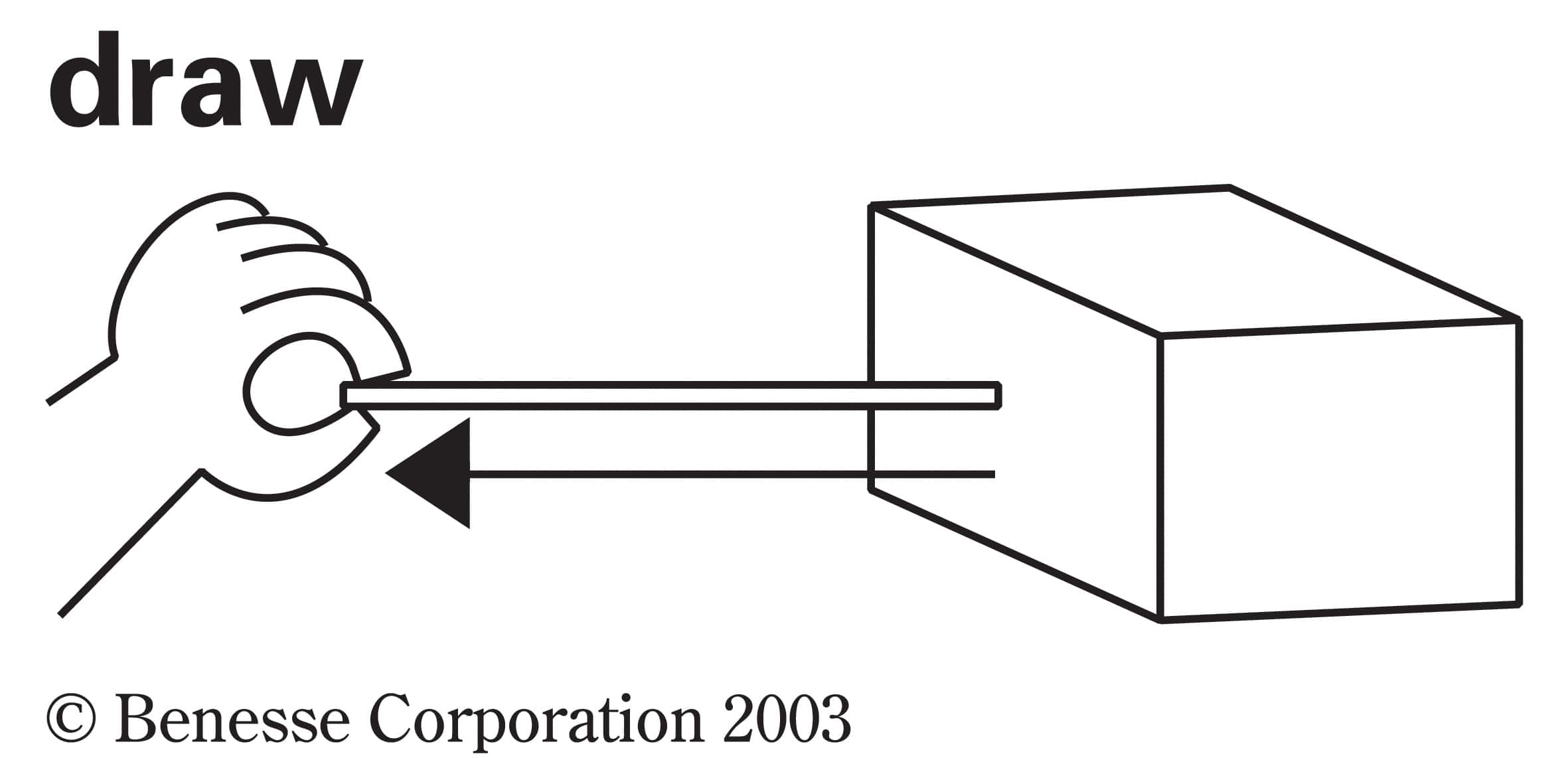
1 (軽くなめらかに)引く 《★【類語】pull》:
a 〈ものを引っぱる牽引(んい)する.
用例


b 〔+目的語+副詞()〕〈ものを〉(ある方向に)引き寄せる.
用例


c 〈を〉引きしぼる; 〈などを〉引き締める.
用例


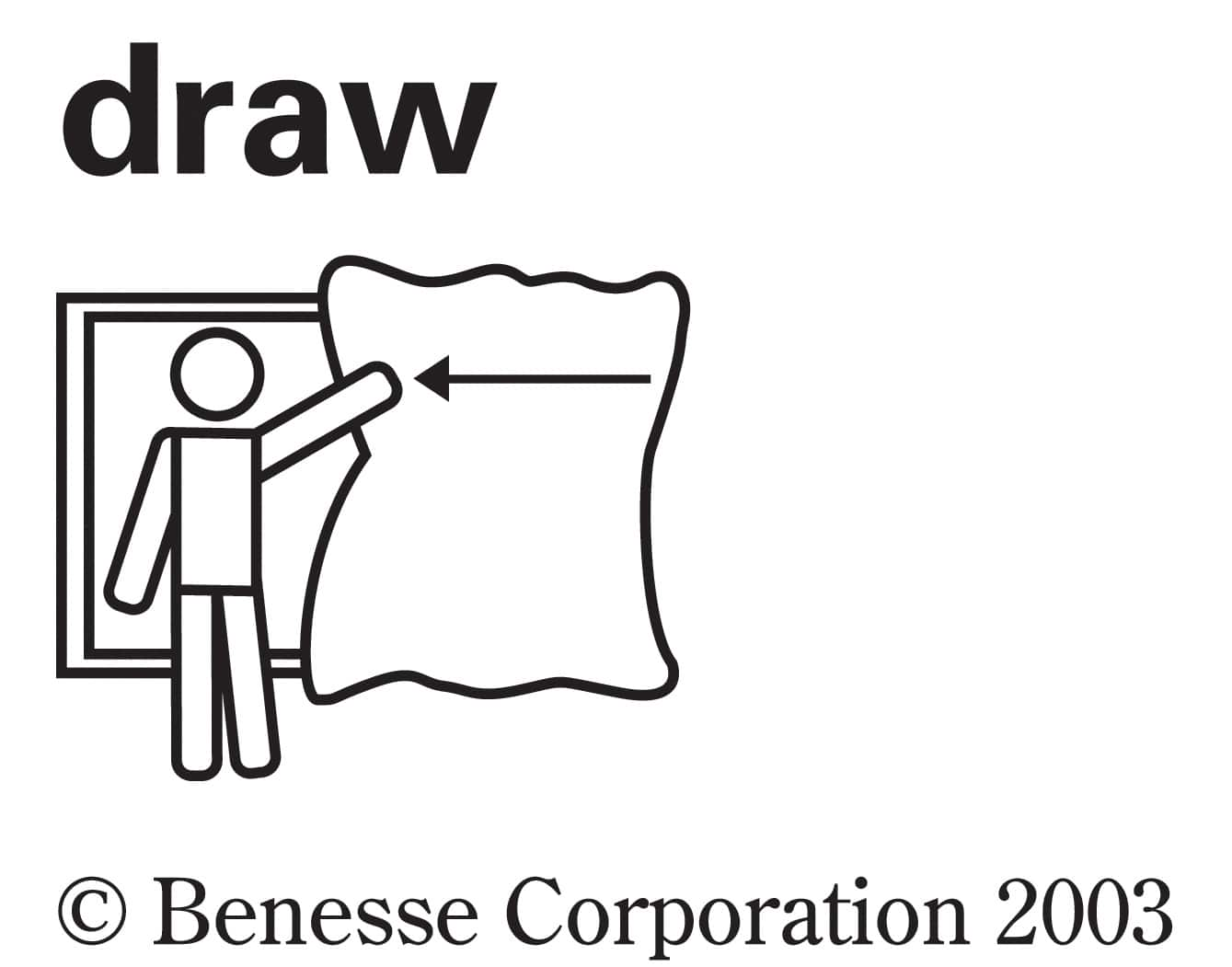
d 〔+目的語(+副詞())〕(通例締める」ので)〈カーテンなどを〉(続けて)引く; っぱって下ろす[上げる].
用例


e 〔+目的語+into+()名詞〕〈(いやがる)を〉(無理に)〔…に引き入れる.
用例


f 〈手綱を〉いて止める.
用例

2 引き抜く:
a 〔+目的語(+out)(+前置詞+()名詞)〕〈ものを〉〔…から引き抜く抜き取る 〔from,out of〕.
用例


b 〔+目的語(+out)+前置詞+()名詞〕〔…に向かって〕〈刀剣ピストルなどを〉抜くon,upon〕 (cf. 自動詞 4b).
用例

c 〈などのはらわたを出す.
用例

d 〔+目的語(+from+()名詞)〕〈トランプを〉〔…から引く取る.
用例

e 〈くじを〉引く引き当てる.
用例


3 引き出す:
a 〔+目的語(+from+()名詞)〕〈などを〉〔…からくみ上げる; 〔容器から〕〈液体を〉出す.
用例


b 〔+間接目的語+直接目的語 / +目的語+for+()名詞〕〈に〉(容器から)〈液体を〉出す; 〔に〕(容器から)〈液体を〉出す.
用例

c 〔+目的語(+前置詞+()名詞)〕〔銀行・口座などから〕〈を〉おろす 〔from,out of〕.
用例

d 〔+目的語(+前置詞+()名詞)〕〈結論情報などを〉〔…から引き出す; 〔物語から〕〈教訓を〉得る 〔from,out of〕.
用例


e 〈給料などを〉もらう[受け取る].
用例


f 〈金銭などが〉〈利子が〉つく.
用例

4 引きつける:
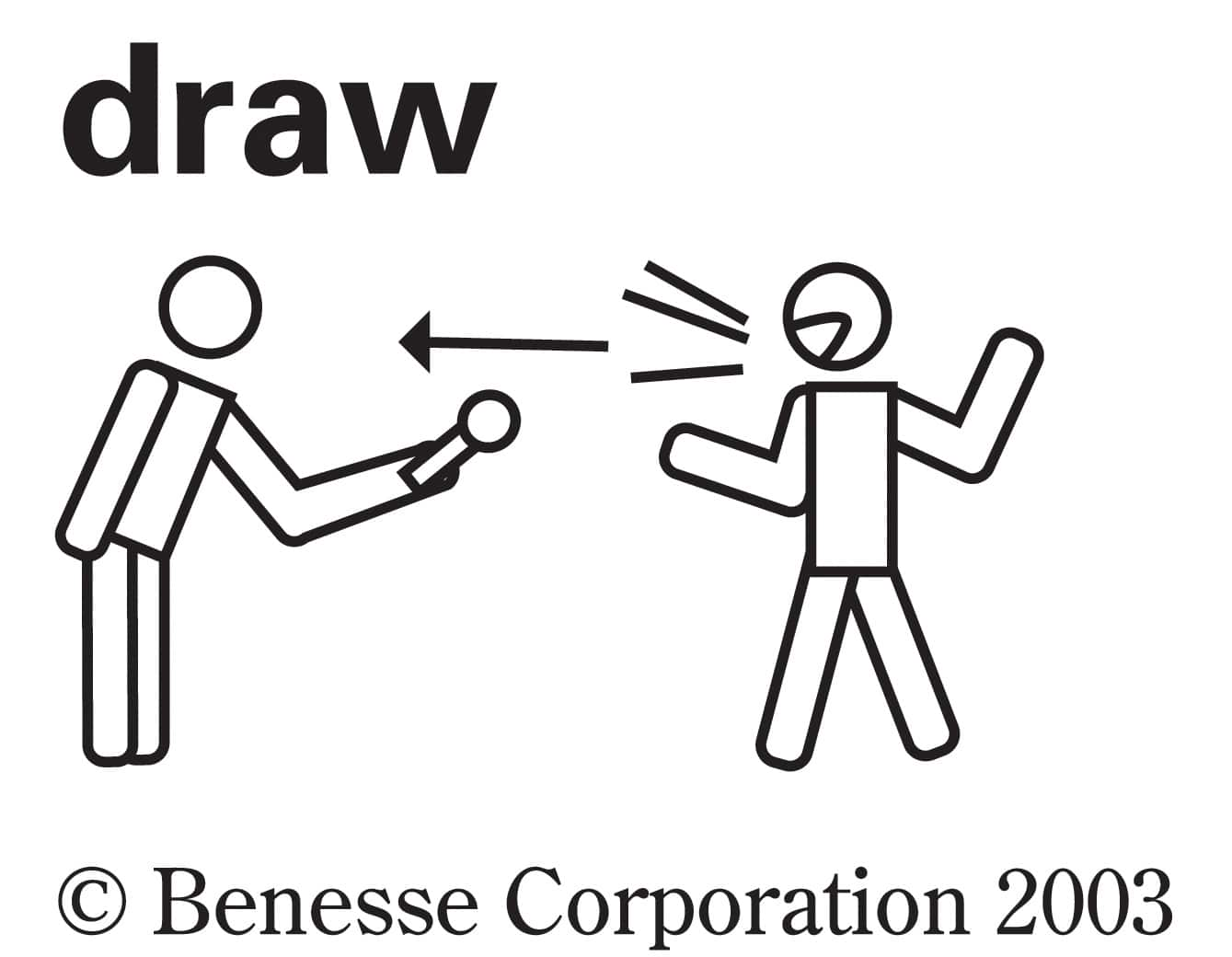
a 〔+目的語(+to+()名詞)〕〈注意耳目などを〉〔…に引く引きつける.
用例


b 〈支持者などを〉引きつける,〈…の〉人気を呼ぶ.
用例

c 〔+目的語(+前置詞+()名詞)〕〈人のを〔に〕引きつける,〈に〉〔…の〕魅力を感じさせるtotoward〕.
用例


5 引き起こす:
a 〔+目的語(+前置詞+()名詞)〕〈笑い攻撃非難などを〉〔…から引き出す誘う 〔from,out of〕.
用例


b 〔+目的語(+down)+前置詞+()名詞〕〈破滅などを〉〔に〕招くon,upon〕.
用例

6 a 〔+目的語(+in)〕〈を〉吸う.
用例


b 〈ため息を〉つく.
用例

7勝負試合を〉引き分けにする.
用例


8を〉させる.
用例

9苦痛が〉〈を〉ゆがめる 《★通例過去分詞形容詞的用いる; ⇒drawn 3b》.
10が〉喫水〈…フィートである.
用例

B
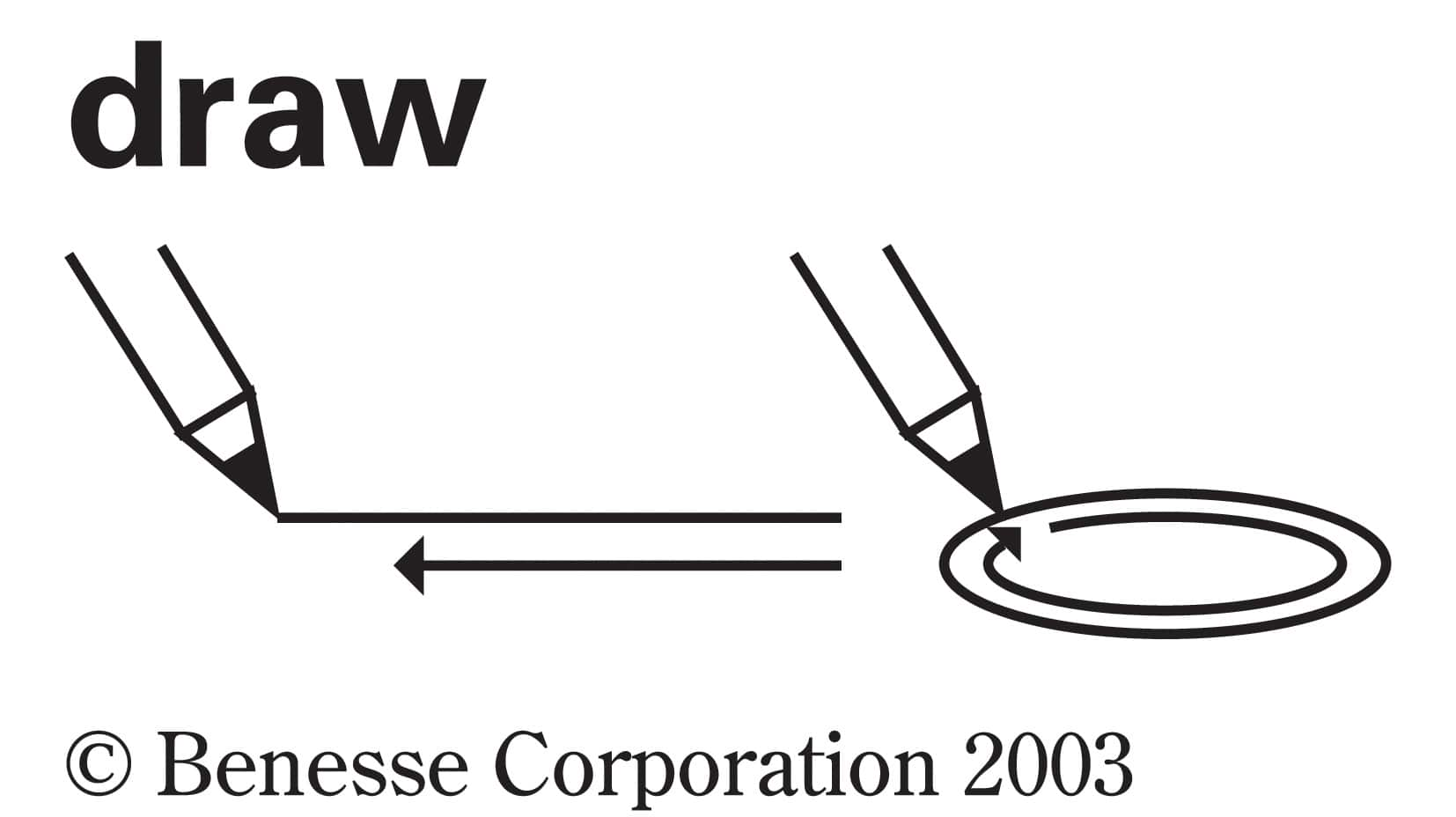
1 (鉛筆・ペン・クレヨン・チョークなどを用いてで)描く 《★【類語】 paint絵の具絵を描く; writeを書く》:
a 〈を〉引く写す; 〈を〉描く.
用例


b 〔+間接目的語+直接目的語 / +目的語+for+()名詞〕〈に〉〈…を〉描いてあげる; 〔に〕〈…を〉描いてあげる.
用例

c 〈…を〉(言葉で)描写する.
用例

2 〔+目的語(+between+()名詞)〕〔…の間の〕〈比較区別を〉設ける,〈類似点を〉指摘する.
用例


3 a 〔+目的語(+up)〕〈文書を〉作成する.
用例

b 〔+目的語+on+()名詞〕〈小切手を〉〔に向けて振り出す.
用例

自動詞

A
1 〔+副詞()〕
a (引き寄せられるように)近づくやってくる[いく]; 寄り集まる.
用例


b 〈が〉近づく.
用例


2 [wellbadly などの様態副詞伴って] 〈煙突パイプなどが〉通りが(…)だ.
用例

3 [wellbadly などの様態副詞伴って] 〈などが〉人目[注意]を引く人気を呼ぶ.
用例

4 a 刀剣[ピストル]を抜く.
b 〔+前置詞+()名詞〕〔に向かって[をねらって]〕刀剣[ピストル]を抜くon,upon〕 (cf. 他動詞 A2b).
用例

5などが〉出る.
用例

6動詞(+for+()名詞)〕〔…を決めるためにくじを引く.
用例


7勝負試合が〉引き分けになる.
用例

B
1 a 〔動詞(+with+()名詞)〕〔…で〕絵を描く製図する.
用例

b [wellbadly などの様態副詞伴って] 絵を描く製図する.
用例

2 〔+前置詞+()名詞〕〔資金などを〕利用する; 〔経験などに〕頼るon,upon〕《★受身》.
用例


名詞可算名詞

1 a 引くこと,ひと引き.
b (ピストルなどを)抜き出すこと.
用例

c くじ引き抽選 〔for〕.
2 (勝負などの)引き分け.
用例

3 (たばこパイプの)ひと吸い.
用例

4 呼び物.
用例

5主に米国で用いられる》 (はね橋の)開閉 (cf. drawbridge 1).

【語源】

調べた例文を記録して、効率よく覚えましょう
Weblio会員無料で登録できます
履歴機能 過去に調べた単語を確認できる
語彙力診断 診断回数が4回に増加
マイ単語帳 便利な学習機能付き
マイ例文帳 文章で意味を理解できる

Eゲイト英和辞典

株式会社ベネッセコーポレーション

draw

音節draw発音記号・読み方drɔ́ː変化~s{~z};過去drew{drúː};過分drawn{drɔ́ːn}; ~・ing ~s{~z}
覚え方ゆっくり滑らか引く
何かを引いた結果焦点がある荷車やいすなどをいて動かすというのが基本
引く動詞
引く引っ張る他動詞1
などを)引き伸ばす他動詞2a
会議などを)長引かせる他動詞2b
などに)しわを寄せる他動詞3
注意などを)引く他動詞4a
引き出す動詞
引き出す他動詞5
(くじなどを)引く他動詞6
お金を)引き出す他動詞7
などを)吸う他動詞8a
情報などを)引き出す他動詞9
線を引く動詞
を)引く描く他動詞11
試合を)引き分ける他動詞14

動詞
他動詞
引く
1引く引っ張るいて移動させる
2aなど)を引き伸ばす

b会議痛みなど)を長引かせる
3など)にしわを寄せる生地)を縮ませる

4a注意関心など)を引く)を〈…に引き寄せる〈to/into〉
b災難など)を〈…に招き寄せるon〉;()を〈悪事などに[するように]〉誘い込む〈into[to do]〉
引き出す
5を〈…から引き出す引き抜く〈from/out of〉;(など)をいて〈…に向けるon

6(くじなど)を引く(くじで)当てる
7お金)を引き出す手形)を振り出す,(小切手を現金に換える
8aなど)を吸うため息)をつく;(液体気体)を吸い上げる
b液体)を汲む汲み出す

9情報結論など)を〈…から引き出す得る〈from/out of
10・うみなど)をさせる;(お茶)をじて出す;≪料理のはらわたを抜く
線を引く
11)を引く鉛筆ペンなどを使ってで)(の)を描く絵の具を使って描く場合はpaint);(ことばで)描写するwrite
12文書を作成する
13区別をする
14試合)を引き分ける

自動詞

成句draw ahead
より〉前へ出る;〈を〉引き離すof

成句draw apart
((draw apart))〈…から離れる〈from〉
((draw apart))…を離す分ける;(カーテン)を開ける

成句draw aside
((draw aside))へ(引き寄せる,すみに連れて行く
((draw aside))脇に寄る

成句draw away
((draw away))〈…から〉(急いで離れる;(競技で)〈相手を〉引き離す〈from〉

((draw away))(など)を〈…から引っ込める引き離す;(注意など)を〈…からそらす〈from〉

成句draw back
((draw back))後ろに下がる退く;〈…から手を引く〈from〉

((draw back))引き戻す;(カーテンなど)を開ける(案)引っ込める

成句draw down
カーテンなど)を引き下ろす
非難など)を招く

成句draw in
((draw in))(())(が)暮れる短くなる;(列車などが)着く;(などが)道路脇に寄る

((draw in))引き寄せる引き入れる;(空気)を吸い込む入れる;(など)を縫い込む

成句draw off
((draw off))を取り除く;(手袋靴下など)を脱ぐ

((draw off))引き上げる去る

成句draw on
((draw on))(などが)近づく;(などが)続く長引く

((draw on))(を促す励ます;(手袋靴下など)を着ける

((draw on ...))(預金)から引き出すあてにする頼りにする

成句draw out
((draw out))((おもに))()が延びる長くなる;(列車などが)出発する
((draw out))引き伸ばす長引かせる
((draw out))(預金)を引き出す;(才能など)を引き出す;(文書など)を作成する

成句draw up
((draw up))(が)止まる;((draw up))()を止める

((draw up))〈…に追いつくto

((draw up))引き寄せる引き上げる

((draw up))(文書を作成する;(計画など)を立案する

((draw oneself up))(怒ってまたはらしに)直立する

名詞

成句be quick [fast] on the draw
(())ピストル]を抜くのが早い理解反応]が早い

成句be slow on the draw
(())ピストル]を抜くのが遅い理解応答]が遅い


ネットワーク

Weblio実用英語辞典

英和辞典・和英辞典 - Weblio辞書

draw

「draw」は「引く」「描く」「引き出す」などの意味を持つ英単語である。

「draw」とは・「draw」の意味

動詞:引く、描く、引き出す、引き寄せる、引き分ける
名詞:引き分け、くじ引き

単語のコア:「引く」⇒物をゆっくりと引っ張るイメージ。そこから、「絵を描く」や「情報を引き出す」、「人を引き寄せる」、「試合が引き分ける」という意味に派生する。

動詞:引く、描く、引き出す、引き寄せる、引き分ける

「draw」が動詞として使われる場合、物理的な引き動作から、抽象的な引き出す概念まで幅広く表現する。具体的な例を以下に示す。

・例文
1. Draw the curtain.(カーテンを引け。)
2. She can draw well.(彼女は上手に描くことができる。)
3. Draw water from the well.(井戸から水を引き出せ。)
4. His speech drew a large audience.(彼のスピーチは大勢の聴衆を引き寄せた。)
5. The teams drew 3 all.(両チームは3対3で引き分けとなった。)

名詞:引き分け、くじ引き

「draw」が名詞として使われる場合、結果が引き分けであることや、くじ引きといった概念を表す。具体的な例を以下に示す。

・例文
1. The game was a draw.(試合は引き分けだった。)
2. The lottery is a big draw.(そのくじ引きは大きな魅力だ。)
3. The draw of the lottery will be held tomorrow.(そのくじ引きの抽選は明日行われる。)
4. The draw of the match was unexpected.(その試合の引き分けは予想外だった。)

コア・セオリー英語表現(基本動詞)

慶応大学田中茂範先生

draw

コアとなる意味(ゆっくり滑らかに)引く
ポイント何かを引いた結果焦点がある.荷車椅子などをいて動かすというのが基本.
自動詞 他動詞

I 引く

...を引く,引っ張る,いて移動させる

②(など)を引き伸ばす

③(会議痛みなど)を長引かせる

④(などに)しわを寄せる;(生地を)縮ませる

⑤a(注意関心など)を引く;((draw A to [into] Bで))A()をBに引き付ける

⑤b ((draw A into B, draw A to doで)) AをB(悪事など)に引き込む, Aを仲間引き入れ...させ

II 引き出す

...を<...から>引き出す<from; out of>,引き抜く

⑦(くじなど)を引く,(くじで)...当てる

お金を引き出す;(手形)を振り出す, (小切手)を現金に換える

⑨a(など)を吸う;(液体気体)を吸い上げる

⑨b 液体汲む,汲み出す

(情報結論など)を引き出す,得る,((draw A from [out of] Bで))

((draw teaで))()をじて出す ,お茶入れる

((draw a chickenで))トリのはらわたを抜く

III 線を引く

()を引く;(鉛筆ペンなどを使ってで)...(の)を描く(◇絵具を使って描く場合はpaint);(言葉で)...描写する

(文書)を作成する

(区別)をする

(試合)を引き分けにする

句動詞

draw ahead

<相手より>前へ出る<<of>

draw apart

①((draw apartで))(...から)離れる

②((draw|apartで))...を離す;分ける

draw aside

((draw|asideで))...へ(引き)寄せる,すみに連れて行く

draw at...

(タバコパイプを)ふかす

draw away

①((draw awayで))<...から>(急いで)離れる;(相手を)引き離す<from>

②((draw|awayで))(など)を<...から>引っ込める;引き離す<from>

③((draw|awayで))<...から>(注意など)をそらす<from>

draw back

①((draw backで))後ろに下がる, 退く;(...から)手を引く

②((draw|backで))...引き戻す;(カーテンなど)を開ける

③((draw|backで))(案)引っ込める

draw |down

①(カーテンなど)を引き下ろす

②(給料など)を得る

draw in

①((draw inで))(())(が)暮れる,短くなる

②((draw inで))(())(列車などが)着く;(などが)道路脇に寄る

③((draw|inで))...引き寄せる, 引き入れる;(空気)を吸い込む, 入れる

③((draw|inで))()を手繰り込む;(洋服など)を縫い込む

draw off

①((draw|offで))(手袋靴下など)を脱ぐ

②((draw|offで)) <...から>...を取り除く<from>

③((draw offで))引き上げる

draw on

①((draw onで))(などが)近づく

②((draw onで))続く, 長引く

③((draw|onで))(手袋靴下など)を着ける

④((draw|onで))(災難など)を招き寄せる

⑤((draw|onで))()をいて...に向ける

⑥((draw on...で))(預金)から引き出す;(から)助けなどを引き出す,...あてにする

⑦((draw on...で))(タバコ・パイプ)を吸う

draw out

①((draw outで))(列車などが)出発する

②((draw|outで))...引き伸ばす, 長引かせる

③((draw|outで))...引き出す

draw up

①((draw upで))(が)止まる

②((draw upで))<...に>追いつく<to>

③((draw|upで))...引き寄せる;...引き上げる

④((draw|upで))(文書)を作成する

⑤((draw oneself upで))(怒って, らしに)直立する

イディオム

draw a blank

blank成句 空くじを引く;(努力の結果)何もられない, 失敗に終わる

draw a parallel

parallel成句 比較する

draw a person's fire

fire成句 (他人への攻撃そらすため)自分が(あえて)標的となる;論議非難となる

draw a veil over

veil成句 ...隠す;...に関して口を閉ざす

draw a[the] line (at ...[doing ...])

line成句 ...を[...すること]を拒む(→やっていいことの上限設ける)

draw a[the] line (between A and B)

line成句 AとBを区別する

draw blood

blood成句 怒らせる

draw level

level成句 <...と>対等になる,<...に>追いつく<with>

draw lots

lot成句 くじ引きをする,くじをいて(...を)決める

draw the short straw

straw成句 嫌なをする役回り当たる

draw to a close[an end]

close成句 終わりになる(closeは[klouz])

ハイパー英語辞書

ハイパー辞書:会津大学•筑波大学版

研究社 英和コンピューター用語辞典

研究社

draw

動詞
【1】 《を》 引く, 《を》 かく, 描く.
【2】 引く, 引っ張る.

マイクロソフト用語集

日本マイクロソフト株式会社

科学技術論文動詞集

日本電子株式会社

draw


draw

機械工学英和和英辞典

日外アソシエーツ株式会社

JST科学技術用語日英対訳辞書

独立行政法人科学技術振興機構

日本語WordNet(英和)

日本語WordNet

draw

動詞

1. ある点に配置するようにする(cause to localize at one point)
用例

2. 巻く、金型から抜く、または延ばすことによって合金またはガラスを平らにする、延ばす、または成形する(flatten, stretch, or mold metal or glass, by rolling or by pulling it through a die or by stretching)
用例

3. 内臓を摘出する(remove the entrails of)
用例

4. 浸ける(steep)
用例

5. 型打ち機を通すことにより、直径を減少させる(ワイヤーまたは金属ロッド)(reduce the diameter of (a wire or metal rod) by pulling it through a die)
用例

6. 縮小する(contract)
用例

7. 人をある行動または除隊へ導く(bring or lead someone to a certain action or condition)
用例

8. 所定のグループまたは地域から選ぶか、取り入れる(select or take in from a given group or region)
用例

9. 心の中で作る、公式化する、に由来する(make, formulate, or derive in the mind)
用例

10. 描写を行う(give a description of)
用例

11. 無作為に選ぶ(choose at random)
用例

12. 等しい点数、ゴール数などでゲームを終える(finish a game with an equal number of points, goals, etc.)
用例

13. (空気を)吸い込む、または取り入れる(suck in or take (air))
用例

14. 通過する、横切る、通行する(pass over, across, or through)
用例

15. 何かを覆うまたは見つけるために動くあるいは引く(move or pull so as to cover or uncover something)
用例

16. (射手の弓の)弦を後ろに引き伸ばす(stretch back a bowstring (on an archer's bow))
用例

17. 糸状のものであるかのように、糸を通す(thread on or as if on a string)
用例

18. 引くことにより動きを引き起こす(cause to move by pulling)
用例

19. 心理学的力または物理的属性という手段でそのものまたはその人自身に直接向けられた(direct toward itself or oneself by means of some psychological power or physical attributes)
用例

20. また、比喩的に、取り入れる(take in, also metaphorically)
用例

21. 表面に印をつける、または、表面に線を引く(make a mark or lines on a surface)
用例

22. 投手に歩かされて得点する、または塁に出る(earn or achieve a base by being walked by the pitcher)
用例

23. 図面で描く(engage in drawing)
用例

24. 鉛筆やチョークでのように、表面に図を描いて表す(represent by making a drawing of, as with a pencil, chalk, etc. on a surface)
用例

25. 法律書類または文書を書く(write a legal document or paper)
用例

26. 例えば異議、批評、拍手などの反応を誘発する(elicit responses, such as objections, criticism, applause, etc.)
用例

27. 容器か井戸から液体を取り出す(take liquid out of a container or well)
用例

28. 容器からまたはカバーの下から持ってくる、持っていくまたは引っ張ってくる   270(bring, take, or pull out of a container or from under a cover)
用例

29. 着実にまたは次第に動かすか、または行く(move or go steadily or gradually)
用例

30. 流れる原因(cause to flow)
用例

31. 意味、物理的または抽象的な意味で力を加えることによって特定方向に入って来る原因(cause to move in a certain direction by exerting a force upon, either physically or in an abstract sense)
32. 得る、または入手する(get or derive)
用例

33. (供給源)から(必需品を)移動させる(remove (a commodity) from (a supply source))
用例

34. 彼を処刑するために、彼の四肢に繋がられた4匹の馬を、(人)引き離す(pull (a person) apart with four horses tied to his extremities, so as to execute him)
用例

35. 浮くために特定の深さを必要とする(require a specified depth for floating)
用例

36. 風を通す(allow a draft)
用例

名詞

1. 何かを引っ張る行為(the act of drawing or hauling something)
2. ポーカーで、プレーヤーが手札を捨てディーラーから代わりのカードを得ること(poker in which a player can discard cards and receive substitutes from the dealer)
用例

3. クォーターバックはパスをするかの様にバックする、そして、スクリメッジラインに走るフルバックへボールを投げる(the quarterback moves back as if to pass and then hands the ball to the fullback who is running toward the line of scrimmage)
4. 右ききのゴルファーにとって左にカーブするゴルフショット(a golf shot that curves to the left for a right-handed golfer)
5. 引いたトランプカード(a playing card or cards dealt or taken from the pack)
用例

6. (わらや小石など)何でも無作為に引いたもの(anything (straws or pebbles etc.) taken or chosen at random)
用例

7. 競技において、終了時に勝者が決定していないこと(the finish of a contest in which the score is tied and the winner is undecided)
用例

8. 峡谷より浅い小峡谷(a gully that is shallower than a ravine)
9. 大観衆を引きつける芸能人(an entertainer who attracts large audiences)
用例

Weblio英語表現辞典

英和辞典・和英辞典 - Weblio辞書

draw


draw

訳語

くむ;ひっぱる


draw

Weblio専門用語対訳辞書

英和辞典・和英辞典 - Weblio辞書

DRAW


Draw


draw

Weblio専門用語対訳辞書はプログラムで機械的に意味や英語表現を生成しているため、不適切な項目が含まれていることもあります。ご了承くださいませ。

Wiktionary英語版

出典:Wiktionary

draw

出典:『Wiktionary』 (2026/05/10 23:16 UTC )

WOTD – 15 April 2025

別の表記

語源

The verb is derived from 中期英語 dragen, draghen, draue, drauen, drauhen, drawe, drawen, draȝe, draȝen, draȝhenn (to drag, pull; to draw (out); to attract; to entice, lure; to lead; to make a drawing; to move, travel; etc.), from 古期英語 dragan (to drag, draw), from Proto-West Germanic *dragan (to carry, haul), from Proto-Germanic *draganą (to carry, draw, pull); further etymology uncertain, often said to be from Proto-Indo-European *regʰ- (to drag, pull, run), but possibly from a non-Indo-European substrate root which is also the source of Latin trahō (to pull, draw; etc.). Doublet of drag and draught.

The noun is derived from 中期英語 drau, draue (action of shooting with a bow), from drauen, drawen (verb).

発音

動詞

draw (third-person singular simple present draws, present participle drawing, simple past drew, past participle drawn or (colloquial and nonstandard) drew)

  1. Senses relating to exerting force or pulling.
    1. (transitive, often formal) To pull (someone or something) in a particular direction or manner. [from 8th c.]
      Synonyms: tug, yank; see also Thesaurus:pull
      He drew a sheaf of papers from his bag.
    2. (transitive) To move (a body part) in a particular direction. [from 13th c.]
    3. (transitive) Often followed by tight: to pull (something, such as a belt or string) so that it tightens or wraps around something more closely. [from 17th c.]
      She took a deep breath and drew her corset-strings.
    4. (transitive) To drag (something), especially along the ground.
      Synonyms: hale, haul; see also Thesaurus:drag
    5. (transitive) To pull (blinds, a curtain, etc.) open or closed. [from 13th c.]
      She drew the curtains to let in the sunlight.
      You should draw the curtains at night for privacy.
    6. (transitive) To pull out (a bolt or latch) to unlock a door, gate, etc.; also, to push in (a bolt or latch) to lock a door, gate, etc.
    7. (transitive) Chiefly followed by aside or to one side: to move (someone) away from a group of people in order to speak to them privately.
    8. (transitive, reflexive) To assume a specific attitude or position, either by pulling in or stretching out one's body or limbs. [from 17th c.]
      He drew himself to his full height and glowered at the interloper.
    9. (transitive, figurative)
      1. To cause (a body part) to contract or shrink; also, to pull (the mouth, the face or features, etc.) out of shape from emotion, etc.; to distort. [from 14th c.]
      2. (archaic) To cause (someone or something) to go from one place to another, or from one condition to another.
      3. (archaic) To construct (a canal, wall, etc.) from one point to another. [from 15th c.]
      4. (billiards) To strike (the cue ball) below the centre so as to give it a backward rotation which causes it to move backwards on striking another ball. [from 19th c.]
      5. (bowls) To cause (a bowl) to move in a curve to a certain place.
      6. (cricket, archaic) Of a batter: to hit (a ball) from the off side to the leg side, especially with an inclined bat; also, to hit (a short-length ball directed at the leg stump) with an inclined bat so as to deflect the ball between the legs and the wicket. [from 19th c.]
      7. (curling) To play (a shot or a stone) that lands in the house (circular target). [from 18th c.]
      8. (golf) To hit (the ball) with the toe of the club so that it is deflected toward the left (or, for a left-handed player, toward the right, originally in an uncontrolled and now a controlled manner. [from 19th c.]
      9. (nautical) Of a vessel: to require (a certain depth of water) to float in. [from 15th c.]
    10. (transitive, historical)
      1. To drag (someone) by tying behind a horse or on a frame as a form of punishment or torture, or to bring to a place of execution.
      2. To kill someone as a form of punishment or torture by tearing apart (their body) by tying their limbs to horses which run in different directions; also, to tear (the limbs) from someone's body in this manner.
    11. (transitive, archery) To pull back (an arrow or bowstring) in preparation for shooting the arrow; also, to cause (a bow) to bend by pulling back the bowstring. [from 12th c.]
    12. (transitive, arithmetic) To subject (a number) to an arithmetic operation.
    13. (transitive, fishing) to haul in (a fishing net) which has been cast; also, to drag (a fishing net) alongside a boat.
    14. (transitive, nautical, archaic) To hoist (a sail).
    15. (transitive, UK, regional) To carry (a load) in a vehicle; to cart, to haul.
    16. (transitive, obsolete)
      1. To sew together (the edges of a tear); also, to mend (a hole or tear) in fabric.
      2. To use (a draught animal) to pull a plough or vehicle.
      3. (figurative) To attribute (something) to a person or thing; to ascribe.
        Synonyms: attach, impute, lay; see also Thesaurus:ascribe
      4. (figurative) To change (something) into another thing; to convert, to transform.
        Synonyms: shift, transfigure; see also Thesaurus:convert
      5. (figurative) To convert (a passage) from one literary style to another (for example, from prose to verse); or to translate (a text) from one language to another.
      6. (figurative) To direct (one's heart, thoughts, etc.) in a certain way or towards someone or something.
      7. (figurative) To give (courage, strength, etc.) to oneself; to summon up; also, to produce (evil, wickedness, etc.) in oneself.
      8. (figurative) To give (words) a certain meaning, especially one which is distorted; to distort, to misrepresent.
      9. (figurative, cooking) Followed by through: to pass (food) through a strainer.
      10. (figurative, cooking) To mix (an ingredient) with another ingredient or ingredients to form a liquid or paste; to mix (ingredients) together to form a liquid or paste.
    17. (intransitive) To be (able to be) pulled in a particular direction or manner.
    18. (intransitive) Of blinds, a curtain, etc.: to be pulled open or closed.
    19. (intransitive, figurative)
      1. (bowls) Of a bowl: to move in a curve to a certain place.
      2. (curling) To make a shot that lands in the house.
      3. (nautical) Followed by an adverb, such as deep or shallow: of a vessel: to require a depth of water of a certain characteristic to float in.
        • c. 1602 (date written), William Shakespeare, “The Tragedie of Troylus and Cressida”, in Mr. William Shakespeares Comedies, Histories, & Tragedies [] (First Folio), London: [] Isaac Iaggard, and Ed[ward] Blount, published 1623, →OCLC, [Act II, scene iii]:
    20. (intransitive, archaic)
      1. Especially of a draught animal: to pull something, such as a plough or vehicle, along; to have force to move something by pulling. [from 14th c.]
      2. Of a plough or vehicle: to be pulled along in a specified manner. [from 19th c.]
        The carriage draws easily.
      3. To become contracted; to shrink. [from 17th c.]
    21. (intransitive, archery) To pull back an arrow or bowstring in preparation for shooting the arrow; also, to cause a bow to bend by pulling back the bowstring.
    22. (intransitive, Scotland, figurative, archaic) To work together towards a common aim; to cooperate, to pull together; also, to have a good relationship with; to get on with.
    23. (intransitive, obsolete)
      1. To be dragged along; to drag.
      2. To pull at something; to tug.
  2. Senses relating to attracting.
    1. (transitive) To induce (the attention, the eyes or mind, etc.) to be directed at or focused on something. [from 9th c.]
      From the moment she entered the room, all eyes were drawn to her.
      His mind was drawn back to the events of the preceding morning.
    2. (transitive) To attract or cause (someone) to come to a particular place or to take a particular course of action; also, to cause (someone) to turn away from a particular condition or course of action. [from 12th c.]
      Synonyms: bring, convince, procure; see also Thesaurus:persuade
    3. (transitive) To attract (something) by means of a physical force, especially gravity or magnetism. [from 14th c.]
      Synonyms: pull; see also Thesaurus:attract
    4. (transitive) To attract or provoke (a particular reaction or response) from someone. [from 16th c.]
      Synonyms: evoke, induce, rouse; see also Thesaurus:incite
      The president’s comments have drawn strong criticism from right-wing media outlets.
    5. (transitive) To cause (something) to occur as a consequence; to bring about. [from 14th c.]
      Synonyms: cause, effectuate, implement, produce
    6. (transitive) Followed by on or upon: to bring (disaster or misfortune) on oneself.
    7. (transitive) To receive (a particular prison sentence).
    8. (transitive) To take (air, smoke, etc.) into the lungs; to breathe in, to inhale. [from 13th c.]
      I drew a deep breath and wiped my brow.
    9. (transitive) To cause (air) to be sucked into a duct, a room, etc.
    10. (transitive, archaic) To drag or suck deeply on (a cigarette, pipe, or other smoking implement).
    11. (transitive, originally and chiefly military) To attract or provoke gunfire, either intentionally or unintentionally.
    12. (intransitive) To attract or influence a person or group of people; to be an inducement or enticement.
    13. (intransitive) To take a drink of a beverage, especially an alcoholic one; to swig.
    14. (intransitive) Of a duct, smoking implement, etc.: to allow air to be passed through it in order that combustion can occur. [from 18th c.]
      The chimney won’t draw properly if it’s clogged up with soot.
    15. (intransitive) Followed by at or on: to drag or suck deeply on a cigarette, pipe, or other smoking implement.
    16. (intransitive) Chiefly followed by about or around: of a group of people: to come together; to assemble, to congregate, to gather.
  3. Senses relating to extending or protracting.
    1. (transitive) To make (something) larger or longer; to elongate, to stretch. [from 14th c.]
      The dough was run through the pasta machine and drawn into a long ribbon.
    2. (transitive) Followed by out: to flatten (a piece of metal), usually by hammering.
    3. (transitive) To make (wire) by pulling a rod or other piece of metal through one or more apertures; also, to stretch (a rod or other piece of metal) into a wire. [from 13th c.]
      to draw a mass of metal into wire
    4. (transitive) To make (straw straight for thatching by pulling it through the hands.
    5. (transitive, obsolete)
      1. To amount to (a certain quantity or sum).
      2. To extend the duration of (something); to prolong. [10th19th c.]
      3. To stretch (someone) on a rack as a form of punishment or torture.
    6. (intransitive) To be made larger or longer; to be elongated or stretched.
    7. (intransitive) To make straw straight for thatching by pulling it through the hands.
    8. (intransitive, nautical) Of a sail: to fill with wind and become taut. [from 17th c.]
      The ship’s sail drew when the wind blew strongly.
    9. (intransitive, obsolete)
      1. To amount to a certain quantity or sum.
      2. To extend in area or space; to spread, to stretch.
  4. Senses relating to extracting or selecting.
    1. (transitive) To pull (something) out; to extract, to remove.
      1. To extract (a tooth); to pull. [from 16th c.]
      2. To extract (juice, oil, or some other fluid) from something by osmosis, pressure, or another process. [from 16th c.]
      3. To extract (a small amount of liquid, especially blood) by puncturing a surface, or by using a pipette, syringe, or other suction device.
        The cat scratched her, drawing blood.
      4. To leave (tea) temporarily in water to allow the flavour to increase; to infuse, to steep. [from 18th c.]
      5. To pull out (a firearm, sword, or other weapon) from a holster, sheath, etc.; to unsheathe. [from 12th c.]
        They drew their swords and fought each other.
      6. To take (a beverage) from a cask or keg using a pump or tap; to tap.
      7. To take up (water) from a well or other source, especially by lifting in a container or pumping. [from 13th c.]
        to draw water from a well using a bucket
      8. To soak up (a liquid, etc.); to absorb; specifically, of an organism (especially a plant) or one of its parts: to take in (nutrients, water, etc.).
      9. Of a channel, drain, etc.: to carry (water) away.
      10. (historical) Chiefly in draw and quarter and hang, draw and quarter: to disembowel (someone), especially after hanging as a punishment for high treason. [from 13th c.]
      11. (cooking) To remove the viscera from (an animal, especially a bird) before cooking.
      12. (medicine, archaic) To attract (humours, pus, etc.), chiefly by bringing to the surface of the body, so it can be dispersed or removed; also, to treat (a wound) in this way. [from 14th c.]
      13. (mining) To raise (coal or ore) from an underground mine to the surface.
    2. (transitive) To select (one or more things) at random from a collection of similar things to decide which of a group of people will receive something such as a prize, or undergo something such as an assignment; also, to select (someone) by this process; to win (a prize) in a lottery or lucky draw. [from 14th c.]
      The winning lottery numbers were drawn every Tuesday.
    3. (transitive) To conduct, or select the winning numbers, tickets, etc., for, (a lottery). [from 16th c.]
    4. (transitive) To remove the contents of (something, especially a kiln or oven); to empty.
    5. (transitive) To fill a bathtub with (water for a bath); to run (a bath). [from 19th c.]
    6. (transitive, archaic)
      1. To withdraw (something); specifically (gambling), to withdraw (a bet or wager); also (horse racing), to withdraw (a horse) from a race. [from 17th c.]
      2. (UK, regional, agriculture, horticulture) Of a plant or its roots: to deplete (soil) of nutrients.
    7. (transitive, agriculture) To separate (sheep) from a flock for a particular purpose, such as breeding or selling.
    8. (transitive, card games) To be dealt or to take (a playing card) from the deck; also, to have (a particular hand) as a result of this. [from 16th c.]
      At the start of their turn, each player must draw a card.
    9. (transitive, fishing) To fish by dragging a fishing net along (a shore) or in (a body of water).
    10. (transitive, hunting) To search (a covert, a wood, etc.) for game or a quarry.
    11. (transitive, sports) To end (a game or match) with neither side winning, that is, in a draw. [from 17th c.]
      1. (transitive, cricket) In a match scheduled to last for a certain period of time: to end (a match) with neither side winning because the team batting last has not completed its innings when the playing time concludes.
        Coordinate term: tie
    12. (transitive, manufacturing, historical) To separate (a length of lace made by machine) into sections by removing the threads connecting the sections.
    13. (transitive, northern Scotland) To take milk from (a cow); to milk.
    14. (transitive, obsolete)
      1. (agriculture) To separate (seeds) from the husks of clover or trefoil; also, to separate seeds from the husks of (clover or trefoil).
      2. (cricket, rare) To take (a wicket).
      3. (falconry) To remove (a hawk) from a mew after it has moulted.
      4. (thieves' cant) To steal (something) from a person, especially by picking a pocket; also to pick the pocket of (someone); to steal from (a place).
    15. (analogous) To consume (power).
    16. To obtain, elicit.
      1. To take (something) from a particular source, especially of information; to derive. [from 13th c.]
        She draws her subject matter from the events of her own life.
      2. To call forth (something) from a person, to elicit. [from 14th c.]
        • c. 1610–1611 (date written), William Shakespeare, “The Winters Tale”, in Mr. William Shakespeares Comedies, Histories, & Tragedies [] (First Folio), London: [] Isaac Iaggard, and Ed[ward] Blount, published 1623, →OCLC, [Act I, scene ii]:
          I had thought, sir, to have held my peace until / You have drawn oaths from him not to stay.
      3. To deduce or infer (a conclusion); to make (a deduction). [from 16th c.]
        He tried to draw a conclusion from the facts.
      4. To receive (a salary); to withdraw (money) from a bank etc. [from 16th c.]
        to draw money from a bank
      5. To elicit information from (someone); to induce (a person) to speak on some subject. (Now frequently in passive.) [from 19th c.]
    17. (intransitive) To pull out a firearm, sword, or other weapon from a holster, sheath, etc.
    18. (intransitive) To take up water from a well or other source, especially by lifting it in a container or pumping it.
    19. (intransitive) To select one or more things at random from a collection of similar things to decide which of a group of people will receive or undergo something.
    20. (intransitive) To leave tea temporarily in water to allow the flavour to increase; to infuse, to steep; also, of a teapot: to cause tea to infuse.
      Tea is much nicer if you let it draw for more than two minutes before pouring.
    21. (intransitive) Of a bathtub: to be filled with water for a bath; to be run.
    22. (intransitive) Of a channel, drain, etc.: to carry water away.
    23. (intransitive) Of a liquid: to drain away, to percolate.
    24. (intransitive, medicine, archaic) To treat a wound by attracting humours, pus, etc., chiefly by bringing such material to the surface of the body, so it can be dispersed or removed.
    25. (intransitive, card games) To be dealt or to take a playing card from the deck.
      Jill has four diamonds; she’ll try to draw for a flush.
    26. (intransitive, dominoes) To take a domino from the stock.
    27. (intransitive, sports) To end a game or match with neither side winning, that is, in a draw; to tie.
    28. (intransitive, obsolete)
      1. To take alcoholic beverages from casks or kegs in an inn or tavern; to work as a drawer or barman.
      2. (falconry) To remove a hawk from a mew after it has moulted.
  5. Senses relating to moving or travelling.
    1. (reflexive, now rare) To move in a specific direction. [from 12th c.]
    2. (intransitive, used with prepositions and adverbs) To move steadily in a particular direction or into a specific position. [from 13th c.]
      Draw near to the fire and I will tell you a tale.
      Heavy clouds drew together above our heads.
    3. To come to, towards (a particular moment in time); to approach (a time). [from 14th c.]
    4. (hunting, now rare) To search for game; to track a quarry. [from 16th c.]
  6. Senses relating to depicting or representing.
    1. (transitive) To produce (a figure, line, picture, representation of something, etc.) with a piece of chalk, a crayon, a pen, a pencil, or other instrument. [from 14th c.]
      He had drawn a mural on the wall of his apartment.
    2. (transitive) To carve or shape (something) by cutting off thin pieces.
    3. (transitive) To make (a comparison or contrast) between two or more things; to compare; to contrast, to distinguish.
    4. (transitive) Often followed by on or upon and the person or institution providing the money: to write (a bill, cheque, or draft) to authorize payment of money.
    5. (transitive) Now chiefly in the form draw up: to compose or write (a piece of text, especially a formal document). [from 14th c.]
      • c. 1596–1598 (date written), William Shakespeare, “The Merchant of Venice”, in Mr. William Shakespeares Comedies, Histories, & Tragedies [] (First Folio), London: [] Isaac Iaggard, and Ed[ward] Blount, published 1623, →OCLC, [Act IV, scene i]:
        Clerk, draw a deed of gift.
    6. (transitive, figurative) To depict (something) linguistically; to portray (something) in words; to describe. [from 14th c.]
    7. (transitive, agriculture) To create (a furrow) by pulling a plough through soil.
    8. (transitive, obsolete)
      1. To arrange or devise (something); to contrive.
      2. To produce (a three-dimensional figure of something); to model, to mould, to sculpt.
    9. (intransitive) To produce an image of something with a piece of chalk, a crayon, a pen, a pencil, or other instrument; to make a drawing or drawings. [from 15th c.]
      When I came in she was drawing on a big piece of coloured paper.

Conjugation

Conjugation of draw
infinitive (to) draw
present tense past tense
1st-person singular draw drew
2nd-person singular draw, drawest drew, drewest
3rd-person singular draws, draweth drew
plural draw
subjunctive draw drew
imperative draw
participles drawing drawn

Archaic or obsolete.

派生語

間投詞

draw

  1. (archery) Pull back your bowstring in preparation to shoot.

名詞

draw (countable and uncountable, plural draws)

  1. That which draws: that which attracts e.g. a crowd.
  2. The act of drawing:
    1. The act of drawing a gun from a holster, etc.
    2. The procedure by which the result of a lottery is determined.
      The draw is on Saturday.
    3. (archery) The act of pulling back the strings in preparation of firing; the distance the strings are pulled back.
  3. The result of drawing:
    1. The result of a contest that neither side has won.
      Synonym: tie
      Hyponym: stalemate
      The game ended in a draw.
    2. (cricket) The result of a two-innings match in which at least one side did not complete all their innings before time ran out (as distinguished from a tie).
  4. That which is drawn (e.g. funds from an account).
    They're going to take away our draw! (referring to e.g. disability assistance)
    1. In a commission-based job, an advance on future (potential) commissions given to an employee by the employer.
  5. Draft: flow through a flue of gasses (smoke) resulting from a combustion process, possibly adjustable with a damper.
  6. (sports) The spin or twist imparted to a ball etc. by a drawing stroke.
  7. (golf) A golf shot that (for the right-handed player) curves intentionally to the left. See hook, slice, fade.
  8. (curling) A shot that is intended to land gently in the house (the circular target) without knocking out other stones; cf. takeout.
  9. (geography) A dry stream bed that drains surface water only during periods of heavy rain or flooding.
  10. (slang, countable) A bag of cannabis.
  11. (slang, uncountable) Cannabis.
  12. (poker) A situation in which one or more players has four cards of the same suit or four out of five necessary cards for a straight and requires a further card to make their flush or straight.
  13. (horse racing) The stall from which a horse begins the race.

Further reading

アナグラム

ウィキペディア英語版

出典:Wikipedia

Draw!

出典:『Wikipedia』 (2011/05/12 17:37 UTC 版)

英語による解説

ウィキペディア英語版からの引用
引用

Draw! is a 1984 American/Canadian comedy-western film by Steven Hilliard Stern

Weblio例文辞書

英和辞典・和英辞典 - Weblio辞書

draw

例文

a draw

例文

draw a bye

例文

to draw

例文

draw from

5

ひと吸いする.

例文

take a draw

例文

kick

例文

sew

例文

snipe

例文

strip

例文

shake

例文

to distort the meaning of something

例文

whip

例文

strew

例文

to hit something

例文

a drawing

例文

a drawing

例文

a drawing

例文

trace

例文

to tickle

例文

to treat (someone) as a plaything

例文

trap

例文

sapping

例文

to drag something

例文

cramming

例文

cramming

例文

cramming

例文

to broaden

例文

soak

例文

draw lots

Weblio例文辞書はプログラムで機械的に意味や英語表現を生成しているため、不適切な項目が含まれていることもあります。ご了承くださいませ。

DRAWの変化形一覧

動詞の活用形:

名詞の変化形:

発音記号

  • / drˈɔː(米国英語)
  • / dɹɔː(英国英語)

音声を聞く

クイック再生
ダウンロード再生

学習レベルの目安

レベルレベル2
学校レベル高校1年以上の水準
大学入試センター試験対策レベル
英検準2級以上合格に覚えておきたい単語
TOEIC® L&Rスコア350以上取得に覚えておきたい単語

閲覧履歴

全履歴クリア

DRAW
barba
re-sets
soap boxes
cinn
Innings
Utahan
be bound
be Poor
colloquializing
単語帳に追加

DRAWのページの著作権

  • 研究社
    Copyright (c) 1995-2026 Kenkyusha Co., Ltd. All rights reserved.
  • 株式会社ベネッセコーポレーション
    Copyright © Benesse Holdings, Inc. All rights reserved.
  • 慶応大学田中茂範先生
    Copyright (C) 2026 田中茂範 All rights reserved.
  • ハイパー辞書:会津大学•筑波大学版
    © 2000 - 2026 Hyper Dictionary, All rights reserved
  • 研究社
    Copyright (c) 1995-2026 Kenkyusha Co., Ltd. All rights reserved.

  • 日本マイクロソフト株式会社
    © 2026 Microsoft
  • 日本電子株式会社
    Copyright(C)1996-2026 JEOL Ltd., All Rights Reserved.

  • 日外アソシエーツ株式会社
    Copyright (C) 1994- Nichigai Associates, Inc., All rights reserved.

  • 独立行政法人科学技術振興機構
    All Rights Reserved, Copyright © Japan Science and Technology Agency
  • ライフサイエンス辞書プロジェクト
    Copyright (C) 2026 ライフサイエンス辞書プロジェクト
  • 日本語WordNet
    日本語ワードネット1.1版 (C) 情報通信研究機構, 2009-2010 License All rights reserved.
    WordNet 3.0 Copyright 2006 by Princeton University. All rights reserved. License

  • 独立行政法人情報通信研究機構
    Copyright(C)2002-2026 National Institute of Information and Communications Technology. All Rights Reserved.

  • 日外アソシエーツ株式会社
    Copyright (C) 1994- Nichigai Associates, Inc., All rights reserved.
    「斎藤和英大辞典」斎藤秀三郎著、日外アソシエーツ辞書編集部編
  • Wiktionary
    Text is available under Creative Commons Attribution-ShareAlike (CC-BY-SA) and/or GNU Free Documentation License (GFDL).
    Weblio英和・和英辞典に掲載されている「Wiktionary英語版」の記事は、Wiktionaryのdraw (改訂履歴)の記事を複製、再配布したものにあたり、Creative Commons Attribution-ShareAlike (CC-BY-SA)もしくはGNU Free Documentation Licenseというライセンスの下で提供されています。
  • Wikipedia
    Text is available under Creative Commons Attribution-ShareAlike (CC-BY-SA) and/or GNU Free Documentation License (GFDL).
    Weblio英和・和英辞典に掲載されている「Wikipedia英語版」の記事は、WikipediaのDraw! (改訂履歴)の記事を複製、再配布したものにあたり、Creative Commons Attribution-ShareAlike (CC-BY-SA)もしくはGNU Free Documentation Licenseというライセンスの下で提供されています。
  • CMUdict
    CMUdict is Copyright (C) 1993-2008 by Carnegie Mellon University.