

研究社 新英和中辞典

the
the /(弱形) ðə 《子音の前》, ði 《母音の前》; (強形) ðíː/

1 a [前述の名詞・または文脈上前後関係でさすものが定まっている 可算名詞 の名詞につけて].
b [前述の名詞・または文脈上前後関係でさすものが定まっている 不可算名詞 の名詞につけて].
c [限定語句を伴う 可算名詞 または 不可算名詞 の名詞につけて].
d [形容詞の最上級または序数によって修飾された名詞につけて].
e [of によって最上級の意味が明確に限定されている副詞の最上級にもしばしばつけて].
f [空・海・風・天候などの意味の名詞が主語として形容詞なしで用いられて].
g [特に否定・疑問文で,通例限定句を伴う 不可算名詞 の名詞について].
h [人の体・衣服の一部分をさして].
i [時期を表わす名詞につけて].
j [1 日の時間区分を表わす名詞につけて].
k [‐ties で終わる複数形の数詞につけて].
2 [名ざすだけで相手にそれとわかる名詞につけて]
a [唯一無二の名詞につけて] 《★【用法】 形容詞が伴う場合不定冠詞がつくことがある; 例: a new moon; 大文字で始まる天体の古典語名には the をつけない; 例: Mars,Venus》.
b [特定の人・土地・時期などを表わす名詞につけて].
c [特定の個人の家族の一員を表わす名詞につけて] 《★【用法】 家族の一員を表わす語がその家族間で用いられたりする場合には,固有名詞扱いで無冠詞; 例: Come here,father おとうさん,ここへ来てください》.
d [季節・方位などを表わす名詞につけて] 《★【用法】 春・夏・秋・冬には無冠詞が多いが,the をつけることがある; 例: Spring has come. 春がやってきた / in (the) spring 春には》.
3 [特定の固有名詞につけて]
a [特に複数形の山・島・国などの名につけて].
b [特に,記述的と感じられる単数形の都市・山などの名につけて].
c [河川・海峡・運河・砂漠などの名につけて].
d [特定の街路・橋の名につけて] 《★一般には無冠詞》.
e [艦船の名につけて] 《★【用法】 船名は通例イタリック体で書く; その名の前に S.S. (=steamship) などがついた時はしばしば略される: S.S. Queen Mary 汽船クイーンメリー号》.
f [官公庁・公共施設・建造物の名につけて] 《★【用法】 例外も多いので注意; 例: Buckingham Palace,Harvard University; 駅・空港・港の名には無冠詞; 例: Heathrow Airport,Waterloo Station》.
g [書物・新聞・雑誌の名称につけて] 《★【用法】 (1) 書物などの表題は通例イタリック体で書く; (2) 人名を書名とするものは無冠詞; 例: Hamlet》.
h […language の形で国語名につけて].
i [称号・爵位などの前につけて] 《★【用法】 ただしその直後に姓や名がくる時には無冠詞》 現在の…,当時の….
j [スコットランド・アイルランドなどで一族の族長の姓の前につけて].
k [同格名詞または形容詞+人名の前,または人名に伴う同格名詞または形容詞の前につけて] 《★【用法】 人名に先立ってそれを修飾する形容詞が good,great,old,young,poor などのような感情的な語の場合は無冠詞; 例: Little Emily,Old Jolyon》.
4 /ðíː/ [強調的に用いて] 抜群の,無類の,最高の,超一流の 《★【用法】 印刷では通例イタリック体》.
1 a [単数形の 可算名詞 の名詞につき,その種類に属するもの全体をさして] …なるもの,…というもの.
b [単数形の 可算名詞 の名詞の前につけて,そのものに象徴される特色・性質・職業・能力などを表わして].
c [国民・階級・家族の姓などを表わす複数名詞または集合名詞につけて].
2 [形容詞・分詞の前につけて]
a [抽象名詞の代用として; 単数扱い].
b [普通名詞の代用として; 通例複数扱い].
3 [弾奏・趣味などの対象としての楽器名につけて] 《★【用法】 通例 play,like の目的語に用いる; スポーツの時は無冠詞》.
4 a [特に複数形の病名につけて].
b [神経異常などを表わす複数形の名詞につけて] 《口語》.
5 [割合を表わす計量単位名につけて; 通例 by the,to the の形で; cf. a3 5].
1 [形容詞・副詞の比較級の前につけて] それだけ,かえってますます.
2 [相関的に形容詞・副詞の比較級の前につけて比例的関係を示して] …すれば[であれば]それだけ[ますます] 《★【用法】 前の the は関係副詞,あとの the は指示副詞》.
冠詞
- 用例
-
- 用例
-
- newspapers of the time その時期の新聞.
- about this time of the year 毎年今ごろ.
- 用例
-
- 用例
-
- the Philippines フィリピン(群島).
- the Netherlands オランダ.
- the United States (of America) (アメリカ)合衆国 《★【用法】 略語にも the を用いる; 例: the U.S.》.
- 用例
-
- the Mediterranean (Sea) 地中海.
- 用例
-
- the Brooklyn Bridge (ニューヨークの)ブルックリン橋.
- 用例
-
- the White House (米国の)ホワイトハウス.
- the Alhambra アルハンブラ宮殿.
- the British Museum 大英博物館.
- the University of London ロンドン大学.
- 用例
-
- the English language 《★【用法】 普通は単に 不可算名詞 で English を用いる》.
- 用例
-
- the Queen 女王 《★Queen Elizabeth エリザベス女王》.
- the President 大統領 《★President Clinton クリントン大統領》.
- 用例
-
- the Mackintosh マッキントッシュ家.
- 用例
-
- 用例
-
- 用例
-
- 用例
-
- the Liberals=the Liberal Party 自由党.
- 用例
-
副詞
- 用例
-
- 用例
-
【語源】
調べた例文を記録して、効率よく覚えましょう
Weblio会員無料で登録できます
 履歴機能
過去に調べた単語を確認できる
履歴機能
過去に調べた単語を確認できる
 語彙力診断
診断回数が4回に増加
語彙力診断
診断回数が4回に増加
 マイ単語帳
便利な学習機能付き
マイ単語帳
便利な学習機能付き
 マイ例文帳
文章で意味を理解できる
マイ例文帳
文章で意味を理解できる
Eゲイト英和辞典

the
音節the発音記号・読み方((弱))ðə(子音の前),ði(母音の前);((強))ðíː
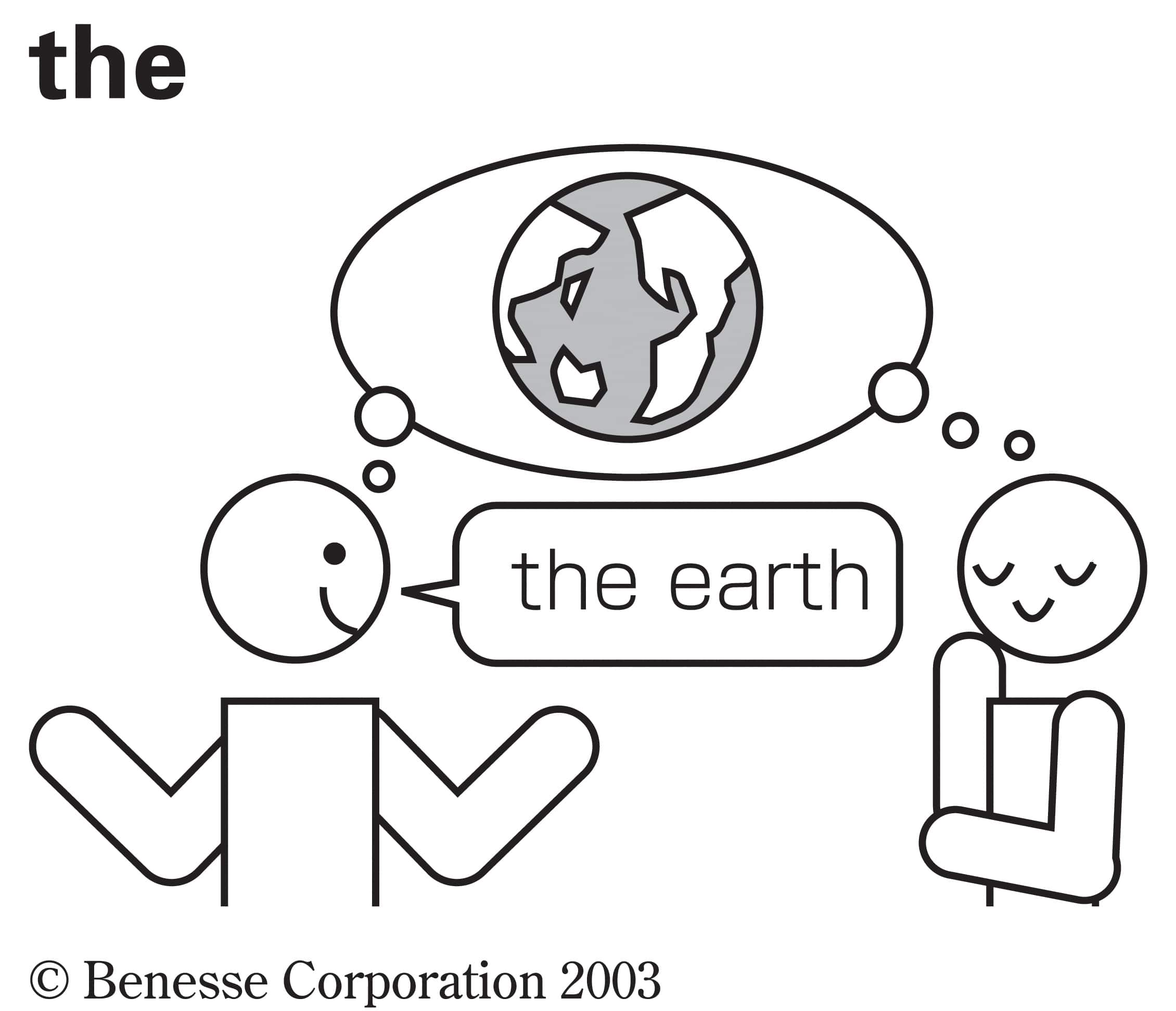
覚え方話し手と相手がある名詞情報を共有しているということを示す
覚え方話し手と相手がある名詞情報を共有しているということを示す
 |
theを使うかどうかは,話し手にとって対象が特定可能であるというだけでなく,「相手にとっても参照可能であること」が重要.相手による特定が可能な場合にはtheを使い,そうでない場合にはtheの使用を控える⇒a~2【語法】 |
〔常識的共有〕その▷1
〔文脈的共有〕その▷2
〔指示的共有〕その▷3
〔全体のうちの部分を特定〕▷4
〔単位の特定〕…年代,…歳代▷5
〔対象を特定・比較〕▷6
〔総称〕…というもの▷7
〔名詞化〕▷8
〔強調〕ほかならぬ▷9
〔文脈的共有〕その▷2
〔指示的共有〕その▷3
〔全体のうちの部分を特定〕▷4
〔単位の特定〕…年代,…歳代▷5
〔対象を特定・比較〕▷6
〔総称〕…というもの▷7
〔名詞化〕▷8
〔強調〕ほかならぬ▷9
話し手と相手の間での,対象の共有感覚が重要.共有感覚を持ちうる状況は以下の123の3通りがある
1〔常識的共有〕その,あの
2〔文脈的共有〕a(先行状況を共有して)その
b(特定可能であることを予期して)その
3〔指示的共有〕その,あの
4〔全体のうちの部分を特定〕
5〔単位の特定〕a(年代などを単位で特定して)…年代,…歳代
b(計量の単位などを特定して)
6〔対象を特定・比較して〕a((形容詞の最上級,序数詞,onlyなどの前につけて))
b((比較級の前で用いて))…のどちら;ますます,前よりずっと,今よりさらに
c((2つの比較級から成る構文の中で))
7〔総称〕(類・種の全体をさして)…というもの
8〔名詞化〕((形容詞・過去分詞に付けて))
9〔強調〕ほかならぬ,あの,まさに,…の中の…(発音{d\i´:}, 印刷では通例斜体にする)
1〔常識的共有〕その,あの
2〔文脈的共有〕a(先行状況を共有して)その
b(特定可能であることを予期して)その
3〔指示的共有〕その,あの
4〔全体のうちの部分を特定〕
5〔単位の特定〕a(年代などを単位で特定して)…年代,…歳代
b(計量の単位などを特定して)
6〔対象を特定・比較して〕a((形容詞の最上級,序数詞,onlyなどの前につけて))
b((比較級の前で用いて))…のどちら;ますます,前よりずっと,今よりさらに
c((2つの比較級から成る構文の中で))
7〔総称〕(類・種の全体をさして)…というもの
8〔名詞化〕((形容詞・過去分詞に付けて))
9〔強調〕ほかならぬ,あの,まさに,…の中の…(発音{d\i´:}, 印刷では通例斜体にする)
語法 常識的共有とは,ある集団内や特定の場面で常識とされていることを前提に,相手も対象を特定することができるだろうと考えられる場合を言う.例えばthe earthやthe sunと言えば,常識的に「地球」「太陽」のことと理解するだろうという想定が働く.the moon, the universe, the world, the sky, the seaなども同様.またHow can I get to the post office?と言えば,聞き手は常識的に「(このあたりでの最寄りの)郵便局のことである」と理解するだろうという想定が働く.一方I was not able to use my car. The tires were slashed.では,the tiresがいきなり出てくるが,この場合,「車というものにはタイヤがついている」という常識を,相手も共有しているという想定が働いている.もし相手が車がどういうものであるかを知らなければ,the tiresといきなりいうことはできない |
語法 文脈的共有とは文脈の中で対象が特定可能になる場合を言う.それには,すでに言及された対象を取り上げる場合(a)と,これからその対象を特定化する場合(b)の2つがある.例えばThe cat always gives me comfort.(aの例)では,話し手が猫を買ったという事実を聞き手が知っているという想定が働いている.ところが,bの例のようにいきなりthe personと言うことがある.このtheには対象が特定可能になることを事前に聞き手に予期させる働きがある.この例では後続のI was going to introduce to youがtheの使用を可能にしている |
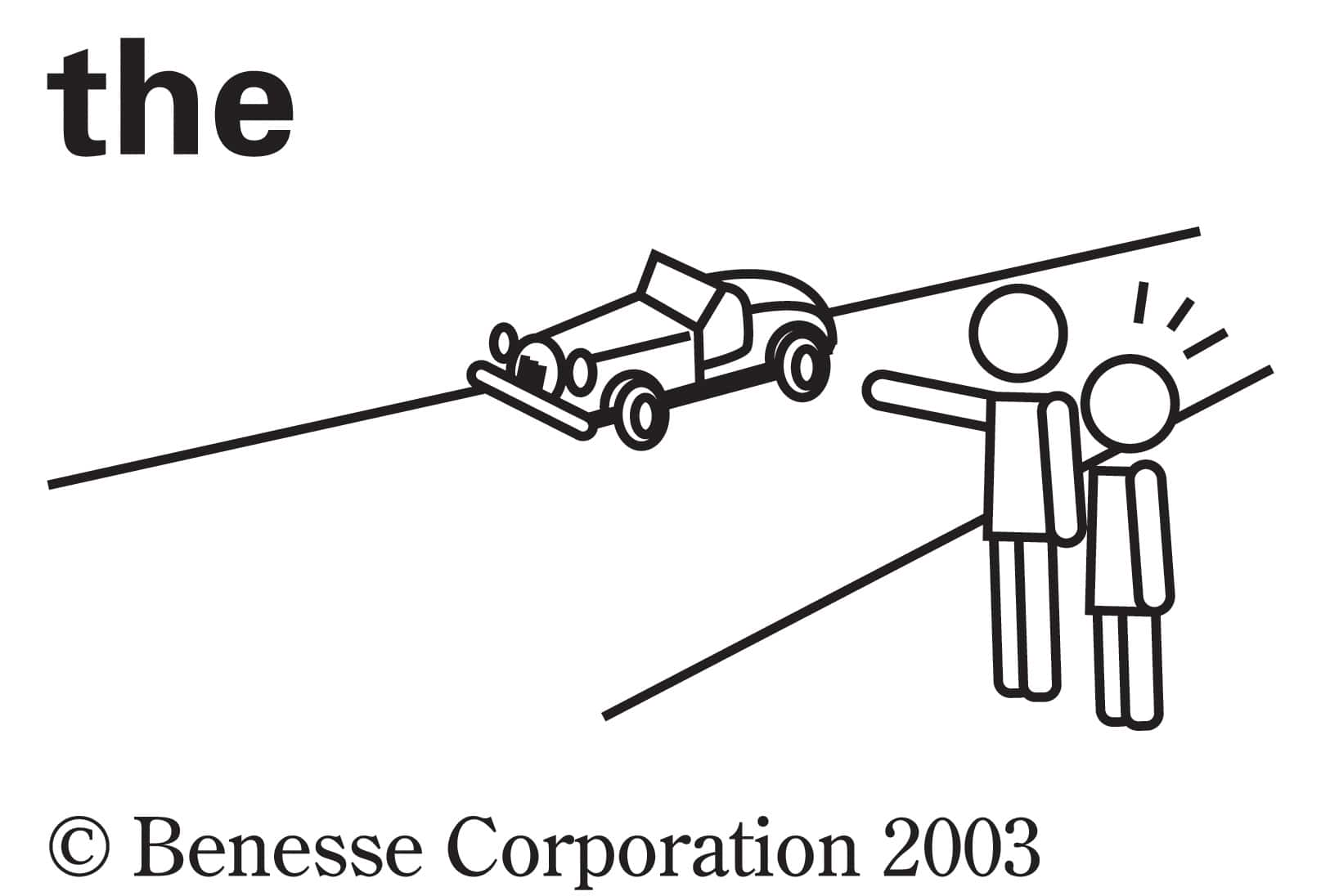
語法 指示的共有とは,文脈や聞き手の意識の中にないものでも,対象を指示することで,共有可能にする場合を言う.Look at the car across the street.の例で話し手は,発話によって聞き手の注意を「道路の向こう側にある車」に向けさせて,「その車」を特定可能としているため,話し手はthe carと言っている |
 |
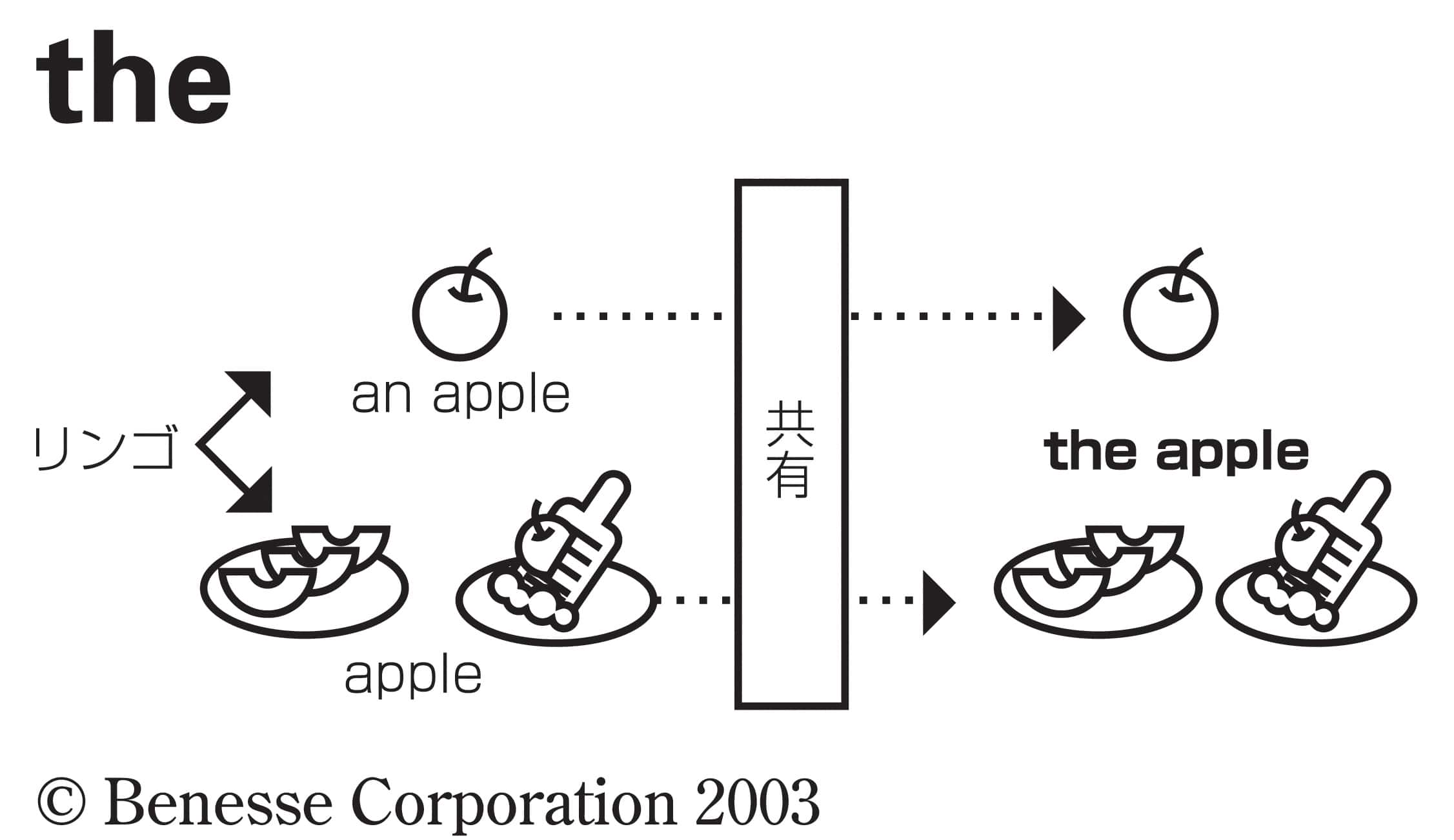
語法aとthe冠詞の考え方 冠詞を伴って名詞を表現するときは,どのような対象を想定しているかを考える.例えば「リンゴ」であれば,「どんなリンゴ」を想定しているかによって,an apple(複数個であればapples)かappleという形を選ぶ. 想定されたリンゴについての情報を,相手と共有すればthe appleと言える.theを用いるということは,相手と情報が共有されている(はずである)ということを示すからである ただし,the appleになると,もとがan appleなのかappleなのかがわからなくなり,それが「一個のリンゴ」か「すりつぶしたリンゴ」なのか,といったことがあいまいになることがある.しかしこれは,theを用いるということは,話者の間で既に情報が共有されているという認識になっているためである |
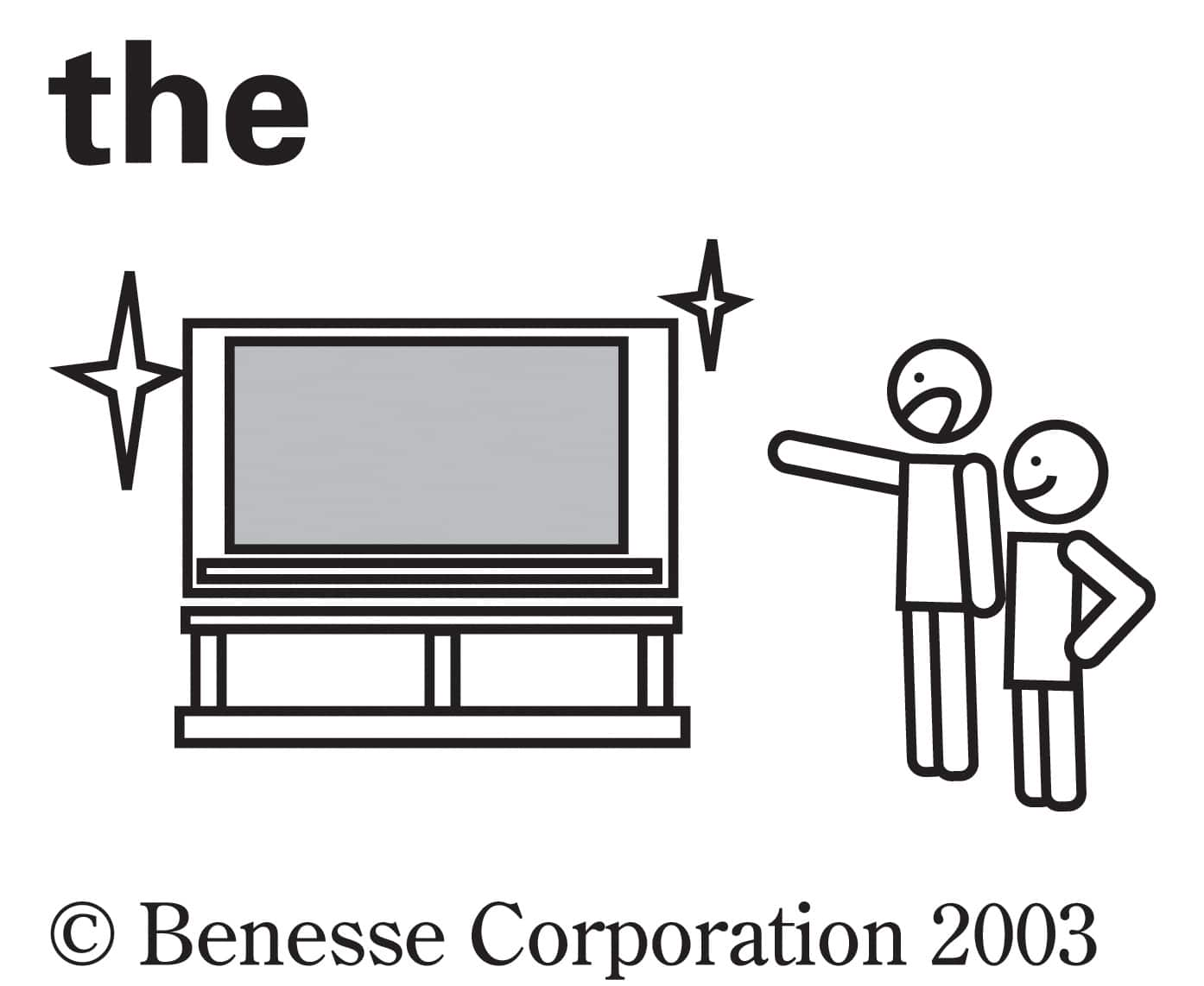 |
語法aとthe既知情報と新情報 話し手と聞き手の双方が特定可能であるということは,情報としては「既存のもの」として扱われることになる.したがって,新しい情報を表すときには「the+名詞」ではなく,「a+名詞」を用いる.例えば,A君が訪ねた家で新しいテレビを見つけ,Wow, you got a new TV.(わあ,新しいテレビを買ったんだね)と言ったとする.この状況では,A君はテレビを指差しており,相手にもそれがわかる.これは,指示的共有(3)でのtheを使用する条件に合致していると言えるが,発見した驚きを表すには,the new TVよりもa new TVのほうが適切である |
 |
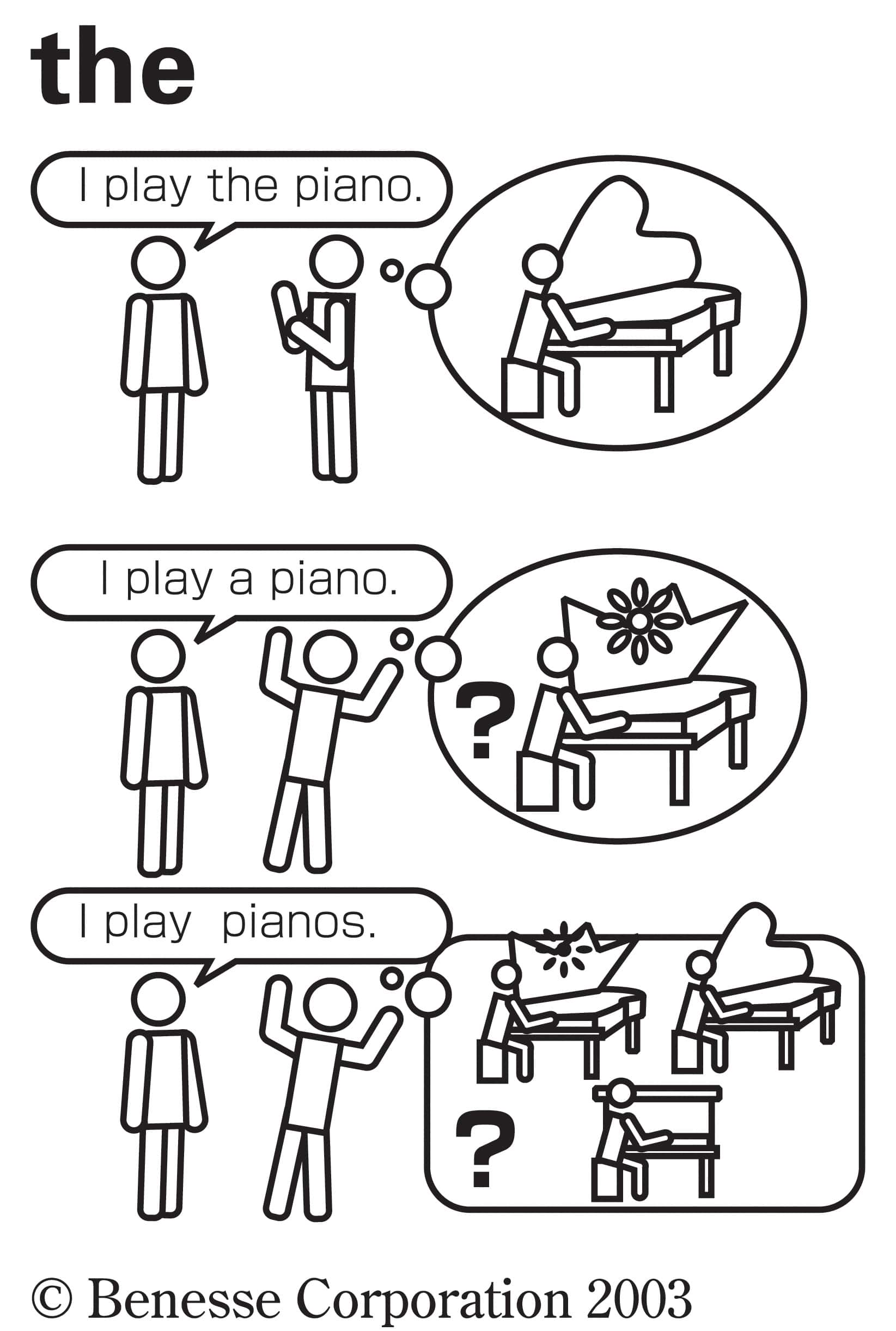
語法aとtheplay the pianoとplay baseball ①「ピアノを弾く」はplay the pianoと表す.このtheは1〔常識的共有〕であって,「あなたもご存じのいわゆるピアノ(総称としてのピアノ)」という意.ピアノは具体物なので,「ピアノを弾く」はplay a pianoと言えそうだが,形や大きさ,色など,さまざまなピアノを想定することが可能となってしまい,「ピアノという種類の中の(ある)1つ」という意になり,「何か特別のピアノを弾く」という印象を相手に与えてしまう.一方,総称であれば,複数形を用いてplay pianosと言えそうだが,「pianosはa pianoが複数ある」ということで,「いろいろな種類のピアノを弾く」と受け取られてしまう ②一方,「野球をする」はplay baseballというように無冠詞で表す.野球はスポーツであり,具体物ではない.①で述べたようにピアノは具体物であるために,さまざまなピアノを想定することが可能だが,野球には,このような意味でいろいろな種類があるわけではない.従って,野球は具体物としてとらえることができず,無冠詞のbaseballで表す |
 |
語法総称を表す用法 ①dogs 「犬という動物」のように総称を表すときは,Dogs are cute.(犬はかわいい)のように名詞の複数形を用いるのが一般的 ②the dog the dogには形式ばった響きがあるだけでなく,theには対象を特定化する働きがあるため,具体的な犬を想定しやすい.I like the dog.(私はその犬が好きだ)のように目的語の位置では特にその意が強くなる.そこで,「私は犬という動物が好きだ」と表す場合I like dogs.と言えば明確になる ③a dog aにも総称を表す機能があり(⇒a~25),A dog is cute.という言い方も可能だが,a dogを主語に持ってくると「どの犬でも(any single dog)」という強い意味にも受け取られる.またI like a dog.のように目的語の位置で用いると「何か特別な種類の犬」という印象を与えてしまう(⇒【語法】aとthe).また「イヌ科の動物」のように「種全体」を話題にするときはdogsかthe dogと言い,a dogは使えない |
Weblio実用英語辞典

the
「the」は、特定のものを指示するために名詞の前に置かれる英語の冠詞である。
1. The book you need is on the table.(必要な本はテーブルの上にある。)
2. The sun rises in the east.(太陽は東から昇る。)
3. I saw the movie you were talking about.(あなたが話していた映画を見た。)
4. The children are playing in the park.(子供たちは公園で遊んでいる。)
5. Can you pass me the salt?(塩を取ってくれますか?)
「the」とは・「the」の意味
冠詞:その、例の(特定のものを指示するために名詞の前に置かれる)
「the」の用法
冠詞
「the」は、話し手と聞き手が共に認識している特定のものや、既に言及されたもの、または一般に知られているものを指示する際に用いられる。
・例文1. The book you need is on the table.(必要な本はテーブルの上にある。)
2. The sun rises in the east.(太陽は東から昇る。)
3. I saw the movie you were talking about.(あなたが話していた映画を見た。)
4. The children are playing in the park.(子供たちは公園で遊んでいる。)
5. Can you pass me the salt?(塩を取ってくれますか?)
遺伝子名称シソーラス

The
| rat | 遺伝子名 | The |
| 同義語(エイリアス) | 11413; TH; Tyrosine 3-hydroxylase; Th; tyrosine hydroxylase; Tyrosine 3-monooxygenase | |
| SWISS-PROTのID | SWISS-PROT:P04177 | |
| EntrezGeneのID | EntrezGene:25085 | |
| その他のDBのID | RGD:3853 |
本文中に表示されているデータベースの説明

Wiktionary英語版
出典:Wiktionary
the
出典:『Wiktionary』 (2026/09/07 23:54 UTC 版)
発音
- (Received Pronunciation)
- (General American)
- 韻: -iː
- Homophone: thee
語源 1
From 中期英語 þe, from 古期英語 þē m (“the, that”, demonstrative pronoun), a late variant of sē, the s- (which occurred in the masculine and feminine nominative singular only) having been replaced by the þ- from the oblique stem.
冠詞
the
- Used before a noun phrase, including a simple noun
- The definite grammatical article that shows that the noun phrase that immediately follows it is definitely identifiable...
- ...because it has already been mentioned, is to be completely specified in the same sentence, or very shortly thereafter. [from 10th c.]
- I’m reading the book Mary reviewed. (Compare I’m reading a book Mary reviewed.)
- You live on Main Street, don't you? You know, you should tell the mayor the street needs cleaning.
- The men and women watched the man give the birdseed to the bird.
- the street that runs all the way through my hometown
-
A car is parked right outside my house. Since it's difficult to find a parking space, I hope the car won't be there later.
- the cow jumped over the moon (1760 (date first published), Mother Goose's Melody (the book title), "Hey Diddle Diddle" (the rhyme title))
- ...because it is presumed to be definitely known in context or from shared knowledge.
- Used before a noun designating something considered to be unique, or of which there is only one at a time. [from 10th c.]
- Used to indicate a certain example of (a noun) which is usually of most concern or most common or familiar. [from 12th c.]
- Used before a body part, a family member, a pet (especially of someone previously mentioned), as an alternative to a possessive pronoun. [from 12th c.]
- (colloquial) Precedes a familiar nickname or other term of address.
- Used in many idiomatic expressions and proverbs to refer to common objects, roles, or situations connected with something definite, in the manner of an analogy.
- Used before a noun designating something considered to be unique, or of which there is only one at a time. [from 10th c.]
- ...because it has already been mentioned, is to be completely specified in the same sentence, or very shortly thereafter. [from 10th c.]
- When stressed, indicates that it describes something which is considered to be best or exclusively worthy of attention. [from 18th c.]
-
2012 May 27, Nathan Rabin, “TV: Review: THE SIMPSONS (CLASSIC): “New Kid On The Block” (season 4, episode 8; originally aired 11/12/1992)”, in The Onion AV Club:
-
“New Kid On The Block” doubles as a terrific showcase for the Sea Captain who, in the grand tradition of Simpsons supporting characters, quickly goes from being a stereotype to an archetype, from being a crusty sea-captain character to the crusty sea-captain character.
-
- When stressed, used before the name of a famous person, to distinguish said person from a hypothetical lesser-known person with the same name.
-
1928, Agatha Christie, The Mystery of the Blue Train:
-
"My name," he said, "is Hercule Poirot." "Not," the Commissary stammered, "not the Hercule Poirot?"
-
-
- Used before a noun phrase beginning with superlative or comparative adjective or an ordinal number, indicating that the noun refers to a single item.
-
That was the juiciest apple pie ever.
-
- Introducing a singular term to be taken generically: preceding a name of something standing for a whole class. [from 9th c.]
-
1994, Nelson Mandela, Long Walk to Freedom: The Autobiography of Nelson Mandela, London: Abacus, published 2010, page 536:
-
Stern and God-fearing, the Afrikaner takes his religion seriously.
-
- The downy woodpecker can be found in the same environments as the hairy woodpecker.
-
- Used with the plural of a surname to indicate the entire family.
- The definite grammatical article that shows that the noun phrase that immediately follows it is definitely identifiable...
- Used with an adjective
使用する際の注意点
別の表記
- da (d'), teh (informal or dialectal)
- de (eye dialect, AAVE)
- t' (Northern England)
- th' (poetic, usually before a vowel sound)
- ye (archaic), y (archaic, abbreviation), yͤ (archaic, abbreviation)
- ẏe (obsolete), ẏ (obsolete, abbreviation)
同意語
派生語
参照
語源 2
From 中期英語 the, thy, thi, from 古期英語 þē̆, probably a neuter instrumental form ("by that, thereby")—alongside the more common þȳ and þon—of the demonstrative pronoun sē ("that"). Compare Dutch des te ("the, the more"), German desto ("the, all the more"), Norwegian fordi and Norwegian av di ("because"), Icelandic því (“the; because”), Faroese tí, Swedish ty.
副詞
the (not comparable)
- With a comparative or with more and a verb phrase, establishes a correlation with one or more other such comparatives.
- The hotter(,) the better. (comma usually omitted in such very short expressions)
- With a comparative, and often with for it, indicates a result more like said comparative. This can be negated with none.
- (with a superlative adjective) Beyond all others.
使用する際の注意点
This is called the "comparative correlative", but it is also known as the "correlative construction", the "conditional comparative", or the "the...the construction".
語源 3
(This etymology is missing or incomplete. Please add to it, or discuss it at the Etymology scriptorium.)
前置詞
the
語源 4
代名詞
the
参考
参照
- “the”, in OneLook Dictionary Search.
語源 1
冠詞
the
- alternative form of þe (“the”)
- 14th c. Geoffrey Chaucer, The Canterbury Tales. General Prologue: 1-2.
- 14th c. Geoffrey Chaucer, The Canterbury Tales. General Prologue: 1-2.
語源 2
語源 3
語源 4
-the
出典:『Wiktionary』 (2026/02/24 03:46 UTC 版)
語源 1
Inherited from 古期英語 -þ, -þu (abstract nominal suffix), from Proto-West Germanic *-iþu, from Proto-Germanic *-iþō, from Proto-Indo-European *-iteh₂.
発音
- IPA: /-θ(ə)/, /-ð(ə)/
- (following fricatives) IPA: /-t(ə)/
接尾辞
-the
- (rarely productive) Forms abstract nouns denoting a state or attribute, usually from adjectives but occasionally from verbs; -th, -ness
使用する際の注意点
派生語
参照
- “-th(e, suf.”, in MED Online, Ann Arbor, Mich.: University of Michigan, 2007.
語源 2
Inherited from 古期英語 -þa (ordinal suffix), from Proto-West Germanic *-dō, from Proto-Germanic *-dô; reinforced by the higher ordinals formed with -oþa.
発音
- IPA: /-θ(ə)/, /-ð(ə)/
- (following fricatives) IPA: /-t(ə)/
- (influenced by Old Norse) IPA: /-d(ə)/
使用する際の注意点
派生語
eightetithe
fiftithe
fourtithe
nyntithe
seventithe
sixtithe
tenthe
the-
出典:『Wiktionary』 (2026/02/10 17:36 UTC 版)
別の表記
- theo-
語源
From Latin theo- (“god”), combining form of theos (“god”); from Ancient Greek θεο- (theo-, “god”), combining form of θεός (theós, “god”).
発音
- IPA: /θiː/
派生語
参照
- “theo-, comb. form”, in OED Online
 , Oxford: Oxford University Press, 2015-03-17.
 - Douglas Harper (2001–2026), “theo-”, in Online Etymology Dictionary.

別の表記
- theo-
語源
From Ancient Greek θεο- (theo-, “god”), combining form of θεός (theós, “god”).
参照
- "Thěos", in Nicholas Salmon, Stemmata latinitatis: or, An etymological Latin dictionary, London, printed for the author by W. and C. Spilsbury, 1796, v. 2, pp. 675–676. →OCLC.
- “theo-, comb. form”, in OED Online , Oxford: Oxford University Press, 2015-03-17.
- Douglas Harper (2001–2026), “theo-”, in Online Etymology Dictionary.
ウィキペディア英語版
出典:Wikipedia
The...
出典:『Wikipedia』 (2011/04/30 04:24 UTC 版)
英語による解説
ウィキペディア英語版からの引用
- 引用
The... is the debut extended play by South Korean boyband JYJ (then using the name Junsu/Jejung/Yuchun), a group formed of three of the five members of TVXQ. It was released in Japanese language under Rhythm Zone, the band's former Japanese label as a part of TVXQ. The release was commercially successful, reaching number one on Oricon's weekly albums chart.
Weblio例文辞書
the
例文
a
2
例文
例文
that
例文
since
5
どのもの
例文
which
6
例文
his
例文
have
8
こと
例文
a thing
例文
any
例文
11
例文
12
例文
例文
a being
14
むら
例文
a village
15
例文
a seine
16
例文
17
18
19
おおわれる
例文
21
例文
22
例文
of something under discussion, that which has just been made mention of
例文
you
24
なってゆく
例文
26
例文
27
なる
28
しんとする
29
例文
例文
yes
Weblio例文辞書はプログラムで機械的に意味や英語表現を生成しているため、不適切な項目が含まれていることもあります。ご了承くださいませ。


- Copyright (c) 1995-2026 Kenkyusha Co., Ltd. All rights reserved.
- Copyright © Benesse Holdings, Inc. All rights reserved.

- © 2000 - 2026 Hyper Dictionary, All rights reserved

- ※この記事は「日本法令外国語訳データベースシステム」の2010年1月現在の情報を転載しております。

- All Rights Reserved, Copyright © Japan Science and Technology Agency
- DBCLS Home Page by DBCLS is licensed under a Creative Commons 表示 2.1 日本 License.

- Copyright (C) 1994- Nichigai Associates, Inc., All rights reserved.
「斎藤和英大辞典」斎藤秀三郎著、日外アソシエーツ辞書編集部編
- Wiktionary
- Text is available under Creative Commons Attribution-ShareAlike (CC-BY-SA) and/or GNU Free Documentation License (GFDL).
Weblio英和・和英辞典に掲載されている「Wiktionary英語版」の記事は、Wiktionaryのthe (改訂履歴)、-the (改訂履歴)、the- (改訂履歴)の記事を複製、再配布したものにあたり、Creative Commons Attribution-ShareAlike (CC-BY-SA)もしくはGNU Free Documentation Licenseというライセンスの下で提供されています。
- Wikipedia
- Text is available under Creative Commons Attribution-ShareAlike (CC-BY-SA) and/or GNU Free Documentation License (GFDL).
Weblio英和・和英辞典に掲載されている「Wikipedia英語版」の記事は、WikipediaのThe... (改訂履歴)の記事を複製、再配布したものにあたり、Creative Commons Attribution-ShareAlike (CC-BY-SA)もしくはGNU Free Documentation Licenseというライセンスの下で提供されています。
- CMUdict
- CMUdict is Copyright (C) 1993-2008 by Carnegie Mellon University.
