

研究社 新英和中辞典

T.O.
to
to /(弱形) (子音の前) tʊ, tə, (母音の前) tu, (文または節の終わり) tuː; (強形) túː/

1 [方向を表わして; cf. from 2]
a [到着の意を含ませずに方向を表わして] …(のほう)へ.
b [到着の意を含めて方向を表わして; cf. from 1] …まで,…へ,…に.
c [方角を表わして] …のほうに(当たって).
2 [変化の方向を表わして] …へ,…に,…のほうへ.
3 a [到達点を表わして] …まで,…に至るまで.
b [限度・程度・結果などを表わして] …に至るまで,…するほどに.
4 [結果・効果を表わして]
a [通例 to a person's に感情を表わす名詞を伴って] …したことには,…にも.
b [結果・効果を表わす句を導いて].
5 [時間を表わして]
a [時間・期限の終わりを表わして; cf. from 2] …まで.
b (時刻が)…の(何分)前で (《主に米国で用いられる》 of,before).
6 [目的を表わして] …のために,…に.
7 [対向を表わして] …に向かい合って,…に相対して.
8 [行為・作用の対象を表わして]
a …に対して,…に.
b …のために.
c [間接目的語に相当する句を導いて] …に.
d …にとっては,…には.
9 [接触・結合・付着・付加を表わして] …に,…へ; …の上に,…に加えて.
10 a [適合・一致を表わして] …に合わせて,…どおりに[の].
b [呼応を表わして] …に答えて,…に応じて.
c [随伴を表わして] …に合わせて,…につれて.
11 a [比較を表わして] …に比べて,…より.
b [対比を表わして] …に対して,…対,…につき.
12 [付属・関連・関係を表わして] …の,…に(とっての).
1 [名詞用法] …すること:
a [主語として].
b [目的語として].
c [補語として].
2 [形容詞用法]
a …するための,…する.
b …する価値のある.
3 [副詞用法]
a [目的を表わして] …するために,…するように 《★【用法】 目的を表わす否定には in order not to do または so as not to do を用いる》.
b [程度の基準を表わして].
c [原因・理由を表わして].
d [適応範囲を限定して] …するのに.
e [結果を表わして] …するようになるまで; …してみると.
f [文全体にかかる句をなして] …すれば,…するとして.
4 [その他の用法で]
a [be+to do で] ⇒BE to do (cf. →be 助動詞 3).
b [連結詞として].
c [+目+to do で].
d [疑問詞+to do で].
1 (ドアなどが)閉まって.
2 正気に(立ち戻って).
3 正常な[本来の]位置に(向けて).
4 身近に.
5 [特定の動詞と結合して成句をなして] (…に)取りかかって.
前置詞
A
- 用例
- 用例
-
- 用例
-
- 用例
-
- 用例
-
- 用例
-
- 用例
-
- 用例
-
- ⇒rise to the OCCASION 【成句】.
- 用例
-
- 用法
-
- (2) この不定詞は前後の関係で明らかな時には略され to だけが残ってその代用をする
-
![[N16-A26B]](https://cdn.weblio.jp/e7/wbr/CHUJITEN/N16-A26B_F-000000_B-FFFFFF.png) “Do you want to go?"—“I should like to (=to go)."
“Do you want to go?"—“I should like to (=to go)." - (3) 否定形は to の直前に否定語 (not, never, etc.)を置き, don't to do とはいわない
- I'll ask him not [never] to say that again. 彼にそのことを二度と言わないように頼もう.
- (4) 通例 to と原形動詞は直結するが, 時には意味の関係を明確に表わすために副詞が to と原形動詞の中間に置かれることがある (cf. split infinitive)
- My job is to quickly retrieve tennis balls that are out of play. 私の務めはライン外に出たテニスボールをすばやく取ってくることです.
- 用例
-
- 用例
-
- To tell the truth, I don't like it. 本当を言えば私は気にくわない.
- 用例
―/túː/
副詞
【語源】
調べた例文を記録して、効率よく覚えましょう
Weblio会員無料で登録できます
 履歴機能
過去に調べた単語を確認できる
履歴機能
過去に調べた単語を確認できる
 語彙力診断
診断回数が4回に増加
語彙力診断
診断回数が4回に増加
 マイ単語帳
便利な学習機能付き
マイ単語帳
便利な学習機能付き
 マイ例文帳
文章で意味を理解できる
マイ例文帳
文章で意味を理解できる
Eゲイト英和辞典

to
音節to発音記号・読み方((弱))tə(子音の前),tu(母音の前);((強))túː
(通例強勢をもつ)
覚え方…に向いて
前置詞
副詞
(通例強勢をもつ)
覚え方…に向いて
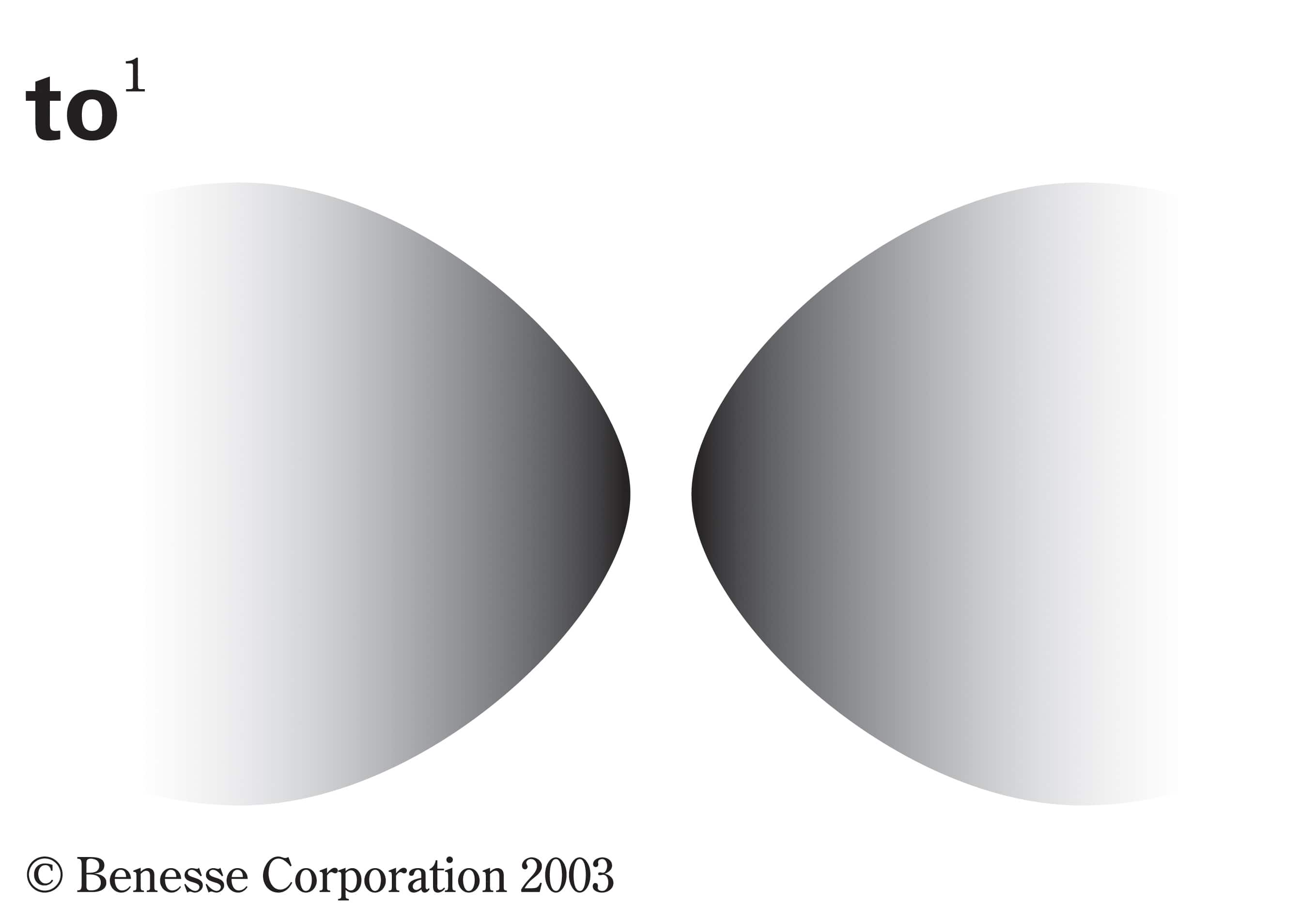 |
単に「向き」を示すだけでなく,コア図のように「ある対象に向き合って(相対して)」ということも表す |
Ⅰ対象に向いて前置詞
├〔到着点〕…に▷1
├〔方向〕…に▷2
├〔状態の変化〕…の状態に▷3
├〔行為の行き先〕…に対して▷4
├〔対象への持続性〕…に▷5
└〔判断・評価などの観点〕…にとって▷6
Ⅱ限度を示して前置詞
├〔時間〕…まで▷7
├〔数〕…まで▷8
└〔場所・程度〕…まで▷9
Ⅲ対象に相対して前置詞
├〔関係〕…に対して▷10
├〔比率・割合〕…に対して▷11
├〔対比〕…に対して▷12
├〔適合〕…に合う▷13
├〔合致〕…と…を向き合わせて▷14
├〔付属・所属〕…に▷15Ⅰ名詞的用法
├((主語))…することは▷1
├((目的語))…することを▷2
└((補語))…することだ▷3a
Ⅱ形容詞的用法
├…するための▷4
└…すべきか▷5
Ⅲ副詞的用法
├〔目的〕…するために▷6
├〔理由〕…して▷7
├〔結果〕…となる▷8
├〔条件〕…すれば▷9
├〔基準・根拠〕…するには▷10
└〔独立用法〕…すると▷11
├〔到着点〕…に▷1
├〔方向〕…に▷2
├〔状態の変化〕…の状態に▷3
├〔行為の行き先〕…に対して▷4
├〔対象への持続性〕…に▷5
└〔判断・評価などの観点〕…にとって▷6
Ⅱ限度を示して前置詞
├〔時間〕…まで▷7
├〔数〕…まで▷8
└〔場所・程度〕…まで▷9
Ⅲ対象に相対して前置詞
├〔関係〕…に対して▷10
├〔比率・割合〕…に対して▷11
├〔対比〕…に対して▷12
├〔適合〕…に合う▷13
├〔合致〕…と…を向き合わせて▷14
├〔付属・所属〕…に▷15Ⅰ名詞的用法
├((主語))…することは▷1
├((目的語))…することを▷2
└((補語))…することだ▷3a
Ⅱ形容詞的用法
├…するための▷4
└…すべきか▷5
Ⅲ副詞的用法
├〔目的〕…するために▷6
├〔理由〕…して▷7
├〔結果〕…となる▷8
├〔条件〕…すれば▷9
├〔基準・根拠〕…するには▷10
└〔独立用法〕…すると▷11
前置詞
Ⅰ対象に向いて
1〔到着点〕…に
3〔状態の変化〕…の状態に(なる[する])
4〔行為の行き先〕a…に対して(何かをする)
b…に対して(何かが起こる)
5〔対象への持続性〕…に(固執する),…に(執着する)
6〔判断・評価などの観点〕…にとって(…だ)
Ⅱ限度を示して
7〔時間〕…まで,…に至るまで
8〔数〕…まで
9〔場所・程度〕a…まで
b…まで,…に至る
Ⅲ対象に相対して
10〔関係〕…に対して(…の関係にある),…に対して(位置している)
11〔比率・割合〕…に対して,…対
12〔対比〕…に対して,…より
13〔適合〕…に合う,…に対する
14〔合致〕((同じ名詞を反復させて))…と…を向き合わせて
15〔付属・所属〕…に(属して,付着して)
16((独立用法で副詞的に))
1〔到着点〕…に
3〔状態の変化〕…の状態に(なる[する])
4〔行為の行き先〕a…に対して(何かをする)
|
b…に対して(何かが起こる)
5〔対象への持続性〕…に(固執する),…に(執着する)
6〔判断・評価などの観点〕…にとって(…だ)
|
Ⅱ限度を示して
7〔時間〕…まで,…に至るまで
8〔数〕…まで
9〔場所・程度〕a…まで
b…まで,…に至る
Ⅲ対象に相対して
10〔関係〕…に対して(…の関係にある),…に対して(位置している)
|
11〔比率・割合〕…に対して,…対
12〔対比〕…に対して,…より
13〔適合〕…に合う,…に対する
14〔合致〕((同じ名詞を反復させて))…と…を向き合わせて
15〔付属・所属〕…に(属して,付着して)
16((独立用法で副詞的に))
副詞
((不定詞を導いて))
2((目的語))…することを;((形式目的語itを用いて))…することを
3a((be動詞の主格補語))…することだ(しばしば口語ではtoは省略される)
b((seem, sound, appearなどの主格補語))…するらしい
c((目的格補語))…であると
Ⅱ形容詞的用法
4…するための,…すべき,…するような;…するという;…するほど
5((関係代名詞の後に用いて))…すべきか,できるか
Ⅲ副詞的用法
6〔目的〕…するために(in order to, so as so)
7〔理由〕…して;…するとは
8〔結果〕(…して)…となる
9〔条件〕…すれば(…と思う[みなす]かもしれない)
10〔基準・根拠〕…するには;…するとは
11〔独立用法〕…すると,…すれば
2((目的語))…することを;((形式目的語itを用いて))…することを
3a((be動詞の主格補語))…することだ(しばしば口語ではtoは省略される)
b((seem, sound, appearなどの主格補語))…するらしい
|
c((目的格補語))…であると
Ⅱ形容詞的用法
4…するための,…すべき,…するような;…するという;…するほど
5((関係代名詞の後に用いて))…すべきか,できるか
Ⅲ副詞的用法
6〔目的〕…するために(in order to, so as so)
7〔理由〕…して;…するとは
8〔結果〕(…して)…となる
9〔条件〕…すれば(…と思う[みなす]かもしれない)
|
10〔基準・根拠〕…するには;…するとは
11〔独立用法〕…すると,…すれば
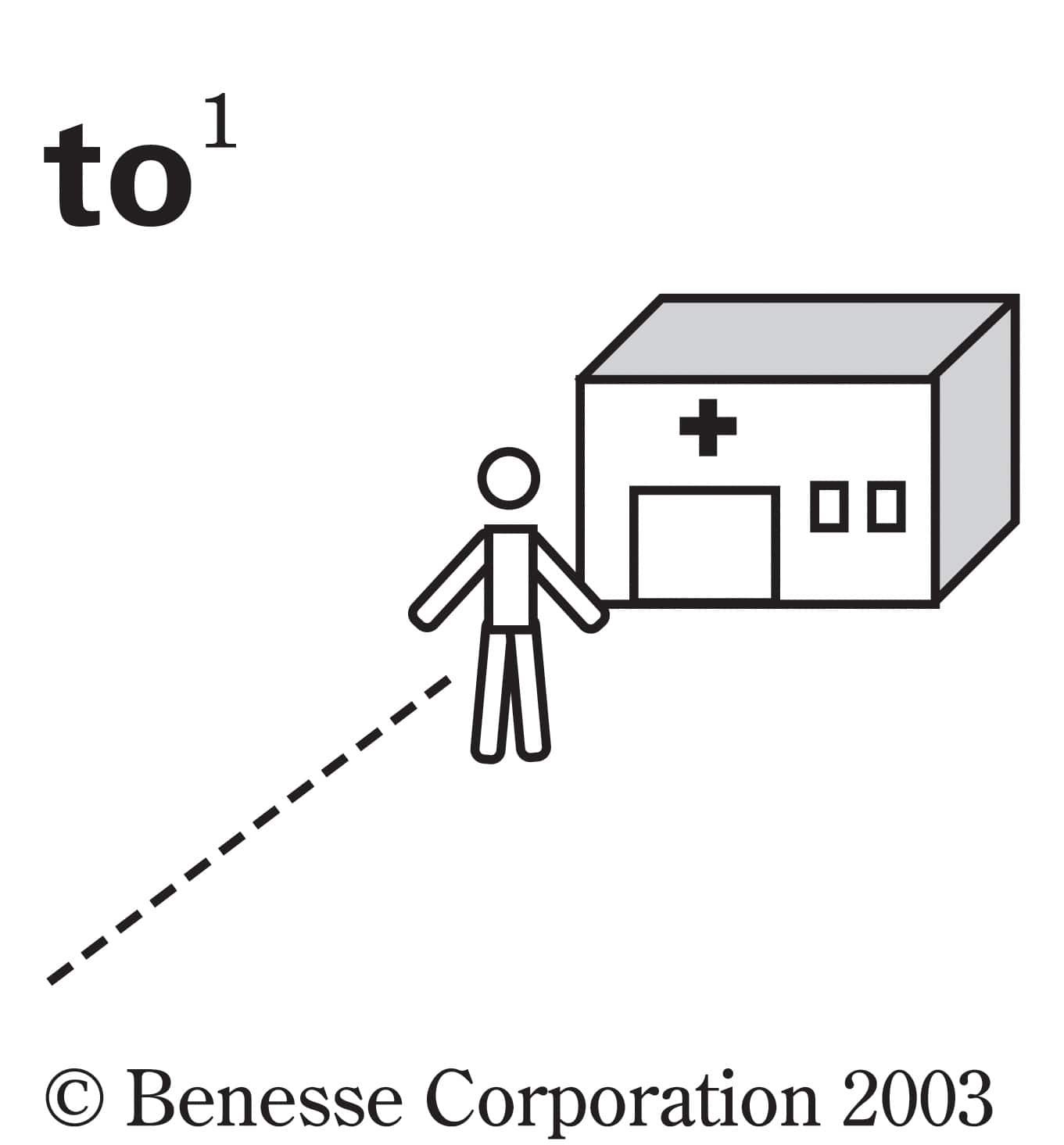
語法 She went to the drugstore.「彼女は薬局まで行った」という意で,ここのtoは「(移動して)薬局と向き合う状態になる」ということを表している.従って,このtoは「方向」ではなく「到着点」を表す.そこでShe went to the drugstore at seven a.m.となった場合は,薬局に着いたのが7時であって家を出て薬局に向かった(行った)のが7時ということではない 「方向」を表すにはforあるいはtowardを用いる.She went for [toward] the drugstore.では「方向」しか表さないため,薬局に向かったものの,そこに到着したかどうかまでは明確ではない 2〔方向〕…に,…へ |
 |
語法不定詞を導くto toには以下のように不定詞を導く用法があるが,このtoの品詞上の位置付けについて定説はない.しかし,意味的には前置詞のtoと共通するところがある I want to visit Okinawa.私は沖縄を訪れたい 前置詞toは「何かに向かう(向き合う)」という関係を表し,ここからto doは「ある行為に向かう」,つまり「未来に向かう(未来志向)」という意味合いが生まれる.この例では「沖縄を訪れる」という未来のことに向いている.このように,不定詞を導くtoにも,前置詞toのコア「…に向いて」が表れている ただし,例えばI'm happy to see you here.のような「理由」を表す用法でのtoの働きは「未来志向」ではなく「相対関係」である.つまり,to see you hereはI'm happyに対する理由になっており,「ここであなたに会えるとは(私はうれしい)」という意になる Ⅰ名詞的用法 1((主語))…することは;((形式主語itを用いて後置して))…することは |
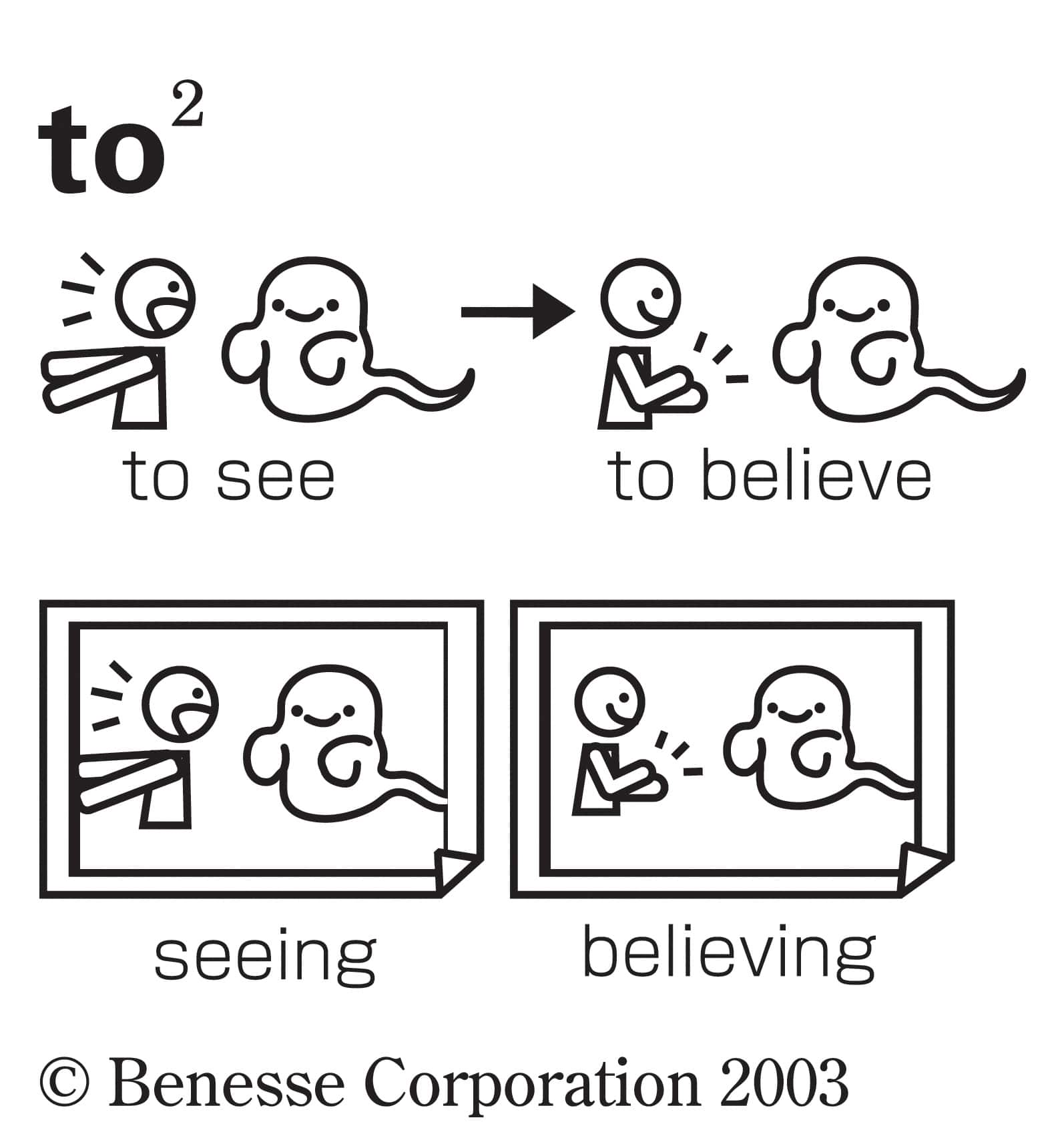
語法不定詞の名詞的用法to doと動名詞doing 不定詞の名詞的用法to doと動名詞doingはともに動詞を名詞化する方法で,To see is to believe.とSeeing is believing.は似た表現とみなされる.しかし,不定詞は予定された動作・行為を示すため動詞的意味合いが強く,動名詞は動作が抽象化されているため名詞的意味合いが強くなる.そこで,不定詞のTo see is to believe.はtoの働きから未来志向的な動作が含意されて(上の【語法】),「見てごらん,すると信じるようになるから」という意味になり,to see, そしてto believeを順番にとらえるような感じがある.一方,Seeing is believing.は手続き的というより,「見ること,それはすなわち信じることである」という意で,seeingとbelievingを同時にとらえるようなイメージがあり,図のように2枚の写真を見るような感じがある |
 |
Weblio実用英語辞典

to
「to」は「~へ」「~に」「~まで」などの意味を持つ英単語であり、前置詞としての用法が最も一般的であるが、副詞としても使用される。
前置詞:~へ、~に、~まで、~を目指して、~に対して、(不定詞を導いて)〜すること、〜するための、〜するために
副詞:意識が戻って、(ドアが)閉まって
1. I am going to the store.(私は店へ行く。)
2. She gave the book to him.(彼女はその本を彼に渡した。)
3. We walked to the park.(私たちは公園まで歩いた。)
4. He is committed to improving his skills.(彼は自分のスキルを向上させることに尽力している。)
5. They are ready to start the project.(彼らはプロジェクトを始めるための準備ができている。)
1. Make sure the door is locked and to.(ドアが閉まって施錠されていることを確認してください。)
2. After fainting, it took her a few minutes to come to.(気絶した後、彼女が意識を取り戻すのに数分かかった。)
3. The shop is closed; the sign says "Back at 2 PM, keep the door to."(その店は閉まっている。看板には「午後2時に戻ります、ドアを閉めておいてください」と書かれている。)
4. He knocked until the door swung to.(ドアが閉まるまで彼はノックし続けた。)
5. When she came to, she found herself in a hospital bed.(彼女が意識を取り戻したとき、自分が病院のベッドにいることに気づいた。)
「to」とは・「to」の意味
to前置詞:~へ、~に、~まで、~を目指して、~に対して、(不定詞を導いて)〜すること、〜するための、〜するために
副詞:意識が戻って、(ドアが)閉まって
toの用法
前置詞
~へ、~に、~まで、~を目指して、~に対して、(不定詞を導いて)〜すること、〜するための、〜するために「to」が前置詞として使われる場合、方向性や目的地、目的、関係性を示す。具体的な例を以下に示す。
・例文1. I am going to the store.(私は店へ行く。)
2. She gave the book to him.(彼女はその本を彼に渡した。)
3. We walked to the park.(私たちは公園まで歩いた。)
4. He is committed to improving his skills.(彼は自分のスキルを向上させることに尽力している。)
5. They are ready to start the project.(彼らはプロジェクトを始めるための準備ができている。)
副詞
意識が戻って、(ドアが)閉まって「to」が副詞として使われる場合、主に「閉じている」や「意識が戻る」といった状態を示す。具体的な例を以下に示す。
・例文1. Make sure the door is locked and to.(ドアが閉まって施錠されていることを確認してください。)
2. After fainting, it took her a few minutes to come to.(気絶した後、彼女が意識を取り戻すのに数分かかった。)
3. The shop is closed; the sign says "Back at 2 PM, keep the door to."(その店は閉まっている。看板には「午後2時に戻ります、ドアを閉めておいてください」と書かれている。)
4. He knocked until the door swung to.(ドアが閉まるまで彼はノックし続けた。)
5. When she came to, she found herself in a hospital bed.(彼女が意識を取り戻したとき、自分が病院のベッドにいることに気づいた。)
遺伝子名称シソーラス

to
| fly | 遺伝子名 | to |
| 同義語(エイリアス) | Protein takeout precursor; CT33074; takeout; CG11853 | |
| SWISS-PROTのID | SWISS-PROT:Q9VBV3 | |
| EntrezGeneのID | EntrezGene:43036 | |
| その他のDBのID | FlyBase:FBgn0039298 |
| fly | 遺伝子名 | TO |
| 同義語(エイリアス) | Ver; Tryptophan pyrrolase; Tryptophan 2,3-dioxygenase; v; CG2155; 152559_at; vm; NP_511113; vermilion; Protein vermilion; CG5163 | |
| SWISS-PROTのID | SWISS-PROT:P20351 | |
| EntrezGeneのID | EntrezGene:32026 | |
| その他のDBのID | FlyBase:FBgn0003965 |
| human | 遺伝子名 | TO |
| 同義語(エイリアス) | Tryptophan pyrrolase; TRPO; Tryptophan 2,3-dioxygenase; Tryptamin 2,3-dioxygenase; Tryptophanase; tryptophan 2,3-dioxygenase; Tryptophan oxygenase; TDO; TPH2; TDO2 | |
| SWISS-PROTのID | SWISS-PROT:P48775 | |
| EntrezGeneのID | EntrezGene:6999 | |
| その他のDBのID | HGNC:11708 |
| mouse | 遺伝子名 | TO |
| 同義語(エイリアス) | TRPO; Tryptophan pyrrolase; Tryptophan 2,3-dioxygenase; Tryptamin 2,3-dioxygenase; Tryptophanase; tryptophan 2,3-dioxygenase; Tryptophan oxygenase; TDO; Tdo; Tdo2; AA407491 | |
| SWISS-PROTのID | SWISS-PROT:P48776 | |
| EntrezGeneのID | EntrezGene:56720 | |
| その他のDBのID | MGI:1928486 |
| mouse | 遺伝子名 | to |
| 同義語(エイリアス) | toppler | |
| SWISS-PROTのID | --- | |
| EntrezGeneのID | --- | |
| その他のDBのID | MGI:2653506 |
| rat | 遺伝子名 | TO |
| 同義語(エイリアス) | TRPO; Tryptophan pyrrolase; Tryptophan 2,3-dioxygenase; tryptophan-23-dioxygenase; Tryptamin 2,3-dioxygenase; Tryptophanase; tryptophan 2,3-dioxygenase; Tryptophan oxygenase; Tdo; Tdo2 | |
| SWISS-PROTのID | SWISS-PROT:P21643 | |
| EntrezGeneのID | EntrezGene:64206 | |
| その他のDBのID | RGD:68370 |
| worm | 遺伝子名 | TO |
| 同義語(エイリアス) | TRPO; Tryptophan pyrrolase; WP:CE01822; C28H8.11; C28H8.11b.2; C28H8.11c.3; CE39680; Tryptamin 2,3-dioxygenase; C28H8.11b.1; WP:CE39680; Tryptophan oxygenase; C28H8.11b; C28H8.11c.2; WP:CE32153; CE01822; C28H8.11c; Tryptophanase; Putative tryptophan 2,3-dioxygenase; C28H8.11a; C28H8.11c.1; CE32153 | |
| SWISS-PROTのID | SWISS-PROT:Q09474 | |
| EntrezGeneのID | EntrezGene:175836 | |
| その他のDBのID | WormBase:WBGene00016201 |
| zfish | 遺伝子名 | TO |
| 同義語(エイリアス) | TRPO; Tryptophan pyrrolase; fi30d08; Tryptophan 2,3-dioxygenase; Tryptamin 2,3-dioxygenase; zgc:63488; tdo2; wu:fi30d08; Tryptophanase; Tryptophan oxygenase; Tdo2 | |
| SWISS-PROTのID | SWISS-PROT:Q7SY53 | |
| EntrezGeneのID | EntrezGene:334082 | |
| その他のDBのID | ZFIN:ZDB-GENE-030131-6014 |
本文中に表示されているデータベースの説明
- SWISS-PROT

- スイスバイオインフォマティクス研究所と欧州バイオインフォマティクス研究所によって開発・運営されているタンパク質のアミノ酸配列のデータベース。
- EntrezGene
- NCBIによって運営されている遺伝子データベース。染色体上の位置、配列、発現、構造、機能、ホモロジーデータなどが含まれている。
- FlyBase
- 米英の大学のショウジョウバエの研究者などにより運営される、ショウジョウバエの生態や遺伝子情報に関するデータベース。
- HGNC
- HUGO遺伝子命名法委員会により運営される、ヒト遺伝子に関するデータベース。
- MGI
- 様々なプロジェクトによる、研究用マウスの遺伝的・生物学的なデータを提供するデータベース。
- RGD
- ウィスコンシン医科大学により運営される、ラットの遺伝子・ゲノム情報のデータベース。
- WormBase
- 欧米の研究所や大学により運営されている、研究用の線虫の生態や遺伝子情報に関するデータベース。
- ZFIN
- ゼブラフィッシュ遺伝子命名法委員会により運営されている、研究用の淡水魚ゼブラフィッシュの遺伝子・ゲノム情報のデータベース。
Wiktionary英語版
出典:Wiktionary
-to
出典:『Wiktionary』 (2026/05/28 17:47 UTC 版)
接尾辞
-tō (present infinitive -tāre, perfect active -tāvī, supine -tātum); first conjugation
使用する際の注意点
This suffix is one of many (including -tus, -tor, -tiō, -tim, -tō, -tūra) that all use the same verb stem as the supine, perfect passive participle, and/or future active participle, found in the verb's fourth principal part. This stem is conventionally considered to end in -t- (or for some verbs, -s-), which would imply analyzing the suffixes as -us, -or, -io, -im, etc. However, from an etymological perspective it is more accurate to identify -t-/-s- as the initial consonant of these suffixes.
- Most 1st conjugation verbs attach -t- after the theme vowel -ā-: e.g. amō, amātor, but a few form this principal part differently: e.g. secō > sectiō. Similarly, many 4th conjugation verbs use -ī-t-, but some use other formations, e.g. saliō > saltō.
- 2nd conjugation verbs are less consistent. Many use -i-t- (moneō, monitor); some attach -t- after the final consonant of the root (doceō > doctor); a considerable number lack this principal part. Monosyllabic stems use -ē-t-: ex-pleō (stem plē-) > explētiō.
- Many 3rd conjugation verbs (and some 1st, 2nd and 4th) attach -t- directly after a consonant, which can cause complex changes. When -t- is placed after -t- or -d-, the consonants merge to -ss- (simplified to -s- if not preceded by short vowel): metō > messor, caedo > caesūra. Occasionally -s- is used after other consonants: curro > cursim, mergo > mersō. Before -t-, -b- -g- are regularly devoiced to -p- -c-: scrībō > scrīptor; frīgō > frīctus. The addition of -t- can be accompanied by various other changes, including vowel shortening, vowel lengthening, consonant insertion, or consonant deletion.
See this page for a more complete analysis. This suffix is not used for first conjugation verbs, the variant -itō appears there instead.
Conjugation
The present passive infinitive in -ier is a rare poetic form which is attested.
派生語
acceptito
adito
amussito
calefacto
clepto
coepto
commeto
conflicto
curso
dissulto
edisserto
fugito
intercurso
-tito
labefacto
lecto
mansito
mercatare
missito
olfacto
scitor
語源 2
(This etymology is missing or incomplete. Please add to it, or discuss it at the Etymology scriptorium.)
参照
- ^ B. L. Gildersleeve and Gonzalez Lodge (1895), Gildersleeve's Latin Grammar, §191 A.
T.O.
TO
出典:『Wiktionary』 (2026/03/22 20:45 UTC 版)
固有名詞
TO
名詞
動詞
TO (third-person singular simple present TOs or TO's, present participle TOing or TO'ing, simple past and past participle TOd or TOed or TO'd or TO'ed)
- to organize a tournament, to be a TO
別の表記
- T.O.
to-
出典:『Wiktionary』 (2026/06/04 22:20 UTC 版)
語源 1
From 中期英語 to-, from 古期英語 tō-, te- (“apart, away”), from Proto-West Germanic *tō-, *tuʀ-, *twiʀ-, from Proto-Germanic *twiz- (“apart, in two”), from Proto-Indo-European *dwís (“two-ways, in twain”).
接頭辞
to-
- (no longer productive) apart, away, asunder, in pieces; expressing separation, negation, or intensity.
- (no longer productive) Parting: forming verbs that involve cleaving, breaking, or sundering.
- (no longer productive) To do excessively.
- (no longer productive) Completely.
- tobruise is to completely beat or batter, toreave is to remove completely, torob is to steal completely, toshend is to ruin completely
- (no longer productive) Moving.
- tolug is to pull about, towind is to whirl around
派生語
tobeat
to-bread
tocut
todash
todrive
tofrush
togrind
to-heap
tohew
tolash
tolug
tomorning
toquake
toquash
torace
torat
toreave
torend
torit
torive
torob
toshake
toshear
toshend
toshiver
toslive
tosliver
tosunder
toswap
toswink
totear
tobrest
tomorn
totread
towind
- tolug
- towind
関連する語
語源 2
From to.
接頭辞
to-
- Used in various ways to indicate temporality:
- Current, the current form of the suffixed time. Forming nouns.
- On (this) time, which is a fixed point in time. Forming adverbs.
- today as on the current day or date, tomorrow as on the day after the present day, tomorn as on the morning
- During the suffixed time. Forming adverbs.
- Of, as characteristic of the suffixed time period. Forming adverbs and adjectives.
- At, at the suffixed time. Forming an unfixed point in time, rather than a duration.
- Adding, additional in quantity.
- Toward in direction or location.
派生語
- to-bread
- to-heap
- to-name
参照
“to-”, in OED Online  , Oxford: Oxford University Press, launched 2000.
- ^ Whitney, The Century dictionary and cyclopedia, to-
参考
tobeat
to-bread
tocut
todash
todrive
tofrush
togrind
to-heap
tohew
tolash
tolug
tomorning
toquake
toquash
torace
torat
toreave
torend
torit
torive
torob
toshake
toshear
toshend
toshiver
toslive
tosliver
tosunder
toswap
toswink
totear
tobrest
tomorn
totread
towind
語源
From Proto-West Germanic *tō-, *twiʀ-, from Proto-Germanic *twiz-, from Proto-Indo-European *dwís. Cognate with Old Frisian ti-, te-, Old Saxon te-, Old High German zi-, zir-, zar-, zur- (German zer-), Gothic 𐌳𐌹𐍃- (dis-), and with Latin dis-.
接頭辞
tō-
使用する際の注意点
- The prefix has two basic forms: stressed (tō-) and unstressed (te-, ti-). Originally, the unstressed formed verbs, and the stressed formed other derivatives (nouns, adverbs, etc). This distinction was blurred in later Old English where the stressed form came to be used for both.
派生語
toberan
tobregdan
tocleofan
tocyrran
todreosan
tofaran
toferan
toflowan
toforan
togangan
togean
tohladan
tonama
tosamne
tosettan
toslean
toslifan
toslupan
totalu
totorfian
toweard
towitan
towritan
語源 1
From to (“in the direction of”), from 古期英語 tō.
接頭辞
to-
- Affixed to verbs and verb inflections to impart a sense of motion, directionality and/or extension.
- Affixed to adjectives, adverbs and prepositions to impart a sense of approach, extension and/or proximity.
- (rare) Affixed to nouns to impart a sense of motion, directionality and/or extension.
派生語
- toansweren
- toassignen
- tobilimpen
- tobore
- tobouen
- tocasten
- toclepen
- tocomen
- tocomynge
- todiȝten
- tofon
- togrowynge
- toȝewriþen
- toiteied
- toknelen
- tolepen
- toleyen
- toneȝen
- toproken
- toresen
- tosælen
- tosen
- tosenden
- tosetten
- tosettynge
- tospeken
- tospyren
- tosteppen
- tostonden
- tostyen
- tosweren
- totemen
- toten
- tothynken
- totiȝten
- toturnen
- towarened
- towenden
- towirchynge
- towiten
- toyede
- toyelden
- toysette
派生した語
- English: to-
参照
- “tọ̄̆-, pref.(1).”, in MED Online, Ann Arbor, Mich.: University of Michigan, 2007, retrieved 9 April 2018.
接頭辞
to-
派生語
- tobellen
- tobenden
- tobreken
- tobresten
- tobysten
- tocheuen
- tocleven
- toclouten
- tocracchen
- todashen
- todelen
- todelven
- todereinen
- todiminuen
- todrauen
- todreven
- todriven
- todynen
- tofallen
- tofaren
- toferen
- toflen
- tofleten
- toflouen
- tofrushen
- tognauen
- togniden
- tognodden
- tograbben
- togreven
- togrinden
- toharwen
- toheden
- tohenen
- toheuen
- tohurten
- tohwiðeren
- toknouen
- tolaughen
- toliðen
- tomurten
- topreven
- torenden
- toresen
- toschiften
- toshenden
- tosheren
- tosheten
- toshiveren
- toshrapen
- toslateren
- toslyften
- tosparplen
- tospateren
- tosprengen
- tosterten
- tostonden
- toswelten
- tosweten
- toteren
- totrayen
- totreden
- totyren
- towalten
- towarplen
- towaxen
- towherven
- towurðen
- toyeten
- toysheden
派生した語
- English: to-
参照
- “tọ̄̆-, pref. (2).”, in MED Online, Ann Arbor, Mich.: University of Michigan, 2007, retrieved 9 April 2018.
Weblio例文辞書
to
1
例文
例文
since
例文
have
4
例文
5
例文
his
例文
that
7
どのもの
例文
which
例文
a
9
例文
例文
to out-
11
例文
12
なってゆく
例文
例文
例文
to doss
16
例文
17
18
活動中で
例文
to total
20
例文
to total
21
例文
to entrain
23
こと
例文
a thing
24
例文
some
25
例文
例文
to add
例文
to include
28
例文
to include
29
例文
30
例文
to give
Weblio例文辞書はプログラムで機械的に意味や英語表現を生成しているため、不適切な項目が含まれていることもあります。ご了承くださいませ。
to-
1
例文
例文
3
例文
4
例文
例文
that
例文
since
7
8
9
10
なってゆく
11
12
どのもの
例文
which
13
例文
例文
a
15
しまいに
16
はく
例文
17
例文
to sit down
18
例文
a seine
19
例文
20
22
かすんで見える
23
例文
have
24
25
する
例文
26
する
27
28
29
例文
in a manner which is at least
30
例文
Weblio例文辞書はプログラムで機械的に意味や英語表現を生成しているため、不適切な項目が含まれていることもあります。ご了承くださいませ。
to.
1
例文
例文
3
例文
例文
that
例文
since
6
例文
7
がってんだ.
8
がってんだ.
例文
9
10
11
12
13
のろま.
14
われ.
例文
例文
a
16
作因.
例文
17
なってゆく
18
例文
have
19
戯れに.
例文
21
をためす.
22
例文
his
23
以上.
例文
〈文書などで〉 Concluded.
24
以上.
例文
【通信】 Over.
25
以上.
例文
〈アナウンサーの放送などで〉 That's all [That's it] (for the moment).
26
筆者.
27
むかつく.
28
のろし.
例文
29
のろし.
例文
30
に代えて。
例文
to change to...
Weblio例文辞書はプログラムで機械的に意味や英語表現を生成しているため、不適切な項目が含まれていることもあります。ご了承くださいませ。


- Copyright (c) 1995-2026 Kenkyusha Co., Ltd. All rights reserved.
- Copyright © Benesse Holdings, Inc. All rights reserved.

- © 2000 - 2026 Hyper Dictionary, All rights reserved

- Copyright (c) 1995-2026 Kenkyusha Co., Ltd. All rights reserved.

- Copyright (C) 1994- Nichigai Associates, Inc., All rights reserved.

- All Rights Reserved, Copyright © Japan Science and Technology Agency
- 北里大学医療衛生学部 医療情報学研究室編集 医学用語集
- ※この記事は「北里大学医療衛生学部 医療情報学研究室」ホームページ内の「医学用語集」(2001.06.10. 改訂)の情報を転載しております。

- Copyright © 2026 CJKI. All Rights Reserved

- Copyright © 2026 CJKI. All Rights Reserved
- DBCLS Home Page by DBCLS is licensed under a Creative Commons 表示 2.1 日本 License.

- Copyright (C) 1994- Nichigai Associates, Inc., All rights reserved.
「斎藤和英大辞典」斎藤秀三郎著、日外アソシエーツ辞書編集部編
- Wiktionary
- Text is available under Creative Commons Attribution-ShareAlike (CC-BY-SA) and/or GNU Free Documentation License (GFDL).
Weblio英和・和英辞典に掲載されている「Wiktionary英語版」の記事は、Wiktionaryの-to (改訂履歴)、T.O. (改訂履歴)、TO (改訂履歴)、to- (改訂履歴)の記事を複製、再配布したものにあたり、Creative Commons Attribution-ShareAlike (CC-BY-SA)もしくはGNU Free Documentation Licenseというライセンスの下で提供されています。
- CMUdict
- CMUdict is Copyright (C) 1993-2008 by Carnegie Mellon University.
