


aとは 意味・読み方・使い方
追加できません
(登録数上限)
 単語を追加
単語を追加
意味・対訳 英語アルファベットの第 1 字、(連続したものの)第 1 番目(のもの)、A 字形(のもの)、(5 段階評価で)秀、エイ、(ABO 式血液型の) A 型、イ音、イ調
- 《記号》 【商業】 単価…で.
- @$100 a doz.
- 1ダース 100 ドルで.
| コア | (複数の対象の中から)1つを個体,単位,あるいは種類などとして取り出すことが可能な場合に用いる |
aの |
aの |
研究社 新英和中辞典での「a」の意味 |
|
a <@>
a2
a3
| 用法 |
(2) 子音で始まる語の前では a, 母音で始まる語の前では an を用いる (⇒an 【用法】): a cow, an ox; a horse, an hour /άʊɚ|άʊə/; an uncle, a unit /júːnɪt/; an office girl, a one‐act /wˈʌn‐ˈækt/ play; a u /júː/, an s /és/.
(3) 単数形の可算名詞に形容詞がつく場合, 通例「a(n) (+ 副詞)+形容詞+名詞」の語順になる (例: a fine day / an extremely fine day); 文語の many, such, 感嘆詞の what, しばしば half, quite, rather の場合, a(n) はそれらの後にくる (例: many a boy / such a thing / What a pity! / half an hour / quite a young lady / rather an idle boy); as, so, too の後に形容詞を伴った場合「as [so, too]+形容詞+a(n)+名詞」の語順 (例: as [so, too] heavy a book).
|
a4
a5
A
A.
A1
![[N16-A12A]](https://cdn.weblio.jp/e7/wbr/CHUJITEN/N16-A12A_F-000000_B-FFFFFF.png) z/)
z/)
from Á to ![[N16-A152]](https://cdn.weblio.jp/e7/wbr/CHUJITEN/N16-A152_F-000000_B-FFFFFF.png) |
from Á to Ź |
| the Á to Ź of… |
A2
a.
a‐1
a‐2
Å
産業のほかの用語一覧
「a」を含む例文一覧
該当件数 : 49996件
-
履歴機能
 過去に調べた
単語を確認! -
語彙力診断
 診断回数が
診断回数が
増える! -
マイ単語帳
 便利な
便利な
学習機能付き! -
マイ例文帳
 文章で
文章で
単語を理解! -

Eゲイト英和辞典での「a」の意味 |
|
a
コア(複数の対象の中から)1つを個体,単位,あるいは種類などとして取り出すことが可能な場合に用いる
名詞
2A字形のもの
3((ふつうA))≪音楽≫イ音;イ調
4((A))一級[A級]のもの;((米))(学業成績の)A⇒『grade』3【参考】
5((A))(紙のサイズの)A判
1…の1人,…の1つ;ある(通例日本語には訳さない)
21つの,1人の
3同じ,同種の
4…につき(per)
5〔総称〕…というもの(「どの…でもそれは」の意)
6〔定義〕…(とは)
7〔固有名の普通名詞化〕((人名につけて))…という(人),…のような(人);((製品・作品などを表して))…のもの
|
8〔物質名詞の普通名詞化〕((種類・量・事例などを表して))ある種類の…,1杯の…;…でできたもの(物質名詞かどうかは,対象の部分を取り出した場合,その呼び名に違いがあるかどうかにある.車からドアを取り出せば,もはや車とは呼ばないが,水や空気はどこでどれだけ取り出しても呼び名に変わりはない)
9〔抽象名詞の普通名詞化〕((個別化が可能な対象をさして))ある…(抽象名詞は境界がなくあいまいで個別化されえない対象をさす)
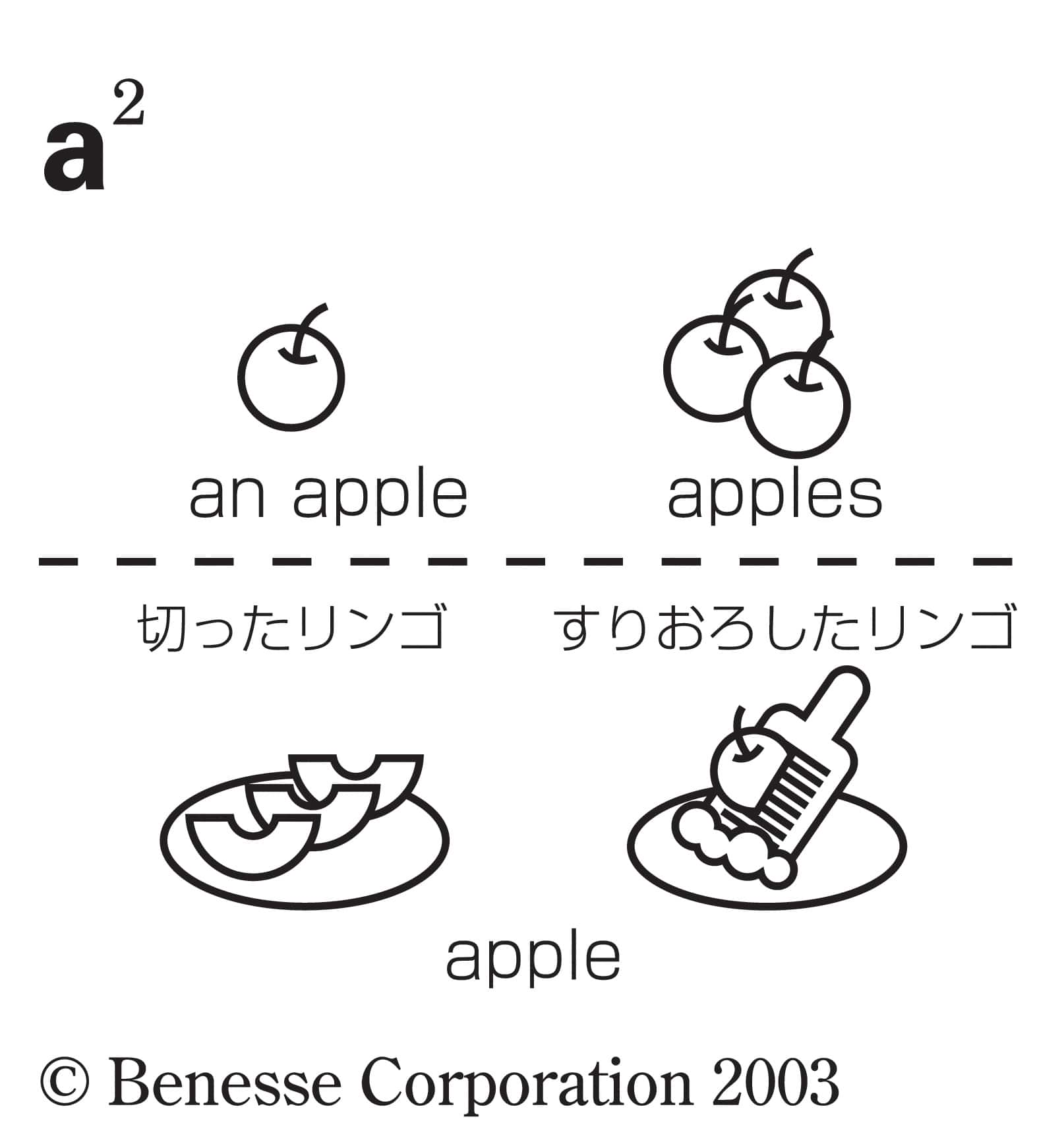
語法名詞形と意味 ①対象を特定する働きをする定冠詞theに対してaは「不定冠詞(対象を特定しない冠詞)」と呼ばれ,「a+名詞」の形で用いる ②名詞が子音で始まる場合はa(例a dog),母音で始まる場合はan(例an apple)となる ③a[an]は,名詞がさしうる対象が複数個存在し,それらの中から1つを単独で取り出すことが可能であることを示す働きをする.そこで通常「a+名詞」で表現可能ということは,「名詞の複数形」で表現することも可能ということを含意する ④英語で名詞を表す場合,その対象が可算か不可算かが問題となり,具体的には可算は「a+名詞」で,不可算は「名詞のみ」の形で表される.たとえば「リンゴ」であれば可算はan apple, 不可算はappleとなる. an appleと表現できれば,通常その複数形applesも表現可能である.この場合,数が1個か複数個かという違いがあるだけで,表しているリンゴに違いはない.ところが,an appleとappleとでは表す対象が異なってくる.an appleは「1個(丸ごとの)のリンゴ」を表すのに対し,appleは,たとえばa slice of apple「切り分けたリンゴ」のように表された,個体としてさし示すことのできないリンゴを表している.このように名詞の形が違えばその意味も異なる.以下はその例/a piano(楽器としての)ピアノ/a teacher of pianoピアノの先生/a question質問/question疑義 したがって「数えられる名詞にはaを付ける」という考え方は正確ではない.数えられる対象を表す場合に「a+名詞」「名詞の複数形」という形が使われると考えるとわかりやすい.なお,通例数えられない対象をさす名詞(抽象名詞・物質名詞など)にaを付けることは「抽象名詞・物質名詞などを普通名詞化する」ともみなすことができる. |
 |
語法 総称名詞が目的語に用いられるときは,I like dogs.(私は犬が好きだ)のように普通複数形を使う⇒the7【語法】 |
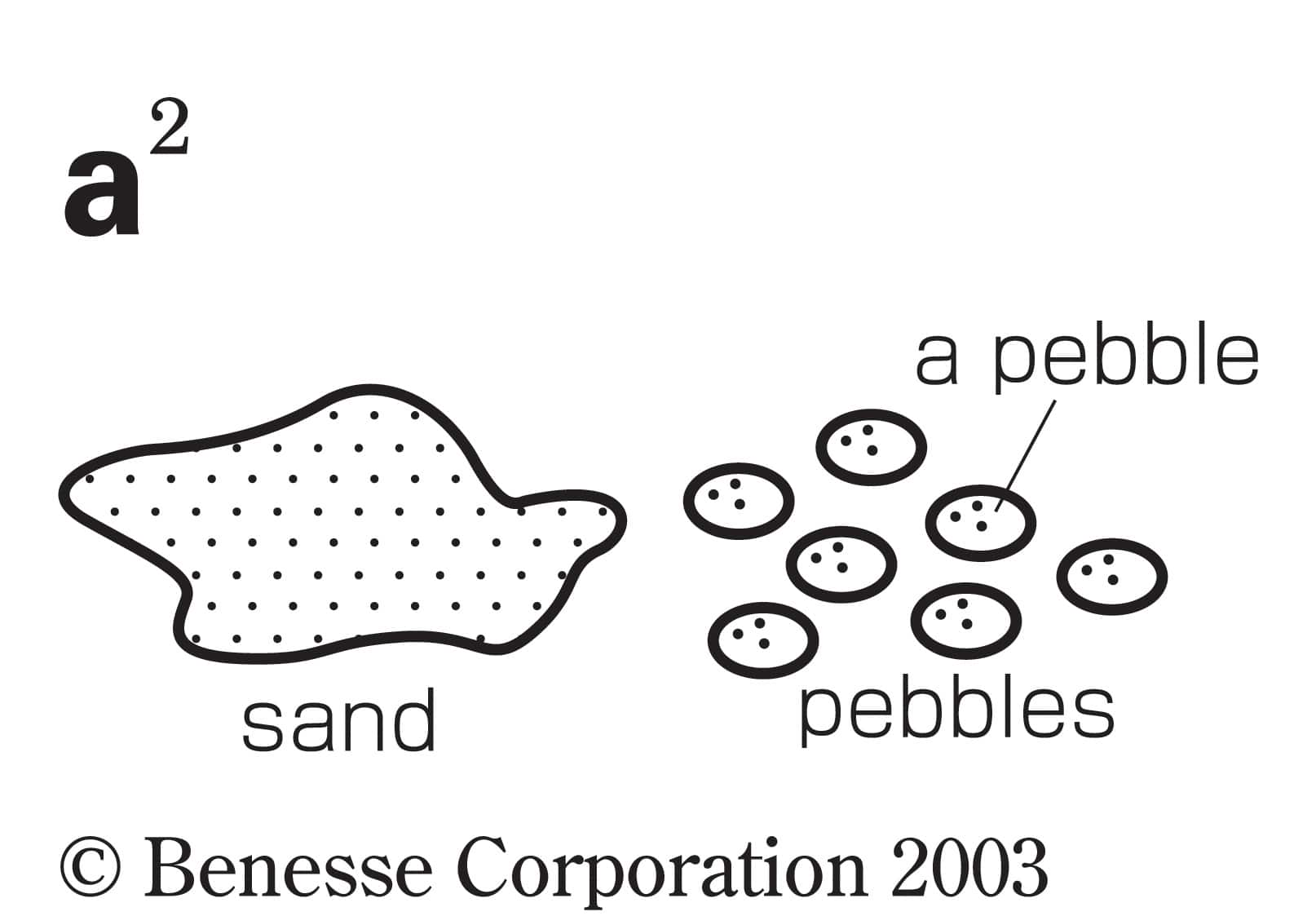
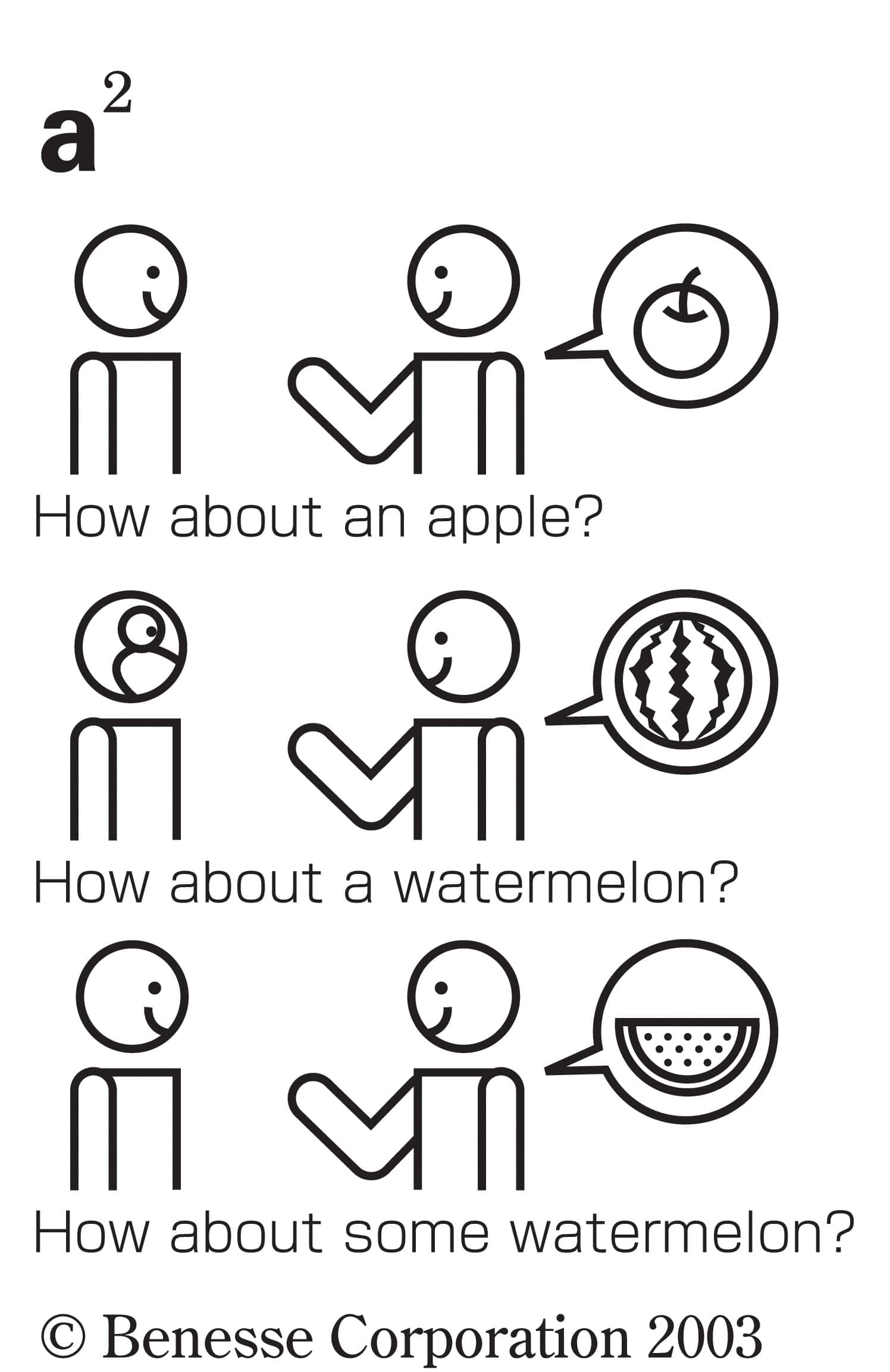
参考数えやすさ(可算・不可算) ①「a+名詞」の名詞形は数えられる対象をさすが,数えられるかどうかは程度の問題である場合が多い.たとえば「砂」は1粒ずつ数えることはないのでsandだが「小石」は数えられるのでa pebble(pebbles),同様に「米」はriceだが「めん」はa noodle(noodles)というように,どの名詞形を使うかは大きさに関する常識的な判断によるところが大きい 「リンゴでもいかが」とリンゴを食べるようにすすめる時はHow about an apple [some apples]?と聞くが,スイカのように大きいものは丸ごと食べることがあまり一般的でないためHow about some watermelon?となる ②a big breakfast「たっぷりの朝食」,an angry Bob「怒ったボブ」のように,形容詞をつけると種類を問題にしやすくなるため個別化が可能となり,たとえ通例無冠詞の形で使う名詞でも「a+名詞」形で表すことができる ③たいていの名詞は可算と不可算の両方の形で用いることができるが,集合名詞の中には可算形をとらないものがある.それはfurniture(家具),equipment(器具類),cutlery(刃物類),crockery(陶器類),kitchenware(台所用具)などで,これらは人工的に作られた物の集合を表す名詞である ④leftovers(残り物),groceries(食料雑貨類),supplies(貯蔵品),valuables(貴重品),refreshments(軽い飲み物),woods(森),guts(腸),bowels(内臓),clothes(衣服)のように複数形が一般的な名詞もある.例えば内臓や腸は普通の人には複雑な要素の集合であり,いちいち数えることはない.このように個々の(雑多な)要素の集まりが想定される場合には,名詞の複数形が好まれる |
  |
A
A.
a-
a.
Weblio実用英語辞典での「a」の意味 |
|
a
「a」とは・「a」の意味
a①冠詞:不特定の一つの、どれか一つの、およそ、一つの
a②
名詞:英語アルファベットの第一文字
形容詞:Aの、aの、A字形の、第一の
a①の用法
冠詞
不特定の一つの、どれか一つの、およそ、一つの「a」が冠詞として使われる場合、特定されていない一つのものや、どれか一つのものを指す。具体的な例を以下に示す。
・例文1. I saw a cat in the garden.(庭で猫を一匹見た。)
2. She is looking for a job.(彼女は仕事を探している。)
3. He bought a car.(彼は車を一台買った。)
4. Take a seat, please.(どうぞ席にお掛けください。)
5. I need a pen to write a letter.(手紙を書くためのペンが必要だ。)
a②の用法
名詞
英語アルファベットの第一文字「a」が名詞として使われる場合、英語アルファベットの最初の文字を意味する。具体的な例を以下に示す。
・例文1. The letter "a" is the first letter of the alphabet.(「a」はアルファベットの最初の文字だ。)
2. Write an "a" in lowercase.(小文字の「a」を書いてください。)
3. The word "apple" starts with an "a".(「apple」という単語は「a」で始まる。)
4. She circled the letter "a" on the page.(彼女はページ上の「a」を丸で囲んだ。)
5. There are two "a"s in "banana".(「banana」には「a」が二つ含まれている。)
形容詞
Aの、aの、A字形の、第一の「a」が形容詞として使われる場合、Aに関連するものや、A字形のもの、または第一のものを示す。具体的な例を以下に示す。
・例文1. He got an A on the test.(彼はテストでAを取った。)
2. She wore an a-line dress.(彼女はAラインのドレスを着ていた。)
3. The a-side of the record was a hit.(レコードのA面はヒットした。)
4. It's an a-class hotel.(それはAクラスのホテルだ。)
5. This is an A-list event.(これはAリストのイベントだ。)
遺伝子名称シソーラスでの「a」の意味 |
|
A
| mouse | 遺伝子名 | A |
| 同義語(エイリアス) | ali2; AMIGO-1; Amigo; Amigo1; Kiaa1163; adhesion molecule with Ig like domain 1; MGC25558; Ali2; Alivin-2; Amphoterin-induced protein 1 precursor | |
| SWISS-PROTのID | SWISS-PROT:Q80ZD8 | |
| EntrezGeneのID | EntrezGene:229715 | |
| その他のDBのID | MGI:2653612 |
| mouse | 遺伝子名 | a |
| 同義語(エイリアス) | As; A<y>; Agouti switch protein; agouti signal protein; Agouti signaling protein precursor; ASIP; Agouti coat color protein; agouti; nonagouti; Asip | |
| SWISS-PROTのID | SWISS-PROT:Q03288 | |
| EntrezGeneのID | EntrezGene:50518 | |
| その他のDBのID | MGI:87853 |
| rat | 遺伝子名 | A |
| 同義語(エイリアス) | Agouti (coat color); agouti; ASP; Agouti switch protein; Agouti signaling protein precursor; Asip | |
| SWISS-PROTのID | SWISS-PROT:Q99JA2 | |
| EntrezGeneのID | EntrezGene:24152 | |
| その他のDBのID | RGD:2003 |
本文中に表示されているデータベースの説明

Wiktionary英語版での「a」の意味 |
'a
出典:『Wiktionary』 (2026/08/01 01:45 UTC 版)
'a'
-a
出典:『Wiktionary』 (2026/09/09 03:19 UTC 版)
語源 1
Learned borrowing from Latin -a (nominative second declension neuter plural suffix), plural counterpart to -um (nominative second declension neuter singular suffix).
発音
- (Received Pronunciation, General American) IPA: /ɑ/, /ə/
- 異形同音異義語: -er, -or (in non-rhotic accents)
語源 2
Learned borrowing from Ancient Greek -α (-a, nominative second declension neuter plural suffix), plural counterpart to -ον (-on, nominative second declension neuter singular suffix).
発音
- (Received Pronunciation, General American) IPA: /ɑ/, /ə/
- 異形同音異義語: -er, -or (in non-rhotic accents)
派生語
発音
- (Received Pronunciation, General American) enPR: ə, IPA: /ə/
接尾辞
- Marks singular nouns, with a foundation in Greek or Latin, often implying femininity, especially when contrasted with words terminating in -us.
- Changes an element or substance into an oxide.
派生語
- incuba
語源 4
<ul class="etymonid" data-lang="en" id="English:_feminine" data-id="feminine" data-title="-a" data-ety-tree-json="{ " : feminine, children [ { keyword_abbrev bor., keyword_label [[appendix:glossary#loanword|borrowed]] from, terms nominal, collective nouns, ], status missing, lang_name proto-indo-european, term *-eh₂, lang ine-pro } [[appendix:glossary#inherited|inherited]] keyword inherited ok, proto-italic, *-ā, itc-pro latin, -a, la italian, it }, is_duplicate true, 1 la, 2 :inh, 3 itc-pro:*-āBorrowed from Italian -a, Spanish -a, or Portuguese -a, all feminine noun suffixes from Latin -a.
発音
接尾辞
-a
- Marks nouns, with a foundation in Italian, Spanish, or Portuguese, implying femininity.
-
donna
-
発音
- (Received Pronunciation, General American) IPA: /ə/, /eɪ/
接尾辞
-a
- Added for metrical reasons to songs, poetry and verse, or as an empty filler syllable to other speech.
- Alternative forms: a, a-
- 1936 July 18, Leon Schlesinger (producer) / Norman Spencer (music), I Love to Singa:
-
1980s, Herb Owen, “Wanna”, in Kids Sing Praise, performed by Kids Sing Praise:
-
I wanna wanna wanna wanna wanna wanna really wanna be just like the Lord
So every day Im gonna gonna read the Book and rest upon-a God's own holy Word
Of good in me there's none-a none-a that's okay because I'm gonna trust upon the work that's done-a on the Cross
and Jesus is the one-a one-a God the Father's Son-a Son-a and my sin He cures!
-
発音
語源 7
発音
接尾辞
-a
語源 8
発音
語源 9
発音
語源 10
A pronunciation spelling of -er, representing the unstressed schwa /ə/ in non-rhotic dialects.
接尾辞
-a
- (chiefly US, African-American Vernacular, non-rhotic) Pronunciation spelling of -er (the agent noun suffix).
- (chiefly UK, Australia, New Zealand, non-rhotic) Pronunciation spelling of -er (the colloquial clipping suffix).
- Macca, rugga
参考
- -z
- -zza
参照
- Lesley Brown, editor-in-chief, William R. Trumble and Angus Stevenson, editors (2002), “-a”, in The Shorter Oxford English Dictionary on Historical Principles, 5th edition, Oxford; New York, N.Y.: Oxford University Press, →ISBN, page 1.
- Christine A. Lindberg, editor (2002), “-a”, in The Oxford College Dictionary, 2nd edition, New York, N.Y.: Spark Publishing, →ISBN, page 1.
接尾辞
-a
- nominative masculine n-stem ending
- used to form the nominative singular n-stem (weak) adjective and subsequent nominalised form
- used to form masculine agents, usually from verbs
派生語
派生した語
- Middle English: -e
使用する際の注意点
- Though it was common in Proto-Germanic and Proto-West Germanic, in Old English this ending is restricted to only a few adverbs, among them sōna (“immediately”) and ġeāra (“long ago”). The competing suffix -e is much more common, along with -līċe.
派生した語
- Middle English: -e (fossilised)
語源 3
接尾辞
-a
語源 4
Inherited from Proto-West Germanic *-ō, from Proto-Germanic *-ǫ̂, from the Proto-Indo-European genitive plural ending *-oHom as attached to thematic (eh₂-stem and o-stem) nouns.
派生した語
- Middle English: -e
語源 5
接尾辞
-a
語源 1
Inherited from Proto-Italic *-ā, from Proto-Indo-European *-eh₂. For the use to form masculine agent nouns from verb roots, compare Latin poeta from Ancient Greek ποιητής (poiētḗs).
発音
- (Classical Latin) IPA: [a]
- (modern Italianate Ecclesiastical) IPA: [a]
接尾辞
-a
接尾辞
-a f or m (genitive -ae); first declension
- suffix used to form feminine first-declension nouns
- used to form a female counterpart of a masculine noun denoting a male
- equus m (“horse”) + -a → equa f (“female horse, mare”)
- flāmen m (“flamen”) + -a → flāmina f (“wife of a flamen”)
- magister m (“master, instructor”) + -a → magistra f (“mistress, instructress”)
- used in substantivised feminine adjective forms, with ellipsis of an implicit feminine head noun
- medicus (“doctor”) + -īnus (adjective-forming suffix) + -a → medicīna f (“medicine”), a type of ars f (“art”)
- specifically, used to form plant names by ellipsis of herba f (“plant; herb”)
- cōnferveō + -us (adjective-forming suffix) + -a → cōnferva f
- cōnsolidō + -us (adjective-forming suffix) + -a → cōnsolida f
- (Late Latin) added to the stem of a third-declension noun to adapt its inflection to that of a feminine first-declension noun
- lendis, lendin- f + -a → lendina f
- pūlex, pūlic- m + -a → *pūlica f
- used to form a female counterpart of a masculine noun denoting a male
- suffix used to form (usually masculine) agent nouns from the roots of (usually compound) verbs
- adveniō + -a → advena
- ager + colō + -a → agricola
- caedō + -a → -cīda
- colō + -a → -cola
- scrībō + -a → scrība
語形変化
First-declension noun.
| singular | plural | |
|---|---|---|
| nominative | -a | -ae |
| genitive | -ae | -ārum |
| dative | -ae | -īs |
| accusative | -am | -ās |
| ablative | -ā | -īs |
| vocative | -a | -ae |
1. Certain masculine nouns ending in -a, especially those ending in -cola and -gena, sometimes have a short genitive plural form ending in -um instead of -ārum.
2. Feminine nouns such as fīlia (“daughter”) that have a second-declension masculine counterpart sometimes take the ending -ābus instead of -īs in the dative and ablative plural to avoid ambiguity (since fīliīs could be misunderstood as the dative/ablative plural of fīlius (“son”)). Forms in -ābus are attested earliest for the nouns fīlia and dea (“goddess”), and later on for others such as līberta (“freedwoman”), equa (“mare”) and anima.
3. Old genitive singular endings are -ās and -ā (e.g., in familiās, Titā, and Vendiās).
同意語
- (suffixed to the roots of verbs, forms masculine agent nouns): -ō¹
派生語
発音
- (Classical Latin) IPA: [aː]
- (modern Italianate Ecclesiastical) IPA: [a]
接尾辞
-ā (not comparable)
- suffixed chiefly to the stems of adjectives terminating in -ter, forms adverbs which are frequently also used as prepositions
発音
- (Classical Latin) IPA: [aː]
- (modern Italianate Ecclesiastical) IPA: [a]
-a-
出典:『Wiktionary』 (2026/09/05 23:26 UTC 版)
語源 1
From of a (as in half-a-crown) or of (as in jack-a-napes from 中期英語 Jak of Naples). Some terms have fully incorporated the use, as ragamuffin and jackanape(s); others arise from mistaken assimilation to the form, as all-a-gog and cock-a-leekie.
接合辞
-a-
派生語
- blackamoor
- cock-a-hoop
- cock-a-leekie
- half-a-crown
- jack-a-dandy
- jack-a-lantern
- Jack-a-Lent
- jack-a-napes, jackanape
- John-a-dreams
- ragamuffin
接続詞
-a-
語源 3
From French à (“various prepositions”) and related prepositions in other Romance languages. Also from related misunderstandings, as all-a-mort from French à la morte.
別の表記
- à, -à-
接中辞
-a-
- Connective infix encountered in loanwords and phrases, generally no longer carrying a distinct meaning.
語源 4
(This etymology is missing or incomplete. Please add to it, or discuss it at the Etymology scriptorium.)
参照
- USP Dictionary of USAN and International Drug Names, U.S. Pharmacopeia, 2000
A
出典:『Wiktionary』 (2010/01/09 23:54 UTC 版)
名詞
同意語
A*
名詞
A-
別の表記
- A−
a'
a**
a.

名詞
a.
- Abbreviation of abbreviation.
- Abbreviation of acceleration (in feet per second).
- Abbreviation of accommodation.[1]
- Abbreviation of account.
- Abbreviation of acre; acres; acreage.
- Abbreviation of acronym.
- Abbreviation of act; acting.
- Abbreviation of activity.
- Abbreviation of adjective.
- Abbreviation of adjutant.
- Abbreviation of adult.
- Abbreviation of afternoon.
- Abbreviation of age.
- Abbreviation of altitude; altitude intercept.
- Abbreviation of alto.
- Abbreviation of amateur.
- Abbreviation of ampere.
- Abbreviation of annealing.
- Abbreviation of anode.[1]
- Abbreviation of answer.
- Abbreviation of anthracite.
- Abbreviation of apprentice.
- Abbreviation of arc.
- Abbreviation of are, ares.
- Abbreviation of area.[1]
- Abbreviation of argent.
- Abbreviation of assist; assists.
- Abbreviation of atmosphere.
- Abbreviation of attendance.
- Abbreviation of audit; auditor.
- Abbreviation of aunt.
- Abbreviation of aviation; aviator.
- Abbreviation of axis.
形容詞
a.
- Abbreviation of absent.
- Abbreviation of absolute.
- Abbreviation of abundant.
- Abbreviation of accepted.
- Abbreviation of accidental.
- Abbreviation of acting.
- Abbreviation of active.
- Abbreviation of aerial.
- Abbreviation of alto.
- Abbreviation of amateur.
- Abbreviation of annus (“a year”).
- Abbreviation of anonymous.
- Abbreviation of ante (“before”).
- Abbreviation of anterior.
- Abbreviation of aqua.[1]
- Abbreviation of argent.
- Abbreviation of artery;[1] arterial blood.
- Abbreviation of automatic.
- Abbreviation of available.
Further reading
- Thomas, Clayton L., editor (1940) Taber's Encyclopedic Medical Dictionary, 5th edition, Philadelphia, PA: F. A. Davis Company, published 1993, →ISBN, page 1
Latin
発音
- (Classical) IPA(key): /a/, [ä̃]
- (modern Italianate Ecclesiastical) IPA(key): /a/, [ä]
派生語
- a. reg. m (numismatics)
ウィキペディア英語版での「a」の意味 |
A++
出典:『Wikipedia』 (2011/03/15 14:47 UTC 版)
Weblio例文辞書での「a」に類似した例文 |
|
a
a
どのもの
which
that
since
簡潔なさま
any
a history of something
心の狭い.
1, 2度
a being
his
have
a ~
a
that
since
Mr. So-and-so.
a being
any
1時に.
こと
a thing
おおわれる
どのもの
which
むら
a village
to speak with a provincial accent
しんとする
Mr. So-and-so.
a trumpet
a$
a bittern
かま
a silkworm
ハジロオオシギ
a'
a
that
a being
こと
a thing
he―she
you
むら
a village
to speak with a provincial accent
a seine
〜様
Mr. So-and-so.
his
have
a-
a
that
since
しんとする
どのもの
which
おおわれる
a being
かすんで見える
むら
a village
こと
a thing
a fellow
Mr. So-and-so.
.05.
しゅんとする
a.
2.5.
原形.
the Ur‐form
平服.
原生代.
the Proterozoic era
通則.
【名詞】 3.
0.5.
本物.
the real stuff
潮流.
1, 2度.
a
通義.
抵当物.
体格.
緯度.
中性.
the neuter gender
a quorum
a quorum
われ.
作因.
諺.
a proverbial phrase [saying]
凪.
即答.
即答.
即答.
即答.
即答.
|
|
aのページの著作権
| Copyright (c) 1995-2026 Kenkyusha Co., Ltd. All rights reserved. | |
| Copyright © Benesse Holdings, Inc. All rights reserved. | |
| © 2000 - 2026 Hyper Dictionary, All rights reserved | |
| This page uses the JMdict dictionary files. These files are the property of the Electronic Dictionary Research and Development Group, and are used in conformance with the Group's licence. | |
| Copyright (C) 1994- Nichigai Associates, Inc., All rights reserved. | |
| DBCLS Home Page by DBCLS is licensed under a Creative Commons 表示 2.1 日本 License. | |
| Copyright (C), Japan Atomic Energy Agency (JAEA) | |
| Copyright (C) 2026 ライフサイエンス辞書プロジェクト | |
|
日本語ワードネット1.1版 (C) 情報通信研究機構, 2009-2010 License All rights reserved. WordNet 3.0 Copyright 2006 by Princeton University. All rights reserved. License |
|
| Copyright(C)2002-2026 National Institute of Information and Communications Technology. All Rights Reserved. | |
| Copyright © 2026 CJKI. All Rights Reserved | |
| Copyright © 2026 CJKI. All Rights Reserved | |
| DBCLS Home Page by DBCLS is licensed under a Creative Commons 表示 2.1 日本 License. | |
|
Copyright (C) 1994- Nichigai Associates, Inc., All rights reserved. 「斎藤和英大辞典」斎藤秀三郎著、日外アソシエーツ辞書編集部編 |
|
|
Text is available under Creative Commons Attribution-ShareAlike (CC-BY-SA) and/or GNU Free Documentation License (GFDL). Weblio英和・和英辞典に掲載されている「Wiktionary英語版」の記事は、Wiktionaryの'a (改訂履歴)、'a' (改訂履歴)、-a (改訂履歴)、-a- (改訂履歴)、A (改訂履歴)、A* (改訂履歴)、A- (改訂履歴)、a' (改訂履歴)、a** (改訂履歴)、a. (改訂履歴)の記事を複製、再配布したものにあたり、Creative Commons Attribution-ShareAlike (CC-BY-SA)もしくはGNU Free Documentation Licenseというライセンスの下で提供されています。 |
|
|
Text is available under Creative Commons Attribution-ShareAlike (CC-BY-SA) and/or GNU Free Documentation License (GFDL). Weblio英和・和英辞典に掲載されている「Wikipedia英語版」の記事は、WikipediaのA++ (改訂履歴)の記事を複製、再配布したものにあたり、Creative Commons Attribution-ShareAlike (CC-BY-SA)もしくはGNU Free Documentation Licenseというライセンスの下で提供されています。 |











ピン留めアイコンをクリックすると単語とその意味を画面の右側に残しておくことができます。 |

ログイン |
Weblio会員(無料)になると

|
 検索履歴を保存できる!
 みんなの検索ランキング
 閲覧履歴
閲覧履歴

weblioのその他のサービス
|
ログイン |
Weblio会員(無料)になると
|
