研究社 新英和中辞典 |
OF
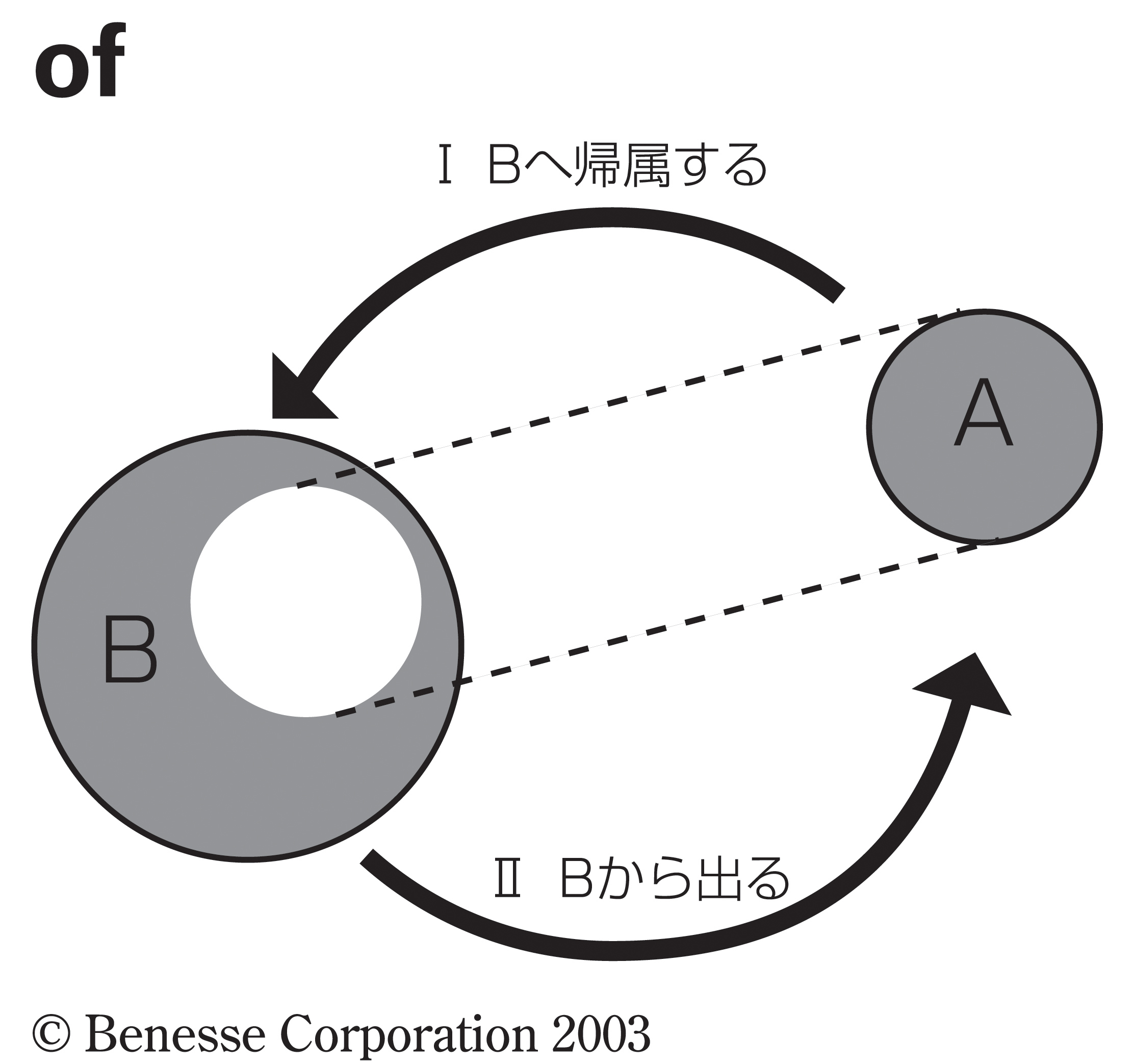
of
| 用例 | ![]() |
| 用例 | ![]() | the plays of Shakespeare シェイクスピアの戯曲. the love of a mother for her children 子供に対する母親の愛 《★【変換】 a mother's love for her children に書き換え可能》. |
b
[it is+形容詞+of+(代)名詞 (+to do)で] 〔人が〕(…するのは)…である 《★【用法】 ここで用いられる形容詞は kind,good,clever,wise,foolish などの人間の性質を表わすもの》.
| 用例 |
| 用例 | ![]() |
| 用例 | ![]() |
| 用例 | ![]() |
| 用例 | ![]() |
| 用例 | ![]() |
| 用例 |
| 用例 | ![]() |
| 用例 |
| 用例 | ![]() | a box of chocolates 1箱のチョコレート. |
| 用例 | ![]() |
| 用例 | ![]() | He's twenty years of age. 彼は20歳だ. |
| 用例 | ![]() |
| 用例 | ![]() | It's five minutes of twelve. 12時 5 分前です. |
| 用例 | ![]() |
| 用例 | ![]() |
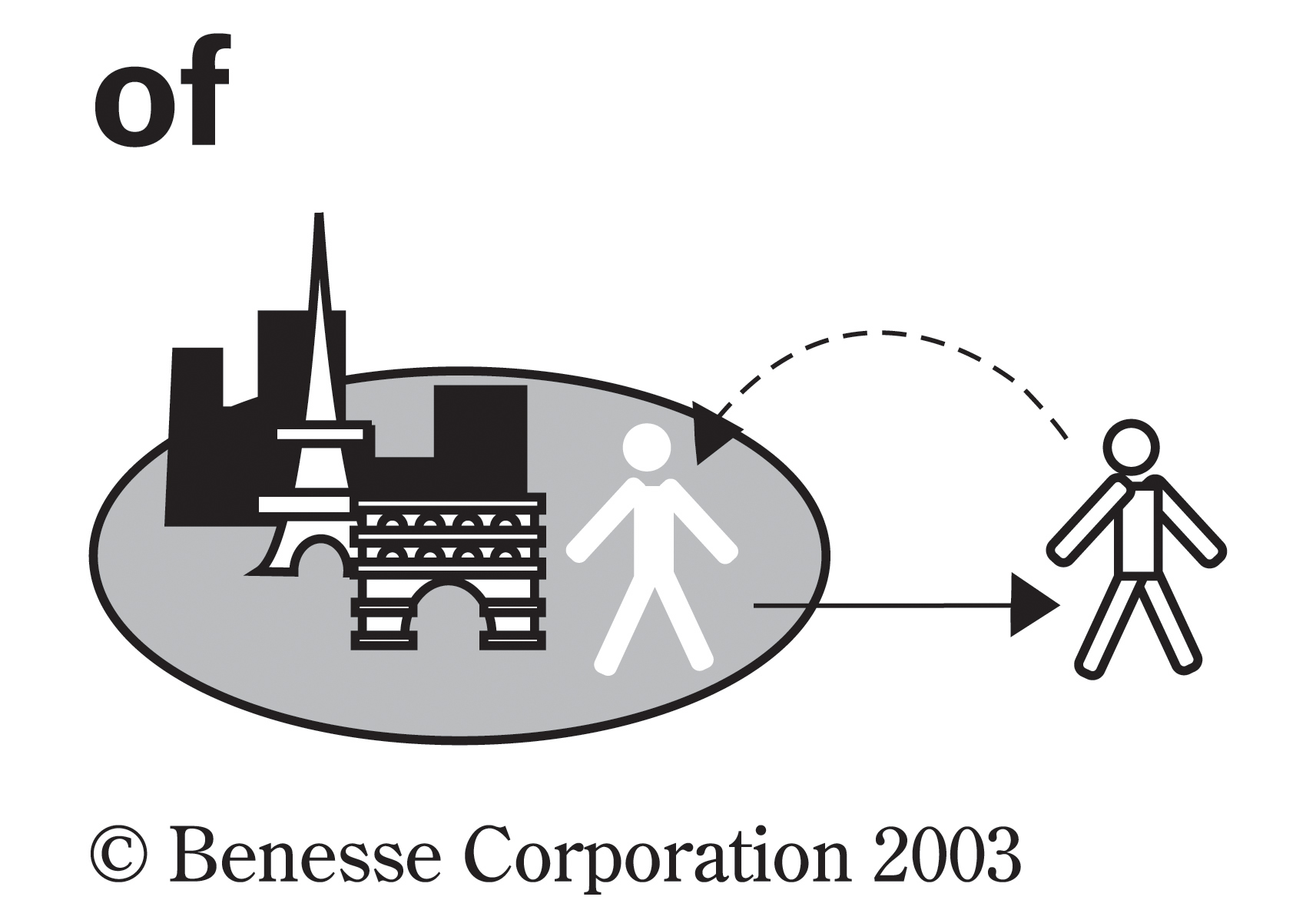
| 用例 | ![]() | a man of California カリフォルニア出身の人. |
| 用例 | ![]() |
| às of | báck of… |
| of áll mén [péople] | of áll óthers |
| of áll thíngs | of cóurse |
| of láte | of óld |
of‐
ハイパー英語辞書 |
of
| 用例 |
| 印欧語根 | ||
|---|---|---|
| apo- | 「…から離れて」「向こうの方へ」、分離などを表す。その他に「…に関係して」の意。重要な派生語は、接頭辞ab-を持つ語(abjure, abrupt, absorbなど)、語幹poseを持つ語(imposeなど)、apostrophe, of, off, sinceなど。 | |
機械工学英和和英辞典 |
JST科学技術用語日英対訳辞書 |
EDR日英対訳辞書 |
遺伝子名称シソーラス |
OF
| mouse | 遺伝子名 | OF |
| 同義語(エイリアス) | Bach1; Fanconi anemia group J protein homolog; BRCA1-interacting protein 1; Protein FACJ; BACH1; Brip1; BRCA1-interacting protein C-terminal helicase 1; Fancj; BRCA1 interacting protein C-terminal helicase 1; 3110009N10Rik; ATP-dependent RNA helicase BRIP1; 8030460J03Rik; BRCA1-associated C-terminal helicase 1 | |
| SWISS-PROTのID | SWISS-PROT:Q5SXJ3 | |
| EntrezGeneのID | EntrezGene:237911 | |
| その他のDBのID | MGI:2442836 |
本文中に表示されているデータベースの説明
斎藤和英大辞典 |
Weblio英和対訳辞書 |
Wiktionary英語版 |
出典:Wiktionary |
OF.
of
出典:『Wiktionary』 (2013/06/13 12:10 UTC 版)
語源
From Middle English of, from 古期英語 of (“of, from”), an unstressed form of af, æf (“from, off, away”), from Proto-Germanic *ab (“from”), from Proto-Indo-European *h₂epo (“from, off, back”). Cognate with Scots of, af (“off, away”), West Frisian af, ôf (“off, away”), Dutch af (“off, from”), Low German af (“off, from”), German ab (“off, from”), Danish af (“of”), Swedish av (“of”), Icelandic af (“of”), Gothic (af, “of, from”); and with Latin ab (“of, from, by”). Compare off.
発音
- (強勢)
- 韻: -ɒv
- 韻: -ʌv
- (弱勢) enPR: əv, IPA: /əv/, X-SAMPA: /@v/
- , unstressed, as part of the expression piece of cake
- Homophone: 've (弱勢 of only, postconsonantal 've only)
前置詞
of
- Expressing direction.
- (now obsolete または dialectal) From (of distance, direction), "off". [from 9th c.]
- 1485, Thomas Malory, Le Morte Darthur, Book XIII:
- 1621, Robert Burton, The Anatomy of Melancholy, II.5.3.ii:
- (obsolete except in phrases) Since, from (a given time, earlier state etc.). [from 9th c.]
- 1526, William Tyndale, trans. Bible, Mark IX:
- 1616, William Shakespeare, Two Gentlemen of Verona, IV.4:
- 2010, Simon Tisdall, The Guardian, 29 Jul 2010:
- Obama has been obliged to make nice of late in hope of rescuing the moribund two-state process and preventing resumed West Bank settlement building.
- From, away from (a position, number, distance etc.). [from 10th c.]
- 1932, Time, 30 Sep 1932:
- Though Washington does not officially recognize Moscow, the Hoover Administration permits a Soviet Russian Information Bureau to flourish in a modest red brick house on Massachusetts Avenue, within a mile of the White House.
- 2010, The Guardian, 7 Nov 2010:
- 1932, Time, 30 Sep 1932:
- (North America, Scotland, Ireland) Before (the hour); to. [from 19th c.]
- (now obsolete または dialectal) From (of distance, direction), "off". [from 9th c.]
- Expressing separation.
- Indicating removal, absence or separation, with the action indicated by a transitive verb and the quality or substance by a grammatical object. [from 10th c.]
- 1485, Thomas Malory, Le Morte Darthur, Book XIII:
- 1603, John Florio, translating Michel de Montaigne, Essays, II.1:
- 1816, Jane Austen, Letter, 20 Feb 1816:
- I am almost entirely cured of my rheumatism – just a little pain in my knee now and then, to make me remember what it was, and keep on flannel.
- 1951, Time, 3 Sep 1951:
- In Houston, ten minutes after the Lindquist Finance Corp. was robbed of $447, Office Manager Howard Willson got a phone call from the thief who complained: "You didn't have enough money over there."
- Indicating removal, absence or separation, with resulting state indicated by an adjective. [from 10th c.]
- (obsolete) Indicating removal, absence or separation, construed with an intransitive verb. [14th-19th c.]
- Indicating removal, absence or separation, with the action indicated by a transitive verb and the quality or substance by a grammatical object. [from 10th c.]
- Expressing origin.
- Indicating an ancestral source or origin of descent. [from 9th c.]
- Indicating a (non-physical) source of action or emotion; introducing a cause, instigation; from, out of, as an expression of. [from 9th c.]
- 1485, Thomas Malory, Le Morte Darthur, Book X:
- I requyre you of knyghthode, telle me youre name.
- 1803, John Smalley, Sermons:
- Undoubtedly it is to be understood, that inflicting deserved punishment on all evil doers, of right, belongs to God.
- 2008, Rowenna Davis, The Guardian, 3 Dec 2008:
- 1485, Thomas Malory, Le Morte Darthur, Book X:
- Following an intransitive verb: indicating the source or cause of the verb. [from 10th c.]
- 2006, Joyce Carol Oates, The Female of the Species:
- He smelled of beer and cigarette smoke and his own body.
- 2010, Rebecca Omonira-Oyekanmi, The Guardian, 5 Oct 2010:
- Two men, one from Somalia and one from Zimbabwe, died of terminal illnesses shortly after their incarceration ended.
- 2006, Joyce Carol Oates, The Female of the Species:
- Following an adjective. [from 13th c.]
- Expressing agency.
- Following a passive verb to indicate the agent (for most verbs, now usually expressed with by). [from 9th c.]
- 1526, William Tyndale, trans. Bible, Acts IX:
- 1603, John Florio, translating Michel de Montaigne, Essays, II.1:
- 1995, The Church of Jesus Christ of Latter-day Saints, The Family: A Proclamation to the World:
- The family is ordained of God.
- 2008, "Selling rhythm to the world", The Economist, 27 Mar 2008:
- Used to introduce the "subjective genitive"; following a noun to form the head of a postmodifying noun phrase. [from 13th c.]
- 1994, Paul Coates, Film at the Intersection of High and Mass Culture, p. 136:
- In Blood and Sand, meanwhile, Valentino repeatedly solicits the attention of women who have turned away from him.
- 2009, "Head to head", The Economist, 28 Dec 2009:
- Somehow Croatia has escaped the opprobrium of the likes of the German Christian Democrats and others that are against any rapid enlargement of the European Union to the include rest of the western Balkans.
- 1994, Paul Coates, Film at the Intersection of High and Mass Culture, p. 136:
- Following an adjective, used to indicate the agent of something described by the adjective. [from 16th c.]
- 1815, Jane Austen, Emma:
- 2007, Dorian Lynskey, The Guardian, 10 Jan 2007:
- Morrissey's spokesperson says he is considering the offer. It would perhaps be rude of him to decline.
- Following a passive verb to indicate the agent (for most verbs, now usually expressed with by). [from 9th c.]
- Expressing composition, substance.
- After a verb expressing construction, making etc., used to indicate the material or substance used. [from 9th c.]
- Directly following a noun, used to indicate the material from which it is made. [from 10th c.]
- Indicating the composition of a given collective or quantitative noun. [from 12th c.]
- 1853, William Makepeace Thackeray, Barry Lyndon:
- His papers at this period contain a mass of very unedifying and uninteresting documents [...].
- 2010, Polly Vernon, The Guardian, 31 Oct 2010:
- I'd expected to be confronted by oodles of barely suppressed tension and leather-clad, pouty-mouthed, large-haired sexiness; the visual shorthand of rock gods in general, and Jon Bon Jovi in particular.
- 1853, William Makepeace Thackeray, Barry Lyndon:
- Used to link a given class of things with a specific example of that class. [from 12th c.]
- 1719, Daniel Defoe, Robinson Crusoe:
- 2010, Maya Jaggi, The Guardian, 30 Oct 2010:
- Linking two nouns in near-apposition, with the first qualifying the second; "which is also". [from 14th c.]
- Introducing subject matter.
- Linking an intransitive verb, or a transitive verb and its subject (especially verbs to do with thinking, feeling, expressing etc.), with its subject-matter: concerning, with regard to. [from 10th c.]
- 1815, Jane Austen, Emma:
- 1871–72, George Eliot, Middlemarch, Chapter 3
- 2010, Rebecca Seal, The Guardian, 19 Oct 2010:
- Following a noun (now chiefly nouns of knowledge, communication etc.), to introduce its subject matter; about, concerning. [from 12th c.]
- 1859, Charles Dickens, (title):
- 2010, The Economist, 21 Oct 2010:
- Recession and rising unemployment have put paid to most thoughts of further EU enlargement.
- Following an adjective, to introduce its subject matter. [from 15th c.]
- 1851, Herman Melville, Moby-Dick:
- The same secludedness and isolation to which the schoolmaster whale betakes himself in his advancing years, is true of all aged Sperm Whales.
- 1851, Herman Melville, Moby-Dick:
- Linking an intransitive verb, or a transitive verb and its subject (especially verbs to do with thinking, feeling, expressing etc.), with its subject-matter: concerning, with regard to. [from 10th c.]
- Having partitive effect.
- Following a number or other quantitive word: introducing the whole for which is indicated only the specified part or segment; "from among". [from 9th c.]
- 1485, Thomas Malory, Le Morte Darthur, Book X:
- I meddyll nat of their maters; and therefore there is none that lovyth me of them.
- 1789, Edward Gibbon, Decline and Fall of the Roman Empire, vol. VI:
- 2010, Michael Wood, The Guardian, 10 Nov 2010:
- Many of the civilisational achievements of Mesopotamia are the product of that symbiosis.
- 1485, Thomas Malory, Le Morte Darthur, Book X:
- Following a noun indicating a given part. [from 9th c.]
- (now archaic, literary) With preceding partitive word assumed, or as a predicate after to be: some, an amount of, one of. [from 9th c.]
- 1526, William Tyndale, trans. Bible, Matthew XXV:
- 1819, John Keats, "Ode to a Nightingale":
- 1846, James Fenimore Cooper, The Redskins:
- Linking to a genitive noun or possessive pronoun, with partitive effect (though now often merged with possessive senses, below). [from 13th c.]
- 1893, Oscar Wilde, A Woman of No Importance, IV:
- 2010, Michael Tomasky, The Guardian, 27 Aug 2007:
- In its flattering way, the press tried to invest this habit of Bush's with the sense that it was indicative of a particularly sharp wit.
- Following a number or other quantitive word: introducing the whole for which is indicated only the specified part or segment; "from among". [from 9th c.]
- Expressing possession.
- Belonging to, existing in, or taking place in a given location, place or time. Compare "origin" senses, above. [from 9th c.]
- 1908, EF Benson, The Blotting Book:
- 2003, Julian Borger, The Guardian, 20 Aug 2003:
- Within ten seconds, the citizens of New York, Cleveland, Detroit and Toronto were being given first-hand experience of what it was like to live in the nineteenth century.
- Belonging to (a place) through having title, ownership or control over it. [from 9th c.]
- 1977, The Guardian, 28 Oct 1977:
- 2001, Dictionary of National Biography, 2001, p. 27:
- Belonging to (someone または something) as something they possess or have as a characteristic; the "possessive genitive". (With abstract nouns, this intersects with the subjective genitive, above under "agency" senses.) [from 13th c.]
- Belonging to, existing in, or taking place in a given location, place or time. Compare "origin" senses, above. [from 9th c.]
- Forming the "objective genitive".
- Expressing qualities or characteristics.
- (now archaic または literary) Linking an adjective with a noun or noun phrase to form a quasi-adverbial qualifier; in respect of, as regards. [from 13th c.]
- Indicating a quality or characteristic; "characterized by". [from 13th c.]
- 1891, Sir Arthur Conan Doyle, "The Boscombe Valley Mystery":
- His frank acceptance of the situation marks him as either an innocent man, or else as a man of considerable self-restraint and firmness.
- 1951, Jacob Bronowski, The Common Sense of Science:
- 1891, Sir Arthur Conan Doyle, "The Boscombe Valley Mystery":
- Indicating quantity, age, price etc. [from 13th c.]
- 1903, Frank Norris, The Pit, Doubleday 1924, p. 4:
- She was a tall young girl of about twenty-two or three, holding herself erect and with fine dignity.
- 2006, Serway & Jewett, Principles of Physics, p. 428:
- A police car, traveling southbound at a speed of 40.0 m/s, approaches with its siren producing sound at a frequency of 2 500 Hz.
- 1903, Frank Norris, The Pit, Doubleday 1924, p. 4:
- Expressing a point in time.
- (chiefly regional) During the course of (a set period of time, day of the week etc.), now specifically with implied repetition or regularity. [from 9th c.]
- (英国用法 dialectal) For (a given length of time), chiefly in negative constructions. [from 13th c.]
- Used after a noun to indicate duration of a state, activity etc. [from 18th c.]
使用する際の注意点
- (belonging to または associated with): When applied to a person or persons, the possessive is generally used instead.
- (containing, comprising, または made from): Of may be used directly with a verb or adjectival phrase.
- When modifying a noun, modern English uses more and more noun adjuncts rather than of. Examples include part of speech (16th century) vs. word class (20th century), Federal Bureau of Investigation (1908) vs. Central Intelligence Agency (1947), and affairs of the world (18th century) vs. world affairs (20th century).
派生語
動詞
of
- (usually in modal perfect constructions) Representing have or 've, chiefly in depictions of colloquial speech.
- 1926, F. Scott Fitzgerald, The Great Gatsby, Penguin 2000, p. 33:
- 1943, Raymond Chandler, The High Window, Penguin 2005, p. 87:
- 1992, Neal Stephenson, Snow Crash, Bantam Spectra, p. 340:
参考
語源
of-
出典:『Wiktionary』 (2011/11/01 05:25 UTC 版)
語源
Proto-Germanic *af- (“away, away from”), from Proto-Indo-European *apo- (“off, away”). Cognate with Old Saxon af-, Old Norse af-, Gothic -, Old High German ab; and with Latin ab-, Ancient Greek απο-.
発音
- IPA: /ov/
接頭辞
of-
- Forming verbs and adjectives with the sense of "off", "away", "from", "out of", "away from"
- down
- excessively, negatively
- ofēhtan "to persecute"
- ofdrincan "to intoxicate"
- for, for the purpose of
- ofclipian "to call for, request"
「Of」を含む例文一覧
該当件数 : 50000件
evaluation of matter from point of view of subject (be troublesome)
困る - EDR日英対訳辞書
the quantity of the number of sheets of paper
紙の枚数 - EDR日英対訳辞書
of the number of times of occurrence, one hundred times
100の回数 - EDR日英対訳辞書
| Ofのページへのリンク |