

研究社 新英和中辞典

IN
IN
《略語》 【米郵便】 Indiana.
In
In
《記号》 【化学】 indium.
in
in /(弱形) in, ən|ɪn; (強形) ín/

1 [場所・位置・方向などを表わして]
a …の中に[で,の].
b …において,…で (⇒at 1a 【用法】).
c …の方に[へ,から].
d 〈乗り物など〉に乗って (⇒by1 3a; on 前置詞 1).
e [場所の機能を考えて無冠詞で用いて] …で,…に.
2 [移動を表わす動詞に伴って行為・動作の方向を表わして] …の中に.
3 a [状態を表わして] …の状態に[で].
b [環境を表わして] …の中で[を].
4 a [行為・活動・従事を表わして] …して,…に従事して.
b [所属・職業を表わして] …して,…に.
5 [着用を表わして] …を着て,身につけて.
6 a [範囲を表わして] …において,…内で.
b [特定の部分を表わして] …の,…に関して.
c [数量などを限定して] …において,…が.
d [性質・能力・芸などの分野を限定して] …において,…が.
e [最上級(相当)の形容詞を限定して] …の面で.
7 [時間を表わして]
a …(のうち)に,…の間,…中 《★【用法】 at よりも比較的長い時間を表わす》.
b …たてば,…の終わりには,…の後には 《★【用法】 主に未来の文に用いる; 《米口語》 ではしばしば within と同義に用いる》.
c …間のうちで.
8 a [全体との関係を表わして] …の中で,…のうちで.
b [割合・程度を表わして] …につき.
9 [人の能力・性格・才能を表わして] 〈人〉の中に,…には.
10 [道具・材料・表現様式などを表わして] …で,…でもって,…で作った.
11 [方法・形式を表わして] …で,…をもって.
12 [配置・形状を表わして] …をなして,…になって.
13 a [理由・動機を表わして] …のために,…の理由で.
b [目的を表わして] …の目的で.
c …として(の).
d [条件を表わして] …だから,(万一…の場合)には.
14 [同格関係を表わして] …という.
1 a [運動・方向を表わして] 中に[へ], 内に[へ] (⇔out).
b (後で)入れ込んで.
2 在宅して,家で,うちで.
3 a 〈乗り物が〉到着して.
b 〈季節など〉来て.
4 〈果物・食品など〉旬(しゆん)で,盛りで.
5 流行して,流行中で.
6 a 〈政党が〉政権を握って.
b 〈政治家が〉在職して,当選して.
7 〈記事など〉(本・雑誌などに)載って,掲載されて.
8 《主に英国で用いられる》〈火・灯火が〉燃えて.
9 〈潮が〉上げ潮で,満ちて.
10 【クリケット・野球】 攻撃中で.
11 【テニスなど】〈ボールが〉ライン内で (⇔out).
12 【ゴルフ】 (18 ホールのコースで)後半(9 ホール)を終了して,インで.
1 内(部)の.
2 《口語》 特殊な少数の人にしかわからない,仲間内だけの.
3 《口語》 流行の,今はやりの.
4 【クリケット】 攻撃側の.
5 【ゴルフ】 (18 ホールのコースで)後半(9 ホール)の,インの.
1 [the ins] 与党,政府党 (⇔the outs).
2 可算名詞 《米口語》 手づる,「コネ」, 引き立て 〔with〕.
3 [the ins] 【クリケット】 攻撃側.
前置詞
- 用例
-
- 用例
-
- in that direction そちらの方向に.
- 用例
-
- 用例
-
- 用例
-
- 用例
-
- in one's power 勢力範囲に, 力の限りに.
- in the second chapter 第 2 章に.
- in my opinion 私の意見[考え]では.
- 用例
-
- 用例
-
- the latest thing in cars 最新型の自動車.
- 用例
-
- 用例
-
- 用例
-
- 用例
-
- 用例
- 用例
-
- in the circumstances こういう事情だから.
―/ín/
副詞
(比較なし)
―/ín/
形容詞限定用法の形容詞
(比較なし)
- 用例
-
- an in restaurant 今はやっているレストラン.
―/ín/
名詞
【語源】
in.
in‐1
in‐ /ìn/
【接頭辞】
in‐2
in‐ /ɪn/
【接頭辞】
‐in2
調べた例文を記録して、効率よく覚えましょう
Weblio会員無料で登録できます
 履歴機能
過去に調べた単語を確認できる
履歴機能
過去に調べた単語を確認できる
 語彙力診断
診断回数が4回に増加
語彙力診断
診断回数が4回に増加
 マイ単語帳
便利な学習機能付き
マイ単語帳
便利な学習機能付き
 マイ例文帳
文章で意味を理解できる
マイ例文帳
文章で意味を理解できる
Eゲイト英和辞典

-in
IN
in
音節in発音記号・読み方ɪ́n
覚え方空間内に
前置詞
副詞
成句be in for ...
((口))(よくないこと・悪天候など)にきっと出会う,…を避けられない
成句be in for it
((口))面倒なことになる,罰を受けなければならなくなる
成句be [get] in on ...
((口))(計画など)に参加している[する],関係している[する]
成句be [get] (well) in with |a| |person|
((口))(人)と親しい
成句have it in for ...
⇒have動詞成句
成句in and out
出たり入ったり;(内も外も)すっかり
形容詞
名詞
覚え方空間内に
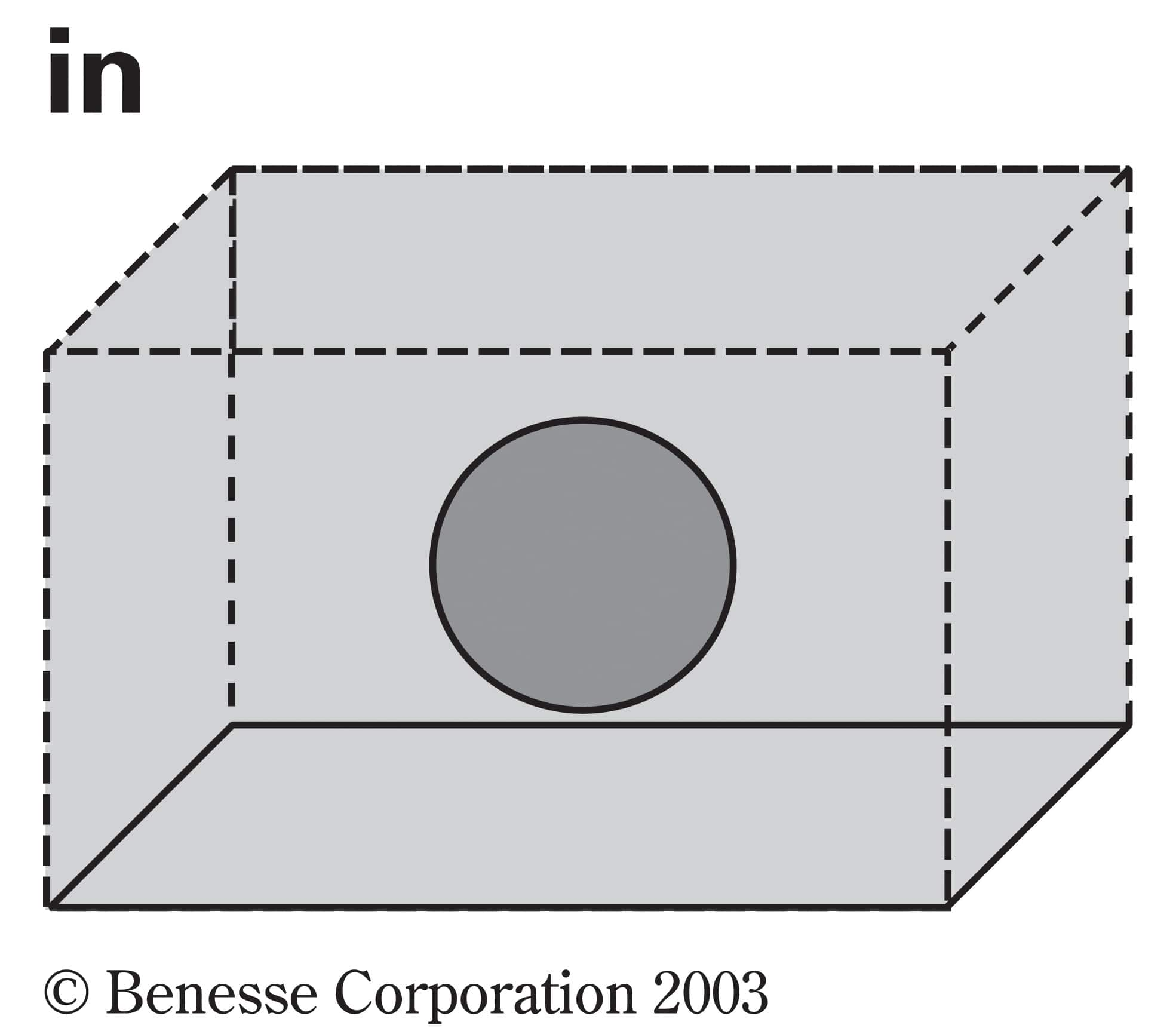 |
inは目的語を入れ物のような空間の中にとらえていることのしるしである.物理的な空間内を表すのが基本だが,in love(恋をしている)では感情を,in 2010(2010年に)では時間を入れ物のように見立てている |
Ⅰ物理的空間内前置詞
├〔場所・位置〕
├(立体的空間)…(の中)に▷1a
├(平面)…に▷1b
├(動作が及ぶ場所)…の箇所を▷1c
└〔衣類の装着〕…を着て▷2
Ⅱ抽象的空間内前置詞
├〔状態〕…の状態(の中)に▷3
├〔様態〕…のうちに▷4
├〔方法・手段〕…で▷5
├〔範囲〕…に▷6
├〔所属・従事・活動〕…に属して▷7
├〔配列・数量〕…の形で▷8
└〔尺度・程度〕…において▷9
Ⅲ時間的空間内前置詞
├〔範囲〕…に▷12a
└〔所要時間〕…したら▷13
├〔場所・位置〕
├(立体的空間)…(の中)に▷1a
├(平面)…に▷1b
├(動作が及ぶ場所)…の箇所を▷1c
└〔衣類の装着〕…を着て▷2
Ⅱ抽象的空間内前置詞
├〔状態〕…の状態(の中)に▷3
├〔様態〕…のうちに▷4
├〔方法・手段〕…で▷5
├〔範囲〕…に▷6
├〔所属・従事・活動〕…に属して▷7
├〔配列・数量〕…の形で▷8
└〔尺度・程度〕…において▷9
Ⅲ時間的空間内前置詞
├〔範囲〕…に▷12a
└〔所要時間〕…したら▷13
前置詞
Ⅰ物理的空間内
1〔場所・位置〕
a(立体的空間を指して)…(の中)に[で,の],…には
b(平面を指して)…に,…の中の
c(動作が及ぶ場所を指して)…の箇所を[に]
2〔衣類の装着〕…を着て,身につけて
Ⅱ抽象的空間内
3〔状態〕…の状態(の中)に[で]
4〔様態〕…のうちに,…のように
5〔方法・手段〕…で
6〔範囲〕…に,…において
7〔所属・従事・活動〕…に属して,…に従事して,…に入っている
8〔配列・数量〕…の形で,…をなして
9〔尺度・程度〕…において,…で
10((最上級の後で))…の中で,…の間で
11((動名詞の前につけて))…するとき,…して
Ⅲ時間的空間内
12〔範囲〕
a…に,…のうちに
b…において,…で
13〔所要時間〕…したら,…の後に
1〔場所・位置〕
a(立体的空間を指して)…(の中)に[で,の],…には
|
b(平面を指して)…に,…の中の
|
c(動作が及ぶ場所を指して)…の箇所を[に]
2〔衣類の装着〕…を着て,身につけて
Ⅱ抽象的空間内
3〔状態〕…の状態(の中)に[で]
|
 |
4〔様態〕…のうちに,…のように
5〔方法・手段〕…で
6〔範囲〕…に,…において
7〔所属・従事・活動〕…に属して,…に従事して,…に入っている
8〔配列・数量〕…の形で,…をなして
9〔尺度・程度〕…において,…で
10((最上級の後で))…の中で,…の間で
11((動名詞の前につけて))…するとき,…して
|
Ⅲ時間的空間内
12〔範囲〕
a…に,…のうちに
b…において,…で
|
13〔所要時間〕…したら,…の後に
副詞
成句be in for ...
((口))(よくないこと・悪天候など)にきっと出会う,…を避けられない
成句be in for it
((口))面倒なことになる,罰を受けなければならなくなる
成句be [get] in on ...
((口))(計画など)に参加している[する],関係している[する]
成句be [get] (well) in with |a| |person|
((口))(人)と親しい
成句have it in for ...
⇒have動詞成句
成句in and out
出たり入ったり;(内も外も)すっかり
形容詞
名詞
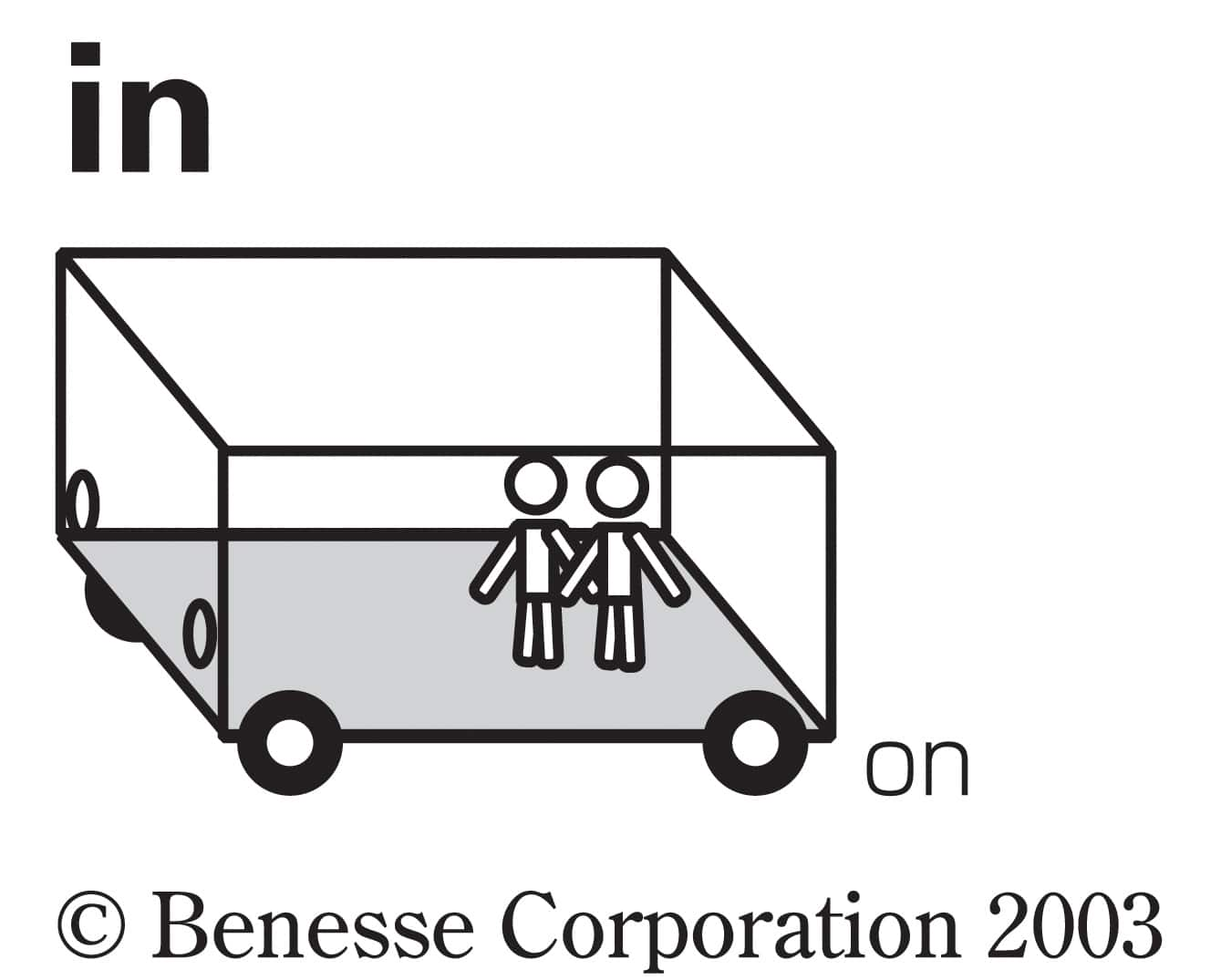
ネットワーク場所を表すinとon 場所を示すときに,inとonのどちらを用いるかは対象のとらえ方によって異なる.例えば「バスに乗っている子ども」を表す場合,バスを入れ物のようにとらえればthe children in the bus, 空間ではなく,平たい板のようなものととらえればthe children on the busとなる.従って,「バスに乗る」はget in the busとget on the busのどちらもいえるが,例えばバイクの場合,空間としてとらえにくいため「バイクに乗る」はget on the bikeといい,inを使うことはできない |
  |
語法 in a weekはThere're seven days in a week.(1週間に7日ある)のように「1週間のうちに」という意味にもなるが,予定を表す文の中では「1週間たったら」という期間の意になる.つまり,発話の時点から一週間が経過し,その経過する時間の長さがinで表されていると考えることができ,I'll call you in a week.は「今から一週間が過ぎたら電話する」という意味になる.「1週間以内に電話する」と言いたいときはI'll call you within a week.とwithinを用いる |
in-
in.
Weblio実用英語辞典

in
「in」は「~の中に」「流行の」「力のある立場」などの意味を持つ英単語である。
副詞:中に、内部に、家に、事務所に、流行して
形容詞:流行の、在職の、内部の
名詞:力のある立場、現職者
1. She is in the room.(彼女は部屋の中にいる。)
2. The meeting will be held in the afternoon.(会議は午後に開催される。)
3. He finished the task in an hour.(彼は1時間以内にその仕事を終えた。)
4. They were in agreement.(彼らは意見が一致していた。)
5. She walked in the rain.(彼女は雨の中を歩いた。)
1. Come in.(入ってきて。)
2. The documents are in.(書類が事務所に届いている。)
3. Is he in?(彼は家にいますか?)
4. Skinny jeans are in right now.(スキニージーンズが今流行っている。)
5. Keep it in.(それを内部に保って。)
1. She always wears in styles.(彼女はいつも流行の服を着ている。)
2. The in president is planning several reforms.(現職の大統領はいくつかの改革を計画している。)
3. He has in knowledge of the system.(彼はそのシステムの内部知識を持っている。)
4. That is the in thing to do.(それが流行のことだ。)
5. The in employees were given a bonus.(在職の従業員にはボーナスが与えられた。)
1. He is one of the ins in the government.(彼は政府内の権力者の一人だ。)
2. The ins have the advantage in the upcoming election.(現職者は今度の選挙で有利だ。)
3. She is fighting to stay an in.(彼女は現職者であり続けるために戦っている。)
4. The ins and outs of the situation are complex.(その状況の内部と外部は複雑だ。)
5. As an in, he has access to confidential information.(現職者として、彼は機密情報にアクセスできる。)
「in」とは・「in」の意味
前置詞:~の中に、~において、~に向かって、~中に、~以内に、~に対して、〜を身につけて副詞:中に、内部に、家に、事務所に、流行して
形容詞:流行の、在職の、内部の
名詞:力のある立場、現職者
inの用法
前置詞
~の中に、~において、~に向かって、~中に、~以内に、~に対して、〜を身につけて「in」が前置詞として使われる場合、場所や時間、状態などを示す。具体的な例を以下に示す。
・例文1. She is in the room.(彼女は部屋の中にいる。)
2. The meeting will be held in the afternoon.(会議は午後に開催される。)
3. He finished the task in an hour.(彼は1時間以内にその仕事を終えた。)
4. They were in agreement.(彼らは意見が一致していた。)
5. She walked in the rain.(彼女は雨の中を歩いた。)
副詞
中に、内部に、家に、事務所に、流行して「in」が副詞として使われる場合、場所や状態の内部を示す。具体的な例を以下に示す。
・例文1. Come in.(入ってきて。)
2. The documents are in.(書類が事務所に届いている。)
3. Is he in?(彼は家にいますか?)
4. Skinny jeans are in right now.(スキニージーンズが今流行っている。)
5. Keep it in.(それを内部に保って。)
形容詞
流行の、在職の、内部の「in」が形容詞として使われる場合、流行していることや、職に就いていること、または内部に関連することを示す。具体的な例を以下に示す。
・例文1. She always wears in styles.(彼女はいつも流行の服を着ている。)
2. The in president is planning several reforms.(現職の大統領はいくつかの改革を計画している。)
3. He has in knowledge of the system.(彼はそのシステムの内部知識を持っている。)
4. That is the in thing to do.(それが流行のことだ。)
5. The in employees were given a bonus.(在職の従業員にはボーナスが与えられた。)
名詞
力のある立場、現職者「in」が名詞として使われる場合、権力を持つ立場や現職者を指す。具体的な例を以下に示す。
・例文1. He is one of the ins in the government.(彼は政府内の権力者の一人だ。)
2. The ins have the advantage in the upcoming election.(現職者は今度の選挙で有利だ。)
3. She is fighting to stay an in.(彼女は現職者であり続けるために戦っている。)
4. The ins and outs of the situation are complex.(その状況の内部と外部は複雑だ。)
5. As an in, he has access to confidential information.(現職者として、彼は機密情報にアクセスできる。)
ハイパー英語辞書

in
前置詞
- 用例
- The kids were playing in the street.
| 印欧語根 | ||
|---|---|---|
| en | 中に、中への意。内側、内部、「…の間で」を表すこともある。重要な派生語は、and,接頭辞en-(enableなど)、接頭辞in-(increaseなど)、接頭辞inter-(interceptなど)、接頭辞intro-(introduceなど)などの単語。 | |
コンピューター用語辞典

IN
information network<IN>; Intelligent Network<IN>
付加価値通信網(VAN)の一種.IBMがSNAのもとに,ユーザ端末を相互接続するネットワークサービス,およびIBMの大形コンピュータを使って行なう計算サービスを提供している.
Bell Communications Research (Bellcore) 社が開発したコンピュータ制御による「サービス重点型」電話網アーキテクチャ.電話番号の特定部分が特定のサービスを起動する.
- 用例
- ベル・アトランティック社によると, IN(インテリジェントネットワーク)は「サービス特化」アーキテクチャである.
According to Bell Atlantic, IN (Intelligent Network) is a "service-specific" architecture.
参照
IN<Intelligent Network>
インテリジェント・ネットワーク; IN
Bell Communications Research (Bellcore) 社が開発したコンピュータ制御による「サービス重点型」電話網アーキテクチャ.電話番号の特定部分が特定のサービスを起動する.
- 用例
- According to Bell Atlantic, IN (Intelligent Network) is a "service-specific" architecture.
ベル・アトランティック社によると, IN(インテリジェントネットワーク)は「サービス特化」アーキテクチャである.
参照
IN<information network>
日本語WordNet(英和)

in
副詞
形容詞
名詞
遺伝子名称シソーラス

IN
| human | 遺伝子名 | IN |
| 同義語(エイリアス) | LHR; GP90 lymphocyte homing/adhesion receptor; HUTCH-I; CDW44; CD44 antigen (Indian blood group); Hyaluronate receptor; CD44 antigen precursor; CD44; Hermes antigen; CDw44; Heparan sulfate proteoglycan; Epican; ECMR-III; MGC10468; Extracellular matrix receptor-III; CD44R; PGP-1; MDU2; Phagocytic glycoprotein I; Pgp1; MUTCH-I; MIC4; MDU3; MC56; CD44 molecule (Indian blood group); HCELL | |
| SWISS-PROTのID | SWISS-PROT:P16070 | |
| EntrezGeneのID | EntrezGene:960 | |
| その他のDBのID | HGNC:1681 |
| mouse | 遺伝子名 | In |
| 同義語(エイリアス) | AhR; Ahre; Ahr; Aryl hydrocarbon receptor precursor; Ah receptor; Ah; Ahh; dioxin receptor; aryl-hydrocarbon receptor | |
| SWISS-PROTのID | SWISS-PROT:P30561 | |
| EntrezGeneのID | EntrezGene:11622 | |
| その他のDBのID | MGI:105043 |
| rat | 遺伝子名 | In |
| 同義語(エイリアス) | In_mapped; Incisorless; incisorless (mapped); ia | |
| SWISS-PROTのID | --- | |
| EntrezGeneのID | EntrezGene:24502 | |
| その他のDBのID | RGD:2910 |
本文中に表示されているデータベースの説明

Wiktionary英語版
出典:Wiktionary
-in'
出典:『Wiktionary』 (2026/03/23 01:58 UTC 版)
別の表記
- -in
語源
Alternate pronunciation of -ing with /n/ instead of /ŋ/. It is inherited from 中期英語 -ynge, -inge, -yng, -ing, from two sources:
The two 古期英語 suffixes became confused in 中期英語; although the exact mechanism of this confusion is disputed, -in' is probably derived from -ung/-ing with loss of /ɡ/ under low stress rather than from -ende.
使用する際の注意点
- In speech, the difference between the pronunciations /ɪŋ/ and /ɪn/ is sometimes one of formality. Some speakers tend to use /ɪŋ/ in more formal situations and /ɪn/ in less formal situations. However, other speakers can either use mainly /ɪŋ/ or mainly /ɪn/ regardless of the situation.
- In writing, both the /ɪŋ/ and the /ɪn/ pronunciations are usually spelled -ing. When writers use -in', as in makin', they are emphasizing the informality of the situation (or attempting, however accurately, to show the social status of the speaker).
- The [ɪn] pronunciation is more common for present participles and less common for verbal nouns.
参照
- ^ Dobson, E[ric] J. (1957), English pronunciation 1500-1700, second edition, volume II: Phonology, Oxford: Clarendon Press, published 1968, →OCLC, § 377, page 950.
- ^ Jespersen, Otto (1909), A Modern English Grammar on Historical Principles (Sammlung germanischer Elementar- und Handbücher; 9), volume I: Sounds and Spellings, London: George Allen & Unwin, published 1961, § 13.11, page 355.
- ^ Jordan, Richard (1974), Eugene Crook, transl., Handbook of the Middle English Grammar: Phonology (Janua Linguarum. Series Practica; 218), The Hague: Mouton & Co. N.V., , § 174, page 162.
-in-
i'n
語源
in
出典:『Wiktionary』 (2026/05/14 21:03 UTC 版)
発音
語源 1
Preposition and verb from 中期英語 in, from 古期英語 in, from Proto-Germanic *in.
Adverb, noun and adjective from 中期英語 in, from 古期英語 inn and inne, from Proto-Germanic *innai.
Sense 1/2 "in"/"into" are from the original PIE prefix, with locative/accusative case respectively. Sense 3/4 "qualification"/"means" are from the PIE metaphor of all infinitives coming from locatives.
別の表記
- i' (colloquial, poetic)
前置詞
in
- Used to indicate location, inclusion, or position within spatial, temporal or abstract limits.
- Contained by; inside.
- Within the bounds or limits of.
-
She stood in the spotlight.
- Surrounded by; among; amidst.
- Wearing (an item of clothing).
- I glanced over at the pretty girl in the red dress.
- Who’s the blonde in the sunhat over there?
- Expressing abstract containment.
- Part of; a member of; out of; from among.
-
You are one in a million.
-
- During (a period of time).
- Within (a certain elapsed time); by the end of.
- At the end of (a period of time).
- (grammar, phonetics) Characterized by.
- Contained by; inside.
- Into.
- By (doing something); indicating action causing an effect or achieving a purpose.
- Indicating an order or arrangement.
- Denoting a state of the subject.
-
My fruit trees are in bud.
-
The company is in profit.
- Indicates, connotatively, a place-like form of someone's (or something's) personality, as his, her or its psychic and physical characteristics.
- Pertaining to; with regard to.
-
There has been no change in his condition.
-
- Used to indicate means, medium, format, genre, or instrumentality.
派生語
- 6in4
- add-in
- bail in
- ben
- built-in
- calcin
- caytaxin
- come in
- drop-in
- end in
- grid-in
- herein
- inable
- inband
- in between
- inbetwixt
- inblown
- inborne
- inbound
- inbox
- inbreath
- inburnt
- inburst
- inclearing
- incross
- indeed
- indegree
- indrift
- indriven
- infill
- in-fill
- in-flight
- in-footed
- inframe
- in funds
- ingate
- ingoer
- ingoing
- inkneed
- inlane
- inlier
- inlink
- inly
- inmeats
- inmost
- innage
- innermost
- inness
- in on
- in one's eyes
- inorder
- inpatient
- inplane
- inroad
- inrun
- inservice
- inshave
- inshoot
- inside
- insole
- in someone's eyes
- insomuch
- insooth
- insourcing
- inspan
- in-state
- instead
- instead of
- instealing
- in steam
- instore
- instroke
- insucking
- inswinging
- inswung
- intext
- into
- intoed
- intown
- in-town
- inwards
- inwash
- inwicking
- inworld
- live-in
- mixin
- opt-in
- piss in the popcorn
- plugin
- puss in a bag
- therein
- tuck-in
- wherein
- whipper-in
- within
関連する語
動詞
in (third-person singular simple present ins, present participle inning, simple past and past participle inned)
- (obsolete, transitive) To enclose.
- (obsolete, transitive) To take in; to harvest.
副詞
in (not comparable)
- At or towards the interior of a defined space, such as a building or room.
- Towards the speaker or other reference point.
- So as to be enclosed or surrounded by something.
- After the beginning of something.
- (in combination, after a verb) Denotes a gathering of people assembled for the stated activity, sometimes, though not always, suggesting a protest.
名詞
- A position of power or influence, or a way to get it.
-
1987 February 1, T. R. Witomski, “Zeitgeist or Poltergeist? Why Gay Books Are So Bad”, in Gay Community News, volume 14, number 28, page 9:
-
Holleran's and White's diminishing capacities as writers does not affect their publishing ins': the writer the house knows is always better than the writer the house doesn't know.
-
- (chiefly in the plural) One who, or that which, is in; especially, one who is in office.
-
1827, Benjamin Chew, A Sketch of the Politics, Relations, and Statistics, of the Western World, page 192:
-
- (sports) The state of a batter/batsman who is currently batting; see innings.
反意語
関連する語
形容詞
in (comparative more in, superlative most in)
- (not comparable) Located indoors, especially at home or at one's office or place of work.
- (not comparable) Located inside something.
- (sports, of the ball or other playing implement) Falling or remaining within the bounds of the playing area.
- Inserted or fitted into something.
- Having been collected or received.
- In fashion; popular.
-
Skirts are in this year.
-
- Incoming.
-
the in train
-
- (nautical, of the sails of a vessel) Furled or stowed.
- Of the tide, at or near its highest level.
- (law) With privilege or possession; used to denote a holding, possession, or seisin
- (cricket) Currently batting.
- Having familiarity or involvement with somebody.
- (informal) Having a favourable position, such as a position of influence or expected gain, in relation to another person.
- (of fire or fuel) (British, Ireland, Australia, New Zealand) Burning; ablaze.
-
1888, H.C. O’Neill, Edith A. Barnett, Our Nurses and the Work They Have to Do, page 81:
-
Blocks of compressed coal keep the fire in for a long time, but they give out very little heat.
-
-
- Having used, consumed , or invested a certain amount.
派生した語
- → Portuguese: in
語源 2
別の表記
- in.
名詞
- Abbreviation of inch or inches.
-
2025 June 3, Mark O’Connell, “‘The Mozart of the attention economy’: why MrBeast is the world’s biggest YouTube star”, in The Guardian, archived from the original on 7 June 2025:
-
Donaldson is not by any means one of God’s chosen entertainment-industry stars. He’s not especially handsome, and neither is he particularly funny-looking. At 6ft 5in, and with the sparse reddish beard he nowadays sports, he has the charmingly awkward aspect of a teen who has recently put on a growth spurt and hasn’t quite settled into himself.
-
-
(Can we date this quote?), “What is a Strain Gage?”, in Micro-Measurements, archived from the original on 13 December 2025:
-
参照
発音
- IPA: /in/
使用する際の注意点
In the West Saxon dialect, this word was replaced by on during the separate prehistory of Old English. However, it was still used as a prefix to form many words such as ingang (“entrance”), inġewinn (“civil war”), inġeþanc (“inner thoughts”), inlendisċ (“native”), intinga (“cause”), and inweorc (“indoor work”), and it was still implied by derived adverbs such as inne (“inside”), innan (“from the inside”), and inn (“in,” adverb).
派生した語
- Middle English: in
語源 2
From Proto-Germanic *inn.
発音
- IPA: /in/
名詞
- Any kind of accommodation; particularly:
- A home or house; habitation or housing one lives in.
-
1387–1400, [Geoffrey] Chaucer, “The Tale of the Wẏf of Bathe”, in The Tales of Caunt́bury (Hengwrt Chaucer; Peniarth Manuscript 392D), Aberystwyth, Ceredigion: National Library of Wales, published [c. 1400–1410], →OCLC, folio 62, recto:
-
- A dormitory; housing for students.

発音
- IPA: /in/, /iː/, /i/, /ən/
前置詞
in
- in; with the following special senses:
- in, inside; encircled or confined by, with the following special senses:
- wearing, having on, clad in
- in a quality or mode: with the following special senses:
- inside, at or on a location or place.
- secured with; bound with
- in the midst of, while, currently doing
- in (pieces or portions), into.
- about; of, on the matter of.
- in the form, way, or manner of.
- on, above, on top of.
- facing at, in the direction of.
- Being one of a set or group.
- Being owned by; in one's possession.
- due to, as, for the reason that.
- versus; in conflict with; fighting with.
- using, utilising, with the means of.
- (rare) with, in the company of.
使用する際の注意点
in is usually postpositive in Middle English. For example, the previous sentence would be in is after þe noun lome Middel Englisch in.
参照
語源 3
From 古期英語 inne, from Proto-Germanic *innai.
発音
- IPA: /in/
副詞
in
語源 4
語源
From earlier en, from Proto-Italic *en, from Proto-Indo-European *h₁én (“in”). Cognates include English in, Ancient Greek ἐν (en).
The ablative is from the locative, and the accusative is from the directional.
発音
- (Classical Latin) IPA: [ˈɪn]
- (modern Italianate Ecclesiastical) IPA: [ˈin]
前置詞
in (+ ablative)
- in, at, on, upon, from (space) [with ablative]
- under, within, in [with ablative]
- during, within, while in (time) [with ablative]
- about, respecting, concerning (of reference) [with ablative]
- among [with ablative]
in (+ accusative)
- into, to [with accusative]
- toward, towards, against, at [with accusative]
- until, for [with accusative]
- about [with accusative]
- according to [with accusative]
-
c. 52 BCE, Julius Caesar, Commentarii de Bello Gallico VII.19:
-
generatimque distributi in civitates
- and being distributed in tribes according to their respective nations
-
generatimque distributi in civitates
-
引用
- For quotations using this term, see Citations:in.
反意語
派生語
in-
出典:『Wiktionary』 (2026/05/15 18:15 UTC 版)
語源 1
From 中期英語 in-, from 古期英語 in- (“in, into”, prefix), from Proto-Germanic *in, from Proto-Indo-European *h₁én. More at in.
発音
派生語
terms derived from within
語源 2
From 中期英語 in-, borrowed (in words of Latinate origin) from Latin in-, from Latin in, from Proto-Indo-European *en (cognate to Germanic in-, above). Often borrowed from French in- (e.g. incise, incite, incline, indication), or as French en-, originally from Latin in.
使用する際の注意点
- In direction sense, used in Latinate terms, and opposed by ex-, e-, rather than Germanic out-; senses not always strict antonyms. Examples include infiltrate/exfiltrate, ingress/egress, invade/evade.
語源 3
From 中期英語 in-, borrowed (in words of latinate origin) from Latin in- (“not”). Sometimes the Latin word has passed through French before reaching English (e.g. incapable, incertainty, inclement, incompatible). Doublet of un-.
接頭辞
in-
- (no longer productive) Used with certain words to reverse their meaning.
- (no longer productive) Added to adjectives to mean not.
- Added to nouns to mean lacking or without.
- Cannot, unable.
- inannihilable is that cannot be annihilated, inappellable is that cannot be appealed against, inassimilable is that cannot be assimilated
派生語
inactivable
inadaptation
inadept
inadherence
inadherent
inadhesion
inambiguous
inamicable
incohesion
incompensated
inconceptualizable
incongealable
inconsumable
indefectible
indifferentiable
indifferentiate
indifferentiation
indiscerptible
indubious
inequidimensional
inequidistant
inexhaustive
indifferentiability
ineffectivity
inexhaustibility
- imbalanced
- inable
- inacceptable
- inaccordant
- inaccuracy
- inaccurate
- inacquiescent
- inactivate
- inactivist
- inadaptable
- inadaptive
- inaddible
- inadept
- inadequate
- inadherent
- inadmissible
- inadmissibly
- inadventurous
- inadvisable
- inadvised
- inaesthetic
- inaffable
- inaffected
- inaffectionate
- inaidable
- inalienable
- inalimental
- inamiable
- inamicable
- inamovable
- inamyloid
- inangular
- inanimate
- inanimated
- inapparent
- inappealable
- inappendiculate
- inapplicable
- inapposite
- inappreciable
- inappreciative
- inapprehensive
- inapproachable
- inappropriable
- inappropriate
- inarable
- inarguable
- inartful
- inarticulable
- inarticulate
- inarticulated
- inarticulation
- inartificial
- inartistic
- inaspirable
- inaudible
- inauspicious
- inauthentic
- inauthoritative
- inavertible
- inavoidable
- incalculable
- incapable
- incapacious
- incapacity
- incautelous
- incautious
- incelibacy
- incelibate
- incensurable
- incertain
- inchangeability
- inchaste
- incircumscription
- incircumspect
- incirrate
- incivil
- incoagulable
- incoalescence
- incoercible
- incoexistence
- incogent
- incogitative
- incognizable
- inimicable
- imbonity
- inability
- inabstinence
- inaccess
- inacquaintance
- inaction
- inactivism
- inadaptation
- inadhesion
- inæsthetical
- inanimate
- inanimation
- inaperturate
- inapparency
- inappetence
- inappetent
- inapplication
- inappreciation
- inapprehension
- inartistic
- inattendance
- inattentive
- incaution
- incelebrity
- inchastity
- incivil
- incivism
- inclarity
- incognizance
- inactinic
- inaddibility
- inalterable
- inannihilable
- inappeasable
- inappellable
- inapprehensible
- inapproximable
- inarticulate
- inassimilable
- inattributable
派生語
inabsorbable
inabstinence
inaccentuated
inacceptably
inaccordant
inacquiescent
inactinic
inactionable
inactivism
inactivist
inadaptive
inaddable
inaddibility
inaddible
inadhering
inadhesion
inadjustable
inadventurous
inadvised
inadvisedly
inæqual
inæsthetical
inaffable
inaffected
inaffectionate
inagglutinable
inamovable
inamyloid
inangular
inanimated
inannihilable
inaperturate
inapparency
inappealable
inappetent
inapplication
inappropriable
inapproximable
inaptronym
inarable
inartful
inarticulated
inaspirable
inassuageable
inattackable
inattributable
inaudacity
inaureole
inauthoritative
inavertible
inavoidable
imbalsamation
imbank
imbannered
imbarn
imbay
inbeaming
inbear
inbearable
imbenching
inbent
inbind
inblind
imbosk
imbound
imbow
imbower
inbreak
inbreaking
inbring
inburning
incage
incautelous
incavation
incave
incaved
incaverned
incelebrity
incelibate
inchase
inchastity
incircumscriptible
incircumscription
incirrate
incivilisation
incivilization
incivism
inclamation
inclarity
incloister
incoagulability
incoagulable
incoalescence
発音
- IPA: /in/
語源 1
From in (“in”). More at in.
接頭辞
in-
派生した語
- Middle English: in-
- English: in-
語源 2
From Proto-Germanic *in- (“strong”, adjective), from Proto-Indo-European *indʰro- (“swelling; strong”), from *oyd- (“to swell”).
接頭辞
in-
派生語
派生した語
- Middle English: in-
発音
- (Classical Latin) IPA: [ɪn]
- (modern Italianate Ecclesiastical) IPA: [in]
語源 1
From Proto-Italic *n̥-, from Proto-Indo-European *n̥- (“not”), zero-grade form of the negative particle *né (“not”). Akin to ne-, nē, nī.
使用する際の注意点
Affixed primarily to adjectives.
The pronunciation or spelling of the prefix may be changed in some situations:
- Before b, p or m, it may become im-. The spelling in- is also found in this context.
- Before l or r, it may become il- or ir-, respectively. These assimilations only became usual in post-Augustan Latin: until a late date, the usual Roman spellings were inl- and inr-.
- Before gn and sometimes n, it becomes ig- (pronounced [ɪŋ-]).
- Before f or s, it becomes īn- (pronounced [ĩː-]).
- Before g, c or q, the spelling remains in-, but the pronunciation becomes [ɪŋ-].
派生語
iniquus
inanimus
iners
incestus
incelebratus
inconcinnus
inconditus
incongelabilis
incorruptela
increditus
incredulus
incruentus
indecoro
indifferens
indigeries
indignus
indireptus
indubius
inedia
ineffabilis
inemptus
inequitabilis
inerrans
inexorabilis
inexpertus
inexpugnabilis
infabre
infandus
infertilis
inflexuosus
infucatus
inglorius
ingratus
ingustabilis
ingustatus
派生した語
- Italian: in-
- Sicilian: n- (m- before p, b or m, il- before l, and ir- before r)
- → Catalan: in- (sometimes i-, or im- before p, b and m)
- → French: in-
- → Middle English: in-
- → Portuguese: in- (im- before p or b, i- before l, n, or m, and ir- before r)
- → Romanian: in- (im- before p or b, and i- before l, m, or r)
- → Spanish: in- (im- before p or b, i- before l, and ir- before r)
接頭辞
in-
- Prepositional prefix, generally attached to verbs to derive new verbs with a range of meanings.
- in, within, inside
- against; into; on, upon; to, towards
- in- + gradior (“to step, go”) → ingredior (“to go into, enter”)
- in- + nūbō (“to marry”) → innūbō (“to marry into”)
- in- + cadō (“to fall”) → incidō (“to fall into, fall upon”)
- in- + pangō (“to set, fix, settle, fasten”) → impingō (“to fasten upon, dash against, strike against”)
- in- + flīgō (“to strike”) → īnflīgō (“to strike on, strike against, inflict, impose upon”)
- in- + vocō (“to call”) → invocō (“to call on, call upon, invoke”)
- Used as an intensifier.
- Attached to inchoative verbs, can express the sense of a change being started or reaching partial completion
使用する際の注意点
The same spelling rules apply as for Etymology 1 above; see the usage notes there.
Not to be confused with Etymology 1 above, which means "not".
派生語
inigo
inaro
incido
inculco
increpo
incrusto
incunabula
infit
inflammo
influo
infucatus
infulcio
ingemino
inheredito
illicio
inmissio
inodio
impeioro
implecto
imprimo
派生した語
語源 3
From Proto-Indo-European *énu (“along, after”). Cognate with Sanskrit अनु (ánu-, “after”), Avestan 𐬀𐬥𐬎 (anu, “after; corresponding to”), Old Persian 𐎠𐎵𐎺 (a-nu-v /anuv/), and Gothic 𐌹𐌽𐌿 (inu, “without”) (whose meaning developed “along” > “past” > “without”).
別の表記
- īn-, ī-
接頭辞
in-
- after
参照
- ^ Walde, Alois; Hofmann, Johann Baptist (1938), “1. in-”, in Lateinisches etymologisches Wörterbuch (in German), 3rd edition, volume 1, Heidelberg: Carl Winter, page 676f.
- ^ William Gardner Hale and Carl Darling Buck, 1903. Latin Grammar, page 25
- ^ Walde, Alois; Hofmann, Johann Baptist (1938), “2. in”, in Lateinisches etymologisches Wörterbuch (in German), 3rd edition, volume 1, Heidelberg: Carl Winter, page 677f.
- ^ Haverling, Gerd. "On Prefixes and Actionality in Classical and Late Latin." Acta Linguistica Hungarica, vol. 50, no. 1–2, 2003, pp. 113–35, http://www.jstor.org/stable/26189816. Accessed 6 Apr. 2022. Page 117
- ^ Dunkel, George E. (2014), Lexikon der indogermanischen Partikeln und Pronominalstämme [Lexicon of Indo-European Particles and Pronominal Stems] (in German), volume 2: Lexikon, Heidelberg: Universitätsverlag Winter, →ISBN, pages 241-44
in.
Weblio例文辞書
in
1
例文
例文
since
例文
例文
have
例文
6
1時に.
例文
7
にある
例文
It's in...
8
活動中で
9
内から
例文
a
12
例文
13
でがある
14
15
16
例文
例文
around
19
なってゆく
20
21
例文
23
24
既にある
25
例文
26
27
例文
28
29
Weblio例文辞書はプログラムで機械的に意味や英語表現を生成しているため、不適切な項目が含まれていることもあります。ご了承くださいませ。
in ~
例文
2
1時に.
例文
例文
around
4
中間で
5
例文
6
真っ裸で
7
真っ裸で.
8
にある
例文
It's in...
例文
11
12
例文
14
例文
例文
since
16
活動中で
17
でがある
18
19
20
既にある
21
22
23
24
25
例文
of something under discussion, that which has just been made mention of
例文
the inside of a metropolis
27
28
29
30
〜する
Weblio例文辞書はプログラムで機械的に意味や英語表現を生成しているため、不適切な項目が含まれていることもあります。ご了承くださいませ。
in'
例文
2
にある
例文
It's in...
例文
例文
5
1時に.
例文
例文
7
8
9
活動中で
10
例文
around
例文
since
13
14
例文
例文
a
16
17
でがある
18
19
例文
of something under discussion, that which has just been made mention of
21
例文
have
例文
he―she
23
既にある
24
25
26
在るもの
27
内から
28
29
30
〜してのける
例文
to do unexpectedly done something
Weblio例文辞書はプログラムで機械的に意味や英語表現を生成しているため、不適切な項目が含まれていることもあります。ご了承くださいませ。
in.
例文
2
1時に.
例文
例文
4
5
例文
7
のろま.
例文
around
9
その間に.
10
その間に.
11
12
例文
13
一点に.
例文
since
15
戯れに.
17
近々.
18
例文
19
20
21
活動中で
22
例文
23
われ.
例文
例文
25
まじめに.
例文
with gravity
26
むかつく.
例文
go within
28
のろし.
例文
29
のろし.
例文
30
集まる.
Weblio例文辞書はプログラムで機械的に意味や英語表現を生成しているため、不適切な項目が含まれていることもあります。ご了承くださいませ。


- Copyright (c) 1995-2026 Kenkyusha Co., Ltd. All rights reserved.
- Copyright © Benesse Holdings, Inc. All rights reserved.
- © 2000 - 2026 Hyper Dictionary, All rights reserved

- This page uses the JMdict dictionary files. These files are the property of the Electronic Dictionary Research and Development Group, and are used in conformance with the Group's licence.

- Copyright (c) 1995-2026 Kenkyusha Co., Ltd. All rights reserved.

- Copyright(c)2026 総務省 統計局 All rights reserved
政府統計の総合窓口(e-Stat)
- Copyright (C) 1994- Nichigai Associates, Inc., All rights reserved.

- Copyright (C) 1994- Nichigai Associates, Inc., All rights reserved.

- Copyright (C), Japan Atomic Energy Agency (JAEA)
- 北里大学医療衛生学部 医療情報学研究室編集 医学用語集
- ※この記事は「北里大学医療衛生学部 医療情報学研究室」ホームページ内の「医学用語集」(2001.06.10. 改訂)の情報を転載しております。

- Copyright (C) 2026 ライフサイエンス辞書プロジェクト
- 日本語ワードネット1.1版 (C) 情報通信研究機構, 2009-2010 License All rights reserved.
WordNet 3.0 Copyright 2006 by Princeton University. All rights reserved. License

- Copyright(C)2002-2026 National Institute of Information and Communications Technology. All Rights Reserved.

- Copyright © 2026 CJKI. All Rights Reserved

- Copyright © 2026 CJKI. All Rights Reserved
- DBCLS Home Page by DBCLS is licensed under a Creative Commons 表示 2.1 日本 License.

- Copyright (C) 1994- Nichigai Associates, Inc., All rights reserved.
「斎藤和英大辞典」斎藤秀三郎著、日外アソシエーツ辞書編集部編
- Wiktionary
- Text is available under Creative Commons Attribution-ShareAlike (CC-BY-SA) and/or GNU Free Documentation License (GFDL).
Weblio英和・和英辞典に掲載されている「Wiktionary英語版」の記事は、Wiktionaryの-in' (改訂履歴)、-in- (改訂履歴)、i'n (改訂履歴)、in (改訂履歴)、in- (改訂履歴)、in. (改訂履歴)の記事を複製、再配布したものにあたり、Creative Commons Attribution-ShareAlike (CC-BY-SA)もしくはGNU Free Documentation Licenseというライセンスの下で提供されています。
- CMUdict
- CMUdict is Copyright (C) 1993-2008 by Carnegie Mellon University.
