


takeとは 意味・読み方・使い方
追加できません
(登録数上限)
 単語を追加
単語を追加
意味・対訳 (手などで)取る、(…を)取る、つかむ、(…を)抱く、抱き締める、(わな・えさなどで)捕らえる、捕縛する、捕虜にする、(…を)(…で)捕らえる、占領する
- 〔+目的語(+前置詞+(代)名詞)〕〔手・指・道具などで〕〈…を〉取る,つかむ 〔in,between,with〕.
- The child took my hand.
- その子は私の手を取った[手につかまった] (cf. take 1b).
| 覚え方 |
|
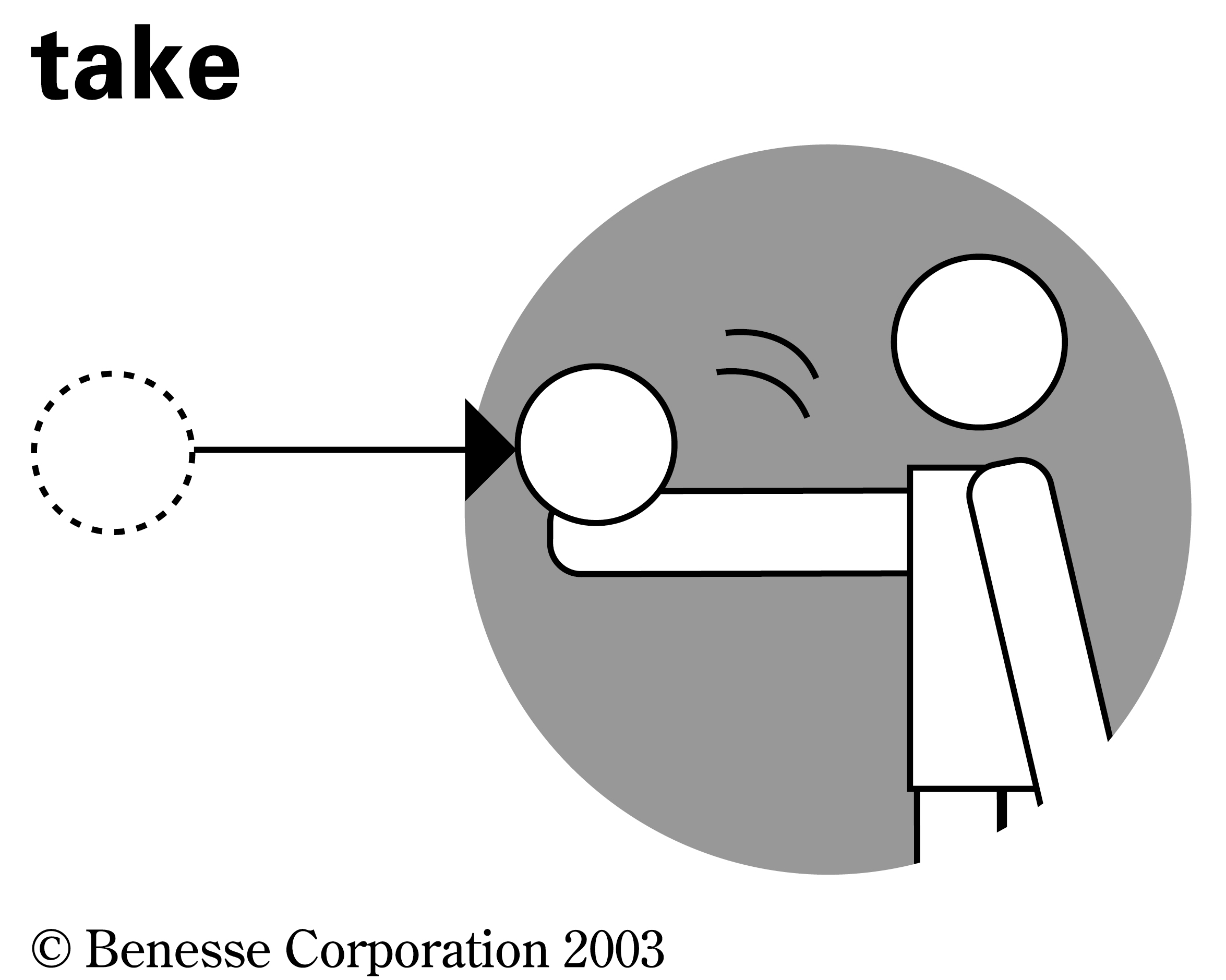
自分のところに取り込む 何かを手にして自分のところに取り込む動作が関与し,「あるところから何かを取る」「何かを(手に)取る」「何かを自分のところに取り込む」の3つの側面のどこを強調するかで,さまざまな意味が展開する |
takeの |
takeの活用表 |
|
takeの |
takeの学習レベル | レベル:1英検:3級以上の単語学校レベル:中学以上の水準TOEIC® L&Rスコア:220点以上の単語 |
研究社 新英和中辞典での「take」の意味 |
|
take
1
(手などで)取る 《★【類語】 take はものを取るの最も一般的な語; seize はいきなり力ずくでつかむ; grasp はしっかりと握る》:
a
〔+目的語(+前置詞+(代)名詞)〕〔手・指・道具などで〕〈…を〉取る,つかむ 〔in,between,with〕.
The child took my hand. その子は私の手を取った[手につかまった] (cf. take 1b). I took the pen between my fingers. 私はそのペンを指の間にはさんだ. |
b
〔+目的語+by+名〕〈人の〉〔体・衣服の一部を〕つかむ 《★【用法】 体や衣服の部分を表わす名詞の前に the を用いる》.
The child took me by the hand. その子は私の手を取った[手につかまった] (cf. take 1a). |
c
〔+目的語+前置詞+(代)名詞〕〈…を〉〔胸に〕抱く,抱き締める 〔to〕; 〈…を〉〔腕に〕抱く 〔in〕.
She took her child to her breast [in her arms]. 彼女はわが子を胸[腕]に抱き締めた. |
2
a
(わな・えさなどで)〈鳥獣を〉捕らえる; 〈犯人などを〉捕縛する,捕虜にする.
take three trout マスを 3 匹つかまえる. The thief was taken in the act. 泥棒は現行犯でつかまった. |
b
〔+目的語+補語〕〈…を〉〈…で〉捕らえる.
take a person captive 人をとりこにする. He was taken prisoner. 彼は捕虜になった. |
c
〈とりで・都市などを〉占領する,奪取する.
take a fort とりでを奪取する. |
3
a
〈賞などを〉獲得する,手に入れる,取得する.
take a degree 学位を取得する. take a bribe 収賄(しゆうわい)する. Her team took (the) first prize at the contest. 彼女のチームが競技で 1 等賞を取った. |
b
〔+目的語(+from+(代)名詞)〕〔…から〕〈…を〉受ける,稼ぐ.
He took 600 dollars last week. 彼は先週 600 ドルを稼いだ. Take that! (相手を打ちながら)これでもくらえ. I'm not going to take any more of your insults [any more insults from you]. もうこれ以上君から侮辱されるのはごめんだ. |
c
[take it で] 《口語》 受け入れる,受諾する.
4
a
〈ものを〉買う.
I'll take this hat. この帽子をください. |
b
〈新聞などを〉予約して取る,〈切符・座席などを〉予約する; 〈家などを〉(契約して)借りる.
What paper do you take? 何新聞を取っていますか. We have taken a cottage by the sea for the holidays. 休暇用に海岸の小別荘を借りている. |
5
a
〈薬・飲食物などを〉(体内に)取り入れる,食べる,飲む 《★【用法】 薬は錠剤・液剤いずれも take を用いるが,飲食物は口語では have または eat,drink のほうが一般的》.
take a meal 食事をとる. take medicine 薬を服用する. Not to be taken internally. 内服しないこと 《★薬の服用の注意》. I don't take coffee. コーヒーは飲みません. |
b
〔+目的語+in+(代)名詞〕〈ミルク・砂糖などを〉〔…に〕入れる.
take sugar in one's coffee コーヒーに砂糖を入れる. |
c
〈空気を〉吸い込む.
take a deep breath 深呼吸をする. |
6
a
〈人を〉採用する; 〈弟子を〉取る; 〈下宿人を〉置く; 〈妻を〉めとる.
take pupils 弟子を取る. take lodgers 下宿人を置く. take a wife 妻を迎える. |
b
〔+目的語+前置詞+(代)名詞〕〈人を〉〔…に〕入れる,入会させる 〔to,into〕.
We took him into the group. 彼をそのグループに加えた. |
7
a
〈手段などを〉講じる.
take measures [steps] 方策を講じる. |
b
〈機会などを〉使用する,利用する.
Take (advantage of) every opportunity. あらゆる機会を利用しなさい. Take your time before answering. ゆっくり考えたうえで答えたまえ 《急がなくてよい》. |
c
〈…を〉(例に)あげる.
Many wives earn a lot. Take Susan (, for example). 多くの主婦がたくさん稼いでいる. スーザンを(例として)みてごらん. |
8
a
〈…を〉(選んで)用いる,採用する.
I take size nine shoes. 私は 9 号の靴をはきます. |
b
〈機械が〉〈…を〉使用する.
This vending machine takes any coin. この販売機はどんな硬貨も使える. |
9
a
〈科目・コースなどを〉取る; 〈授業を〉受ける.
take dancing lessons ダンスを習う. take biology 生物学を取る. |
b
〈専門家の意見を〉求める,聞く.
take medical [legal] advice 医師の診察を受ける[弁護士の意見を聞く]. |
10
〔+目的語+from+(代)名詞〕
a
〈…を〉〔…から〕得る,取り出す.
This medicine takes its name from the inventor. この薬は発明者の名を取っている. |
b
〈…を〉〔…から〕引用する,借用する.
This line is taken from Shakespeare. この行はシェイクスピアから引用されている. |
11
a
〈恐怖・病気・気分などが〉〈人を〉(急に)襲う 《★しばしば受身で用い,前置詞は with》.
She was taken with sickness [illness]. 彼女は病気になった (cf. take 11b). |
b
〔+目的語+補語〕〈人を〉〈病気に〉させる 《★通例受身で用い,前置詞は用いない》.
She was taken sick [ill]. 彼女は病気になった (cf. take 11a). |
c
〔+目的語+前置詞+(代)名詞〕〈人を〉〔ある状況のもとで〕襲う,不意打ちする 〔by,at〕.
take a person by surprise 人の不意を打つ, 人を奇襲する. take a person at a disadvantage 人に不意打ちを食わせる. |
12
〈人が〉〈病気・発作などに〉襲われる,かかる.
take (a) cold かぜを引く 《★【比較】 catch を用いるほうが一般的》. |
13
〈人目・関心を〉引く; 〈人の〉心を引きつける,〈人を〉うっとりさせる 《★しばしば受身で用い,前置詞は with,by》.
take a person's eye 人の目を引く. The song took my fancy. その歌が気に入った. I was much taken with [by] her beauty. 彼女の美しさにすっかりまいった. |
14
a
〈火が〉つく.
take fire 火がつく. |
b
〈染料・香りなどを〉吸収する.
The milk has taken the smell of fish. (冷蔵庫で)ミルクに魚のにおいが移った. |
c
〈磨きなどが〉きく.
Marble takes a high polish. 大理石はよく磨ける. |
15
〈魚が〉〈えさに〉食いつく.
16
〈男が〉〈女と〉性交する.
17
《俗語》〈人を〉だます.
18
【文法】〈…を〉語尾にとる.
Ordinary nouns take ‐s in the plural. 普通の名詞は複数で語尾に ‐s がつく. |
19
【野球】〈投球を〉見送る.
b
〔+目的語(+for+(代)名詞)+to do〕[it を主語として] 〔…が〕〈…するのに〉〈…〉かかる 《★【用法】 It は to do の形式主語とも取れなくはないが,非人称の it と考えられる》.
d
〔+doing〕[some,much,a lot of などを伴って] 〈もの・事などが〉(人にとって)〈…するのが〉(かなり)骨が折れる 《★【用法】 この文の主語が doing の意味上の目的語になっている》.
d
〔+目的語(+from+(代)名詞)+that〕[take it で] 〔…から〕〈…だと〉(一応)解釈する 《★【用法】 take の後に直接 that 節をつながないで形式目的語の it を置く》.
The play took from its first performance [with the public]. その劇は初演からヒットした[大衆に受けた]. |
| on the táke 《米俗》 |
メディアとニュースのほかの用語一覧
-
履歴機能
 過去に調べた
単語を確認! -
語彙力診断
 診断回数が
診断回数が
増える! -
マイ単語帳
 便利な
便利な
学習機能付き! -
マイ例文帳
 文章で
文章で
単語を理解! -
Eゲイト英和辞典での「take」の意味 |
|
take
覚え方自分のところに取り込む
| 何かを手にして自分のところに取り込む動作が関与し,「あるところから何かを取る」「何かを(手に)取る」「何かを自分のところに取り込む」の3つの側面のどこを強調するかで,さまざまな意味が展開する |
├(物を)取る▷他動詞1
├(人から)取り上げる▷他動詞2
├持ってくる▷他動詞3
├(数を)引く▷他動詞4
└(興味などを)引き出す▷他動詞5
Ⅱ何かを(手に)取る動詞
├手に取る▷他動詞6
├(寸法などを)取る▷他動詞7
├(例として)取り上げる▷他動詞8
├(到達点に)持って行く,連れて行く
└▷他動詞9
Ⅲ何かを自分のところに取り込む動詞
├受け取る▷他動詞10
├摂取する▷他動詞11
├買う,手に入れる▷他動詞12
├専攻する;定期購読する▷他動詞13
├(忠告などを)受け入れる▷他動詞14a
├(仕事などを)引き受ける▷他動詞15
├(乗り物を)利用する▷他動詞16a
├(人・ことばを)受け止める▷他動詞17
├〔行為・動作〕…する▷他動詞18
├(時間・労力などを)要する▷他動詞19
└(場所を)取る▷他動詞
動詞
Ⅰあるところから何かを取る
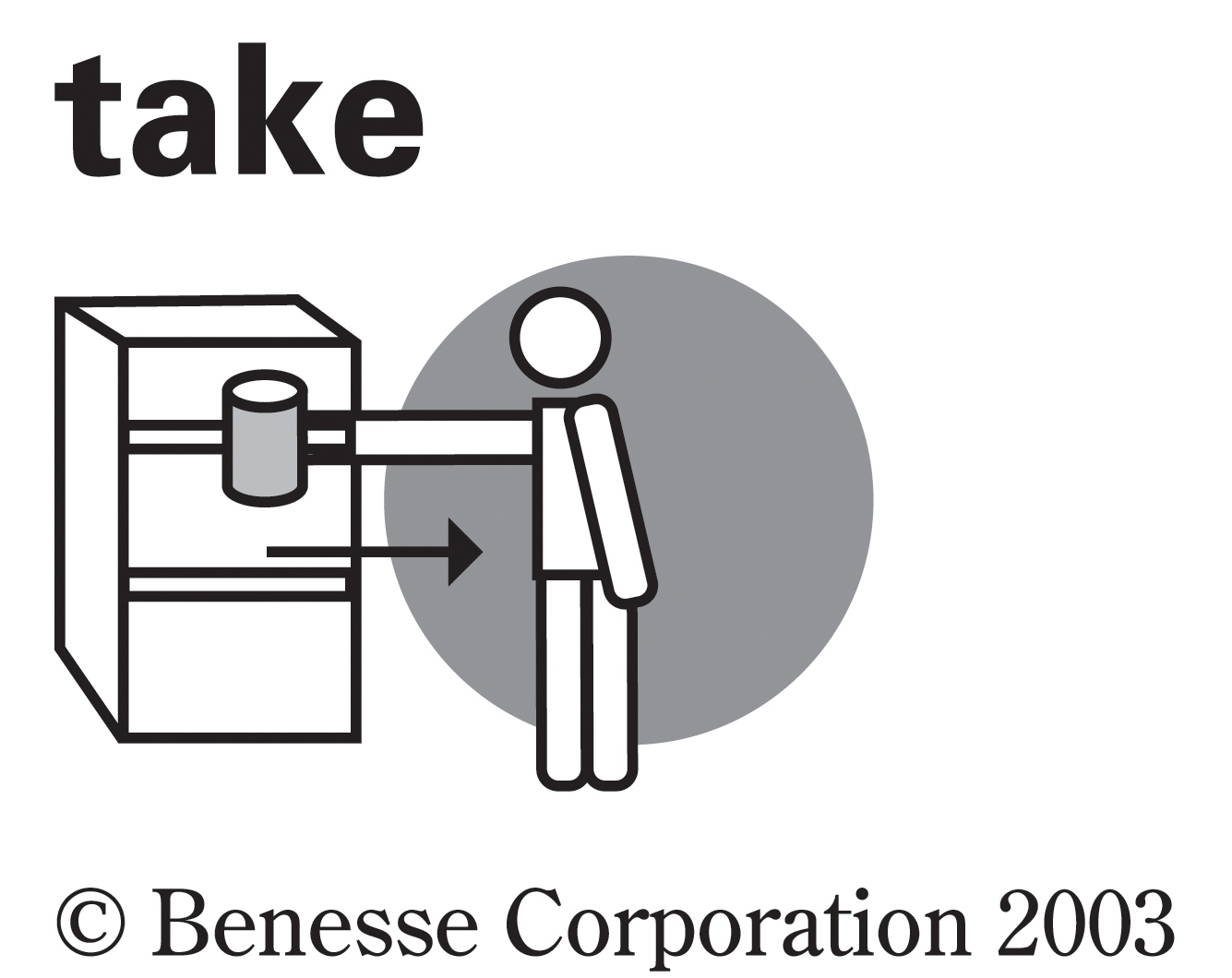
1…を〈ある場所から〉取る,片付ける〈from/out of〉
 |
2…を〈人から〉(無理やり)取り上げる,奪う〈from〉;(病気・事故などが)(人の命)を奪う;(軍などが)(ある場所)を占領する
3…を〈ある場所から〉持ってくる,受け継ぐ,引き継ぐ;…を〈…から〉引用する〈from〉
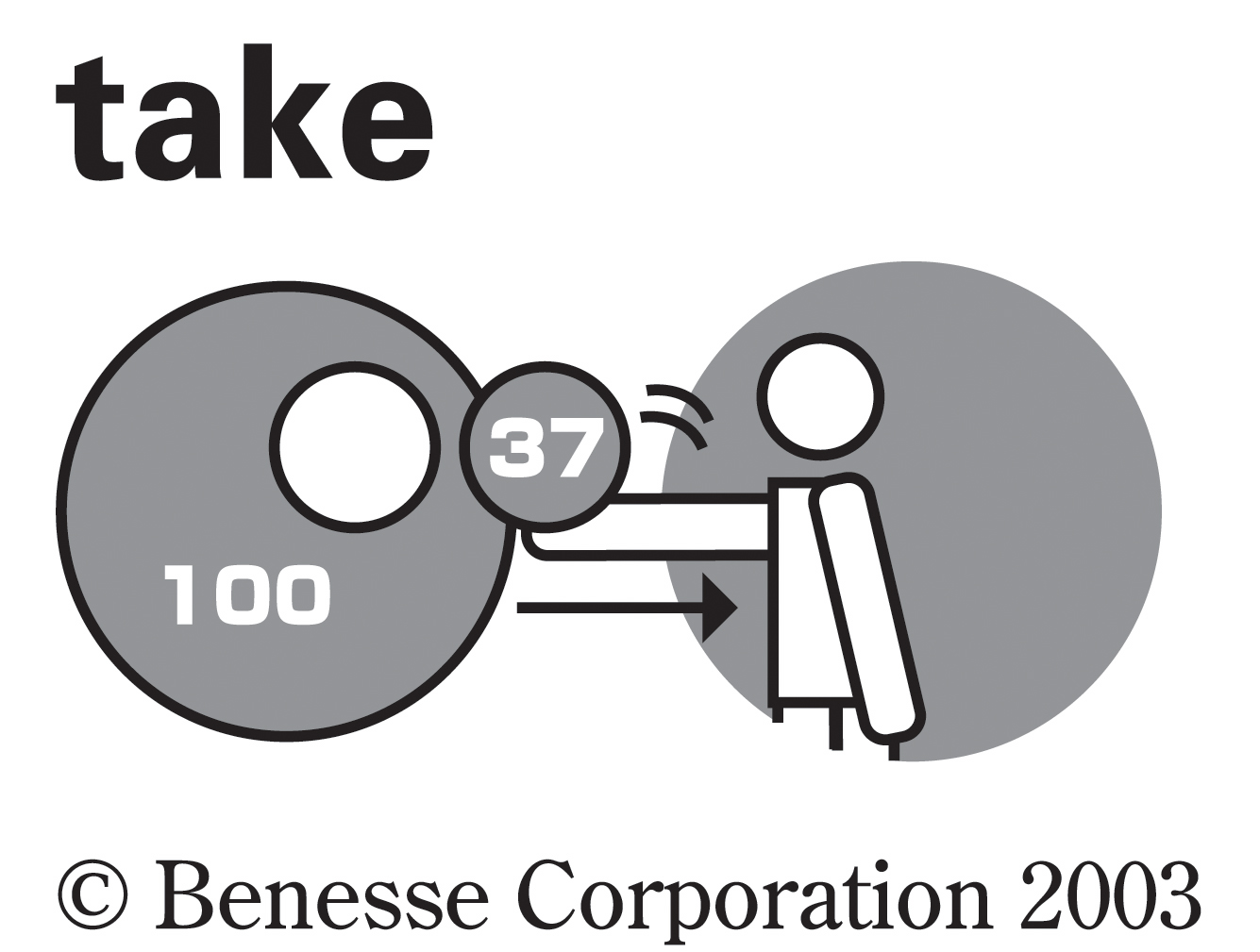
4(数)を〈ある数から〉引く;(値段)を〈価格から〉引く〈from〉
 |
5(興味・誇り・怒り・喜びなど)を引き出す,見い出す
Ⅱ何かを(手に)取る
6(具体物)を手に取る,つかむ;…をとらえる,つかまえる
8…を(例として)取り上げる
9〔到達点を示して〕a(人が)…を〈…に〉持って行く,連れて行く〈to〉(「何かを手にしてそのままの状態でtoで示された場所まで移動する」という意味)
b(道・乗り物が)(人)を〈…に〉連れていく〈to〉
c((比ゆ))…を〈…に〉導く〈to〉
Ⅲ何かを自分のところに取り込む
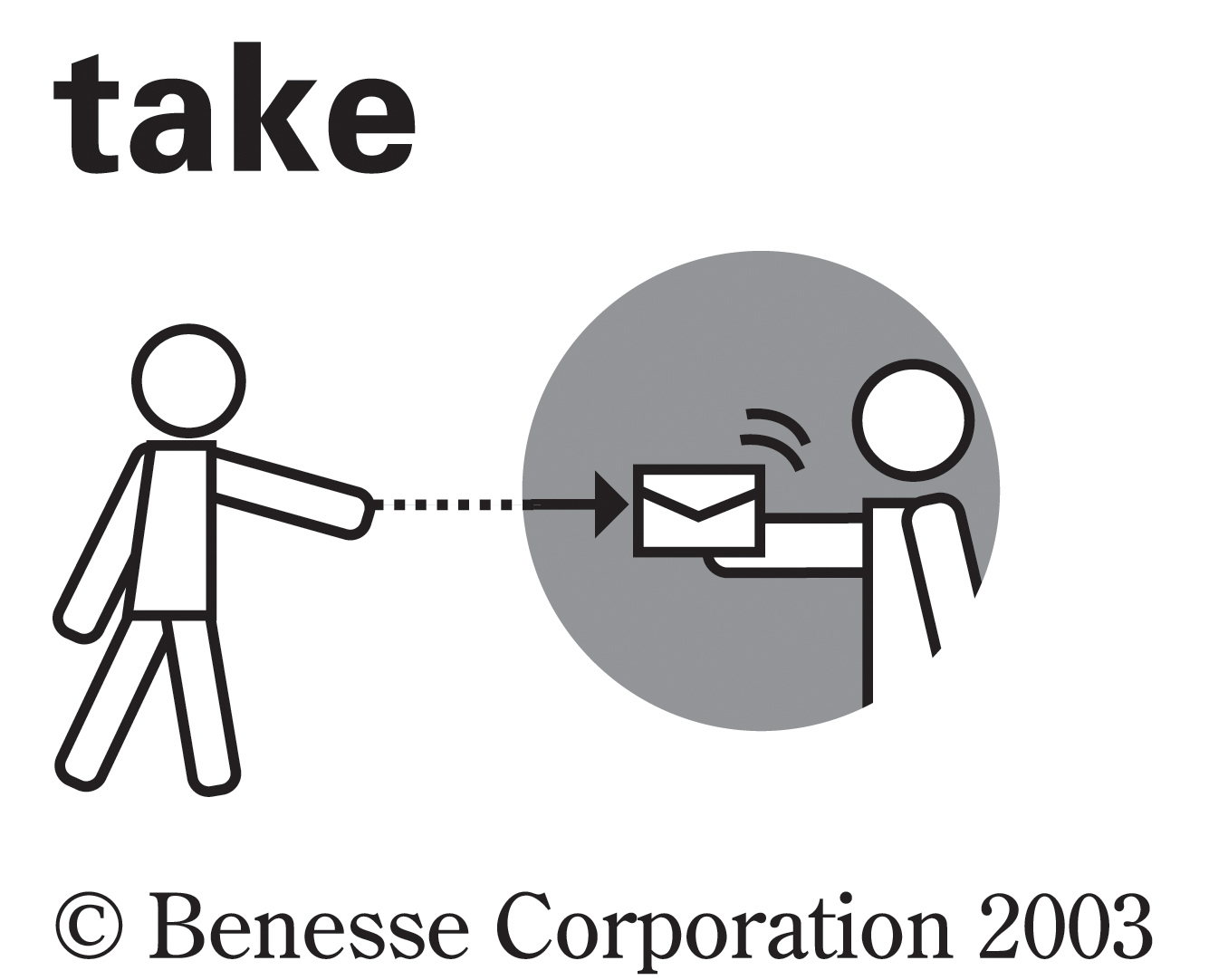
10…を受け取る,取る;〈…として〉受け入れる〈as〉
|  |
11…を摂取する,飲み込む,吸い込む;(液体)を吸収する
12…を買う,手に入れる;(部屋など)を借りる
13(授業など)を取る,専攻する;(新聞・雑誌など)を定期購読する
14a(忠告など)を受け入れる
b(批判など)を甘受する,我慢する
c(一撃など)を受ける
15(仕事・責任など)を引き受ける;(地位・職)に就く;(役割)を(引き受けて)演じる
16a(乗り物)を利用する
b(進路)を取る
17a《take A for B》AをBとして受け止める,みなす;AをBと間違える,勘違いする
b(ことばなど)を(あるふうに)受け止める(副詞(句)などを伴う)
c(態度など)をとる
18〔行為・動作〕((行為・動作を含意する名詞を伴って))(主体的に)…する(「取り込み」のイメージから主体性が連想される)
|
19(物・事・人が)(時間・労力など)を取る,要する;(機械などが)…を必要とする
|
自動詞
2(魚が)えさに食いつく
3人気をとる
4写真に写る(well, badlyなどの副詞を伴う)
5(病気に)なる
6≪法≫(財産を)取得する
成句take after ...
(親など血縁関係のある者)に似る(resembleは他人同士にも使えるが,take after ...の場合「遺伝的に後から特徴を取り込む」という含意があり,血縁関係のある者に限定される)
成句take against ...
…に反抗する,…を嫌う
成句take along
(人)を〈…に〉連れていく;(物)を〈…に〉持っていく〈to〉
成句take apart
①((take apart))分解できる;((take apart))…を分解する
②((take apart))…を徹底的にやっつける,酷評する
成句take around
(人)を案内する,連れまわる
成句take ... aside
(話をするために)…をわきへ連れていく
成句take away
①…を持ち[連れ]去る,奪う,取り上げる,取り除く
③…を差し引いて考える
④(警察などに)…を連行する,(病院などに)…を連れて行く
⑤(食卓など)を片付ける
成句take (away) from ...
(…の価値など)を減じる
成句take back
①((take back))(品物など)を返品する;(借りたもの)を返却する
③((take ... back))…を(昔に)連れ戻す,思い出させる
④((take back))(前言など)を取り消す
成句take |A| before |B|
AをBの前に提出する;AをBのもとへ連れて行く,出頭させる
成句take down
①…を降ろす
②(木)を切り倒す,(建物・機械など)を解体する,(テント)をたたむ
③…を書き留める,書き取る
成句take in
①((take in))(物)を取り入れる
②((take in))(衣服)の丈[幅]を詰める;(帆)をたたむ
③((take in ...))…を吸収する
④((take in ...))(人)を受け入れる,泊める;(下宿人)を置く
⑤((take in ...))…を理解する,飲み込む(通例否定文で用いる)
⑥((take in))(人)を取り込む,だます(しばしば受け身で用いる)
⑦((take in ...))…に見入る
⑧((take in ...))(映画・名所)を見に行く,(パーティー)に出る;…を訪ねる
⑨((take in))…を併合する
((take in))…を警察に連行する
|
成句take off
①((take off))離陸する;出発する;(ジャンプで)地面を離れる
③((take off))姿をくらます,(逃げるため)急いで走る
④((take off))(帽子・衣服)を脱ぐ;(化粧)を落とす;(眼鏡・ネックレスなど)をはずす
⑤((take off))…を取る,はずす;((take off))(髪・髭などを)取り除く,切る
⑥((take ... off))(値)を引く
⑦((take ... off))(ある期間)の休みを取る;((take off))〈…を〉休む〈from〉
⑧((take off))…の上演を打ち切る,(列車の運行)をやめる(通例受け身で用いる)
⑨((take off))…を(役割などから)外す;(名前など)を削除する
((take off))(船などの難破から)…を救出する
((take off ...))(からかって)(…の特徴)を取る,まねる
成句take on
①((take on))(仕事など)を受け入れる,引き受ける
②((take on))(けんか・競技などで)…を相手にする
③((take on ...))(性質・表情など)を帯びる
④((take on))…を乗せる,積む
⑤((take on))(人)を受け入れる,採用する
成句take out
①…を取り出す
②(人・動物)を〈…に〉連れ出す〈for/to〉
③(お金)を引き出す;…を借り出す
④((米))(料理)を買って持ち帰る,テイクアウトする
⑤(免許証など)を取得する;(保険)に入る
⑥…を取り除く;(歯など)を抜く
成句take over
①((take over))引き継ぐ;((take over))…を引き継ぐ
②((take over))支配する;((take over))…を支配する,乗っ取る
成句take round
=take around
成句take |A| through |B|
A(人)とB(台詞や文書)の読み合わせをする
成句take to ...
①…が好きになる,…になじむようになる;…する実力をつける
②…の習慣がつく,習慣的に…し始める
③(隠れ場所などを求めて)…に向かう,行く
④(暴力などに)に訴える
成句take up
①((take up))(中断後)続ける;((take up))(中断後)…を続ける
②((take up))縮む;((take up))(衣服など)を短く詰める
③((take up))(楽しみのひとつとして)…を始める
④((take up))(仕事・任務)につく
⑤((take up))(問題)を取り上げる;(専攻として)…を学ぶ
⑥((take up))(考え)を受け入れる;(申し出・挑戦)を受け入れる,応じる
⑦((take up ...))(場所・時間)を取る;(心)を占める
成句be taken up with ...
…に時間をとられる,心を奪われる
|
成句be taken with ...
(病気など)にかかる;(心)を奪われる
成句have (got) what it takes
((口))(やり遂げるのに)必要な資質を持っている
成句take ... as it is [it comes, they are]
…をそのまま受け取る
成句take it
①〈…と〉思う〈that節〉
②((口))耐える,我慢する
成句take it on [upon] |oneself|
〈…することを〉買ってでる,引き受ける〈to do〉
成句take it out of ...
((口))…をがっくりさせる,疲れさせる
成句take it out on ...
((口))…に(怒りなどを)ぶつける,八つあたりをする
成句taken all in all
あれこれ考慮して
成句take |a person| out of |himself / herself|
(人)を楽しませていやなことを忘れさせる
成句take place
⇒place名詞成句
成句Take that!
((口))これでも食らえ!
成句take |a person| up on ...
①((口))(人)に…について問いただす,文句をいう
②((口))(人)の(申し出など)を受け入れる
成句take up with |a person|
(人)と親しくする(好ましくない人について用いる)
成句take up ... with |a person|⇔take ... up with |a person|
((英かたい))…を取り上げて(人)と論じる[検討する]
成句(You can [may]) take it from me (that ... )
((口))私(の…ということば)を信じなさい
成句(You can) take it or leave it.
((口))それを受け入れるか(嫌なら)やめるかだ(最終的な提示であることを表す表現)
名詞
2((米口))〈…についての〉受け止め方,認識〈on〉
3((ふつうa [the] ~))売り上げ,利益,売上高;((米口))分け前
4≪映≫1シーン,1ショット;(撮影の)1テイク;(演奏の)収録,テイク
5≪印≫(一回に組む)原稿量
6≪医≫(種痘などが)つくこと
ネットワーク手に取る take:自分のところに取り入れる.何かを手にして引き寄せる動きがある.Take the pen.は例えば,机に置いてあるペンに手を伸ばしてつかみそれを手前に引き寄せる,という動作が連想される catch:動いているものをつかむ.何かをすばやくつかむという動きがある.Catch the pen.はだれかがペンを投げそれを誰か別の人がつかみとる,という動作が連想される hold:何かを手で一時的に押さえる.動きというよりは何かを手にした状態を維持することに力点がある.Hold the pen.は手にしたペンをしばらくつかんだままにしておく,ということが連想される 7(寸法など)を取る,測る;(体温など)を測る | 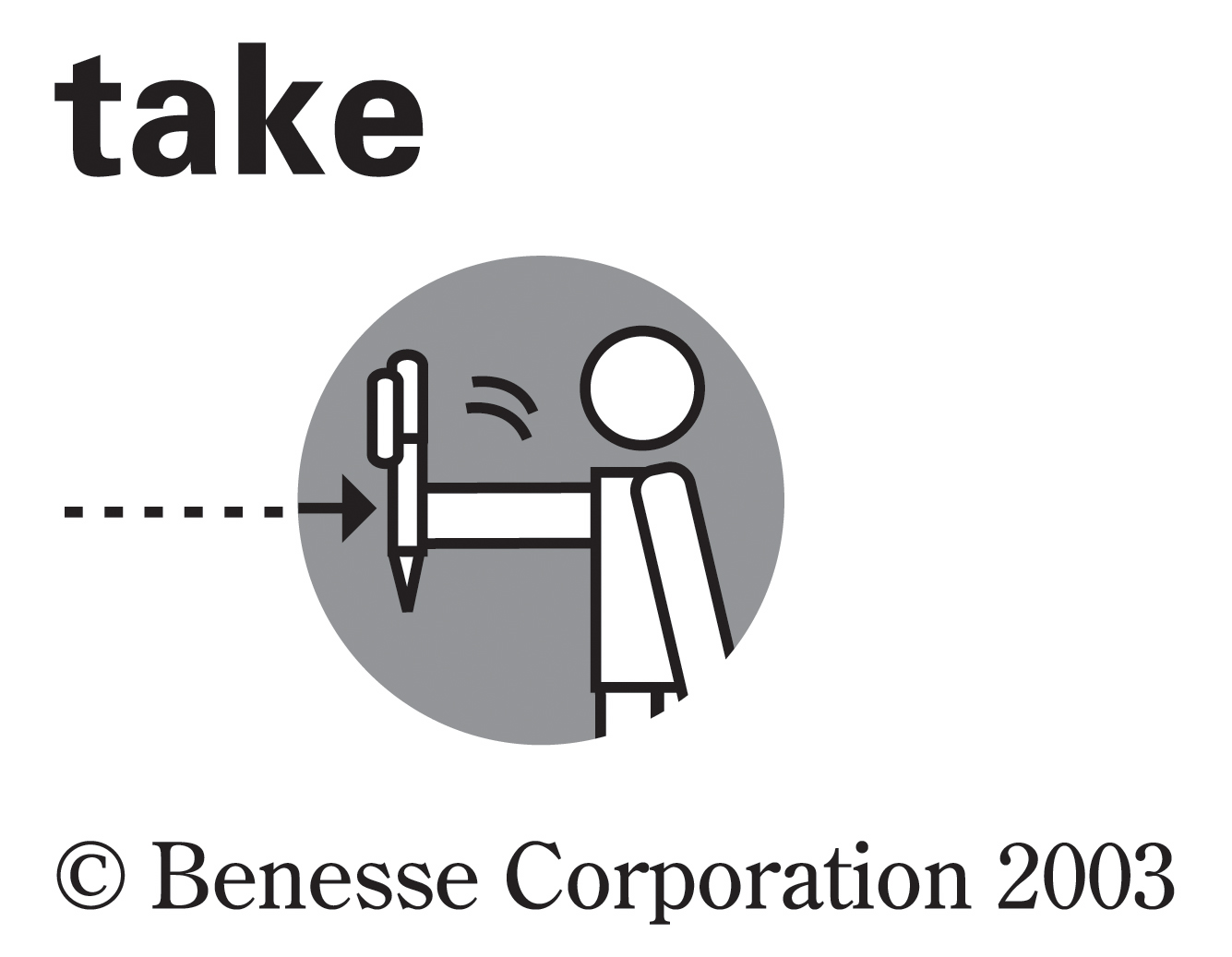 |
コア・セオリー英語表現(基本動詞)での「take」の意味 |
|
take
| コアとなる意味 | 自分のところ(HAVE空間内)に取り込む |
| ポイント | 手でつかむだけでなく取り込む動作が関与する.基本的にはこの図のA,B,Cのいずれかに視点を置くことで意味が派生する. |
①<ある場所から>...をとる,片付ける<from, out of>
②<人から>...を(無理やり)取り上げる, 奪う<from>;(病気・事故などが)(人の)命を奪う;(軍などが)(ある場所)を占領する
- Take the scissors from her; she's just a baby.
ハサミを彼女から取り上げて,まだ赤ちゃんなんだから - The thief took a bag from her hand.
泥棒は彼女の手からバッグを奪った - Bob was taken from us by AIDS.
ボブはエイズで他界した(←我々のことろから天国に召された) - The airplane crash took 350 lives.
飛行機の墜落で350名の命が奪われた - The troop took the city without a big combat.
軍隊は大きな戦闘もなく町を占領した
③<ある場所から>... を持ってくる, 受け継ぐ, 引き継ぐ;引用する<from>
④<ある数から>(数)を引く;<価格から>(値段)を引く<from>
⑥(具体物)を手に取る,つかむ ;...をとらえる,つかまえる
take : 自分のところに取り入れる.何かを手にして引き寄せる動きがある.Take the pen. だと例えば机に置いてあるペンに手を伸ばしてつかみそれを手前に引き寄せるという動作が連想される.
catch : 動いているものをつかむ.何かをすばやくつかむという動きがある.Catch the pen.だと誰かがペンを投げそれを誰か別の人がつかみとるという動作が連想される.
hold : 何かを手で一時的におさえる.動きというよりは何かを手にした状態を保持することに力点がある.Hold the pen. だと手にしたペンをしばらくつかんだままにしておくという状態の維持が連想される.
⑨((到達点を示して))a...を<...に>持っていく, 連れて行く<to>(◇コア図のBとCに視点があり,「何かを手にしてそのままの状態でtoで示された場所まで移動する」という意味)
⑨b ((比喩的に))
⑩...を受け取る,取る;<...として>受け入れる<as>
- I took the message from John.
私がジョンからのメッセージを受け取った - I don't take a bribe.
私は賄賂は受け取らない - They don't take dollars in that restaurant.
あのレストランはドルは受け取らない - Who will take[win] first prize?
誰が1等を取るだろうか - Do you take traveller's checks here?
トラベラーズチェックは使えますか - The hospital takes emergency patients.
その病院は緊急患者を引き受ける - My father takes a size 12.
父はサイズは12号です - The company took me as a temporary worker.
会社は私を派遣社員として採用した
- Don't take too much sugar.
砂糖を摂り過ぎないように - My 8-month old daughter started to take solid food.
8か月になる娘は固形の食物を摂りはじめた - He took drugs for a long time and finally wound up in the hospital.
彼は長いこと麻薬をやっていて,しまいには病院送りになった - Why don't you take some cough medicine?
何か咳止めの薬を飲んだらどう? - It's stuffy. I want to go out and take the air.
むっとする,外に出て外気に当たりたい - This material takes a dye well.
この生地はうまく染まる - Your shoes don't take a polish.
あなたの靴はうまく磨けない
⑬(授業など)を取る,専攻する;(新聞・雑誌など)を定期購読する
⑮(仕事・責任など)を引き受ける;(地位・職)につく;(役割)を(引き受けて)演じる
⑰a 《take A for B》(AをBとして)受け止める,(AをBと)みなす ;間違ってAをBと思う,勘違いする
⑰b(副詞表現を伴って)(言葉など)を(あるふうに)受け止める
⑱〔行為・動作〕((行為・動作を含意する名詞を伴って))(主体的に)...する(◇「取り込み」のイメージから主体性が連想される)
- Let's take a break.
一休みしよう - Shall we take a walk around the lake?
湖のあたりを散歩してみましょうか - We should take action [steps, measures] to eradicate drugs.
麻薬撲滅のための方策を講じなければならない - The pilot took a reading of the cabin pressure.
操縦士は機内の気圧を読み取った - The Democrats took an early lead in the election.
民主党が序盤から選挙戦をリードした - The batter took a look this time.
(野球で)今度は見送りました - The tourist took a picture of the ancient castle.
旅行者はその古代の城郭を写真に収めた
⑲〔必要とする〕(物・事・人が))(時間・労力など)を取る, 要する;(機械などが)...を必要とする
- The movie took three hours.
その映画は3時間だった - It took me two hours to read the novel.
その小説を読むのに2時間かかった - It takes a lot of money to start a business.
商売を始めるには多くの元手がいる - You can take your time.
ゆっくりやっていいよ - Telling the truth took a lot of guts.
真実を語るのはずいぶん度胸がいった - It only takes one stupid person to spoil the whole project.
バカな人が一人でもいれば計画は全部ダメになる - This flashlight takes six batteries.
この懐中電灯には電池が6つ必要だ
take |away
④(警察などに)...を連行する,(病院などに)...を連れて行く
take |down
②(木)を切り倒す, (建物・機械など)を解体する,(テント)をたたむ
take |out
take |round = take around
take A through B
take after...
(親など血縁関係のある者)に似る(◇resembleは他人同士にも使えるが,take after...の場合「遺伝的に後から特徴を取り込む」という含意があり,血縁関係のある者に限定される)
take against...
①((take apartで))分解できる∥((take|apartで)) ...を分解する
②((take|apartで))...を徹底的にやっつける, 酷評する
①((take|backで))(品物など)を返品する;(借りたもの)を返却する
②((take... backで))(人)を送っていく;...を連れ戻す
③((take... backで))...を(昔に)連れ戻す, 思い出させる
②((take|inで))(衣服)の丈・幅をつめる, (帆)をたたむ
④((take in...で))(人)を受け入れる;泊める;(下宿人)を置く
⑤((take in...で))...を理解する,飲み込む(◇通例否定文で用いる)
⑧((take in...で))(映画・名所)を見に行く, (パーティー)に出る;...を訪ねる
- The police have taken him in for questioning.
警察は彼を尋問のため連行した
①((take offで))離陸する;出発する;(ジャンプで)地面を離れる
②((take offで))(事業などが)軌道に乗る,うまく走り出す
③((take offで))姿をくらます,(逃げるため)急いで走る;((take oneself off toで))場所を離れて...に行く
④a((take |offで))(帽子・衣服)を脱ぐ;(化粧)を落とす
- Please take off your coat.
どうぞコートを脱いでください - She took off her make-up and looked like another girl.
化粧を落としたら彼女は別人だった - When he takes his glasses off, he's really cute.
眼鏡をはずすと, 彼は本当にいかしてるわ b ((take |offで))(ある場所から)...をとる
∥((take offで))(髪・髭などを)取り除く,切る - I can't take the lid off (the jar).
(瓶の)蓋がとれないよ - How much should I take off?
(理髪店で)どれぐらい切りましょうか
⑥((take...offで))...の休みを取る∥((take offで))<...を>休む<from>
⑦((take|offで))...の上演を打ち切る, (列車の運行)をやめる(◇通例受け身で用いる)
⑧((take|offで))...を(役割などから)外す;(名前など)を削除する
⑨((take|offで))(船などの難破から)...を救出する
⑩((take off...で))(からかって)(...の特徴)を取る, まねる
①((take|onで))(仕事など)を受け入れる, 引き受ける
take to...
①...が好きになる,...になじむようになる;...する実力をつける
①((take upで))(中断後)続ける∥((take|upで))(中断後)...を続ける
②((take upで))縮む∥((take|upで))(衣服など)を短く詰める
③((take|upで))(楽しみのひとつとして)...を始める
⑤((take|upで))(問題)を取り上げる;(専攻として)学ぶ
⑥((take|upで))(考え)を受け入れる ;(申し出・挑戦)を受け入れる, 応じる
⑦((take up...で))(場所・時間)を取る;(心)を占める
take up A with B, take A up with B
take|around[round]
(You can [may]) take it from me (that...)
. それを受け入れるか(嫌なら)やめるかだ(◇最終的な提示であることを表す表現)
- I've been taken up with caring for my son at the moment.
今は息子の世話に時間をとられている
(病気など)にかかる(通例受身で用いる);(心)を奪う(通例受身で用いる)
have (got) what it takes
I take your point.
It takes a thief to catch a thief
. ⇒thief成句 泥棒を捕まえるには泥棒に限る(蛇(じゃ)の道は蛇(へび))
⇒tango成句 タンゴを踊るには2人必要(協力者なしにはうまくいかないこともある)
take ... as it is [it comes, they are]
((主に英))①すでに読まれたものとみなす(◇readの発音は[red].議事録などをすでに読んでいるという前提で話を進める際の表現)
take ... by surprise
take A before B
⇒rain check成句 辞退したものを後でもらう,埋め合わせをする
- Every time my mom and dad have an argument, they take it out on me.
うちの父さんと母さんは言い争いをするたびに私に八つあたりをする
日本語WordNet(英和)での「take」の意味 |
|
take
Weblio英和対訳辞書での「take」の意味 |
|
take
take
take
take
take
take (in)
take [ pursue]
take 《medicine》 (by mouth)
take sth
「take」を含む例文一覧
該当件数 : 35204件
Take notes.発音を聞く 例文帳に追加
メモしなさい。 - Weblio Email例文集
Take care.発音を聞く 例文帳に追加
お大事に。 - Weblio Email例文集
Take care.発音を聞く 例文帳に追加
おげんきで - Weblio Email例文集
|
|


|
|
takeのページの著作権
英和辞典
情報提供元は
参加元一覧
にて確認できます。
| Copyright (c) 1995-2024 Kenkyusha Co., Ltd. All rights reserved. | |
| Copyright © Benesse Holdings, Inc. All rights reserved. | |
| Copyright (C) 2024 田中茂範 All rights reserved. | |
| © 2000 - 2024 Hyper Dictionary, All rights reserved | |
| Copyright(C)1996-2024 JEOL Ltd., All Rights Reserved. | |
| ※この記事は「日本法令外国語訳データベースシステム」の2010年1月現在の情報を転載しております。 | |
| DBCLS Home Page by DBCLS is licensed under a Creative Commons 表示 2.1 日本 License. | |
| All Rights Reserved, Copyright © Japan Science and Technology Agency | |
| Copyright (C) 2024 ライフサイエンス辞書プロジェクト | |
|
日本語ワードネット1.1版 (C) 情報通信研究機構, 2009-2010 License All rights reserved. WordNet 3.0 Copyright 2006 by Princeton University. All rights reserved. License |
|
| Copyright(C)2002-2024 National Institute of Information and Communications Technology. All Rights Reserved. | |
| Copyright © 2024 CJKI. All Rights Reserved | |
|
Copyright (C) 1994- Nichigai Associates, Inc., All rights reserved. 「斎藤和英大辞典」斎藤秀三郎著、日外アソシエーツ辞書編集部編 |
|
| CMUdict | CMUdict is Copyright (C) 1993-2008 by Carnegie Mellon University. |










ピン留めアイコンをクリックすると単語とその意味を画面の右側に残しておくことができます。 |

ログイン |
Weblio会員(無料)になると

|
 検索履歴を保存できる!
 みんなの検索ランキング
 閲覧履歴
閲覧履歴

weblioのその他のサービス
|
ログイン |
Weblio会員(無料)になると
|
