Go!とは 意味・読み方・使い方
追加できません
(登録数上限)
意味・対訳 行く、(ある場所・人(の所)・方向へ)行く、向かう、(活動などに従事するために)行く、通う、(ある目的で)行く、運行している、移動する、進む、(…で)行く
| 覚え方 |
|
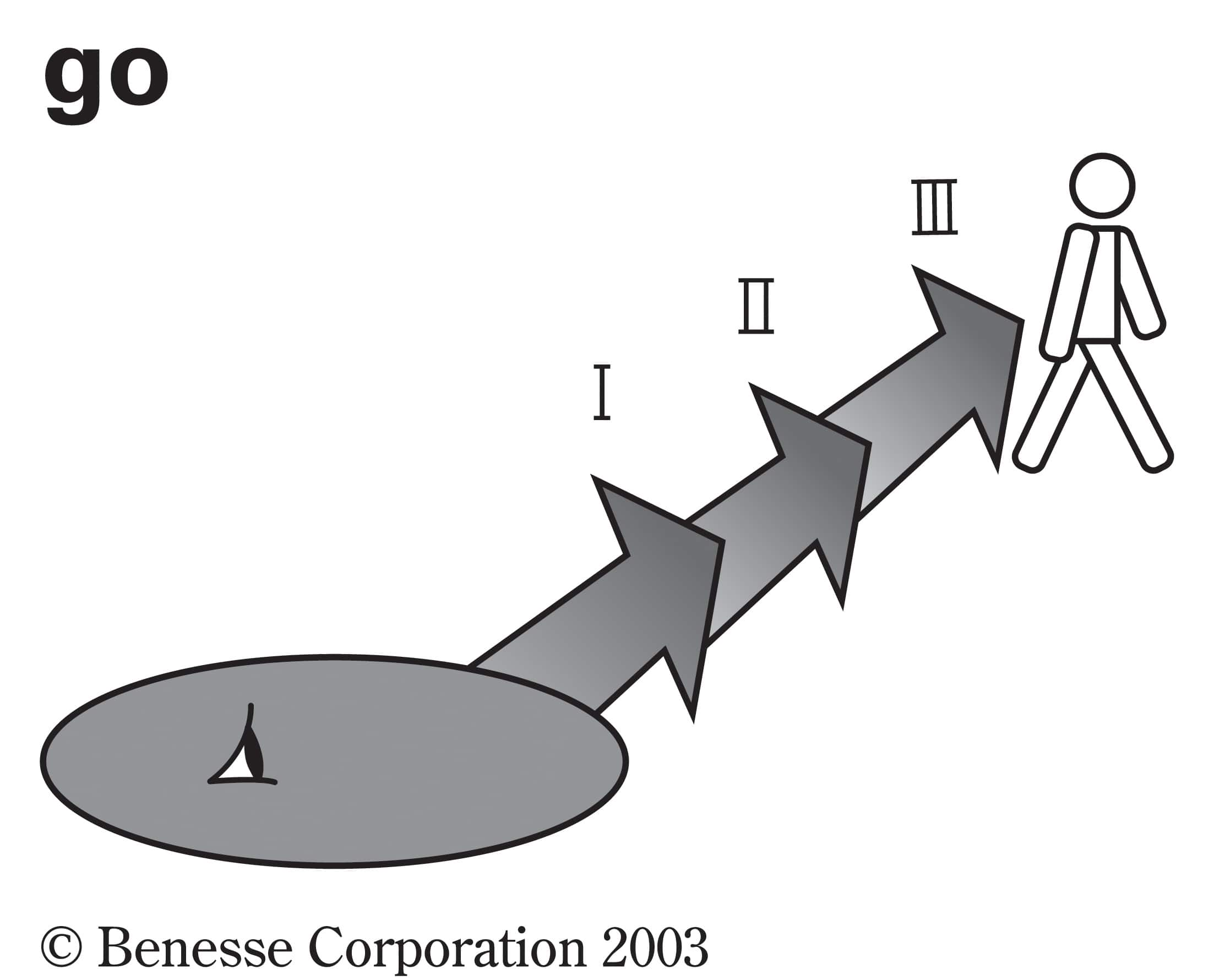
視点が置かれているところから離れて行く Ⅰ場から離れる,Ⅱ進行する,Ⅲある所に向かう,という3つの側面がある |
Go!の |
Go!の |
Go!の学習レベル | レベル:1英検:3級以上の単語学校レベル:中学以上の水準TOEIC® L&Rスコア:220点以上の単語 |
研究社 新英和中辞典での「Go!」の意味 |
|
go
b
〔+to+(代)名詞〕(活動などに従事するために)〔場所へ〕行く,通う 《★【用法】 施設・種類などを表わす時は冠詞がつき,可算名詞 であるが,その「目的」を表わす時には名詞は無冠詞で 不可算名詞》.
d
〔+doing〕〈…しに〉行く 《★doing はもと a‐doing の a‐ の脱落したもの; 【用法】 doing にはスポーツ・娯楽活動などを表わす動詞がくる; 従って go studying [working] は間違い; cf. 自動詞 A18》.
|
|
|
Go try again. もう一度やってみろ.
|
|
|
|
go unnoticed [unpunished] 気づかれない[罰せられない]ままになる.
|
| áll the gó | a néar gó |
| from the wórd gó | gíve it a gó |
| it's áll gó | on the gó 《口語》 |
「Go!」を含む例文一覧
該当件数 : 49975件
-
履歴機能
過去に調べた
単語を確認! -
語彙力診断
診断回数が
増える! -
マイ単語帳
便利な
学習機能付き! -
マイ例文帳
文章で
単語を理解! -
Eゲイト英和辞典での「Go!」の意味 |
|
go
覚え方視点が置かれているところから離れて行く
![]() |
Ⅰ場から離れる,Ⅱ進行する,Ⅲある所に向かう,という3つの側面がある |
├離れる▷自動詞1
├なくなる▷自動詞2
└衰える▷自動詞3
Ⅱ進行する
├走る▷自動詞6a
├動く▷自動詞7
├広まる▷自動詞8
├進行する▷自動詞9
└(ある状態で)いる▷自動詞10
Ⅲある所に向かう
├行く▷自動詞141516
├届く▷自動詞17
└(悪い状態に)なる▷自動詞18a
動詞
Ⅰ場から離れる
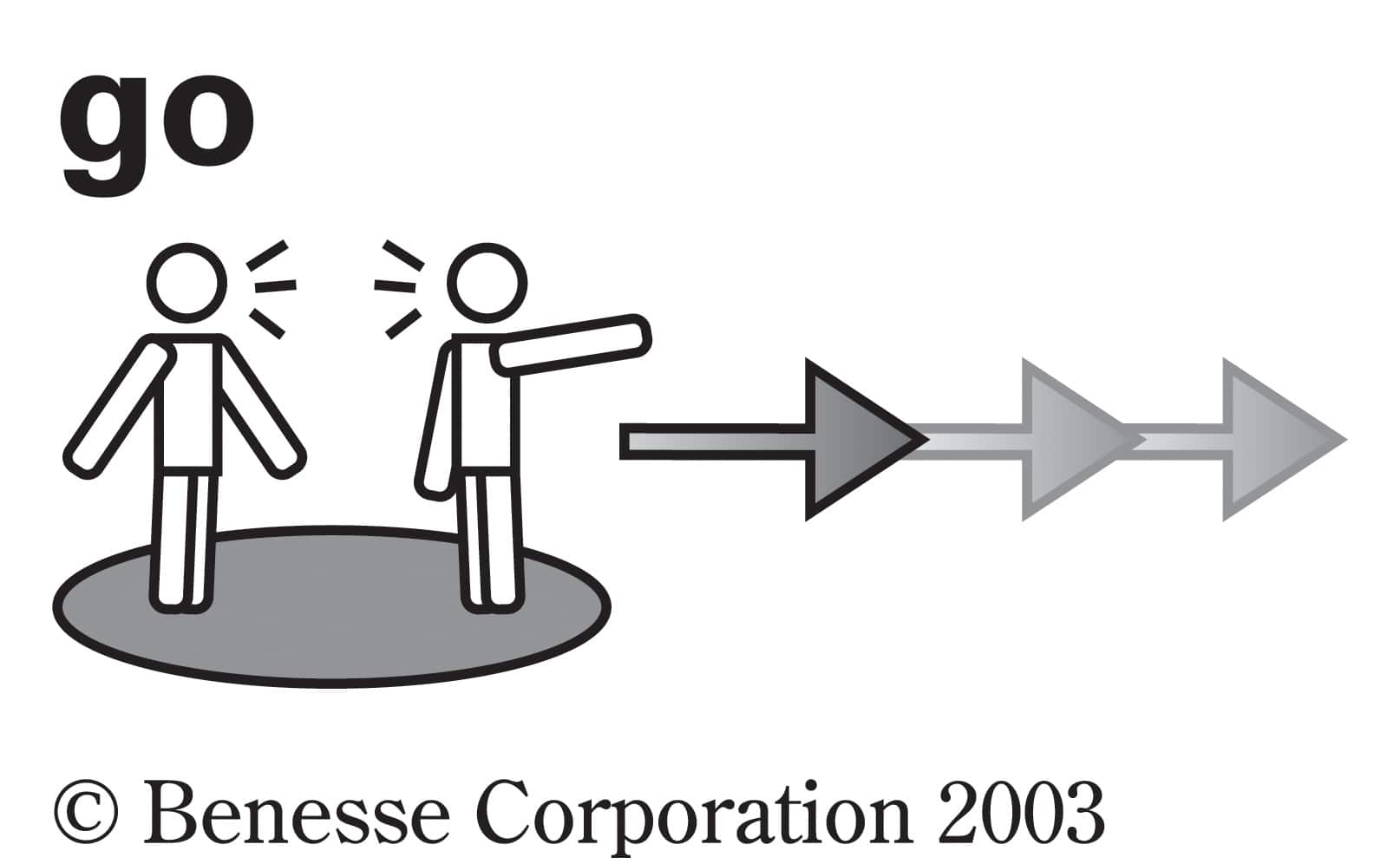
1離れる,去る,帰る;出発する
![]() |
2なくなる,消滅する;廃止になる;外れる
3衰える,使えなくなる,だめになる;((口))死ぬ
|
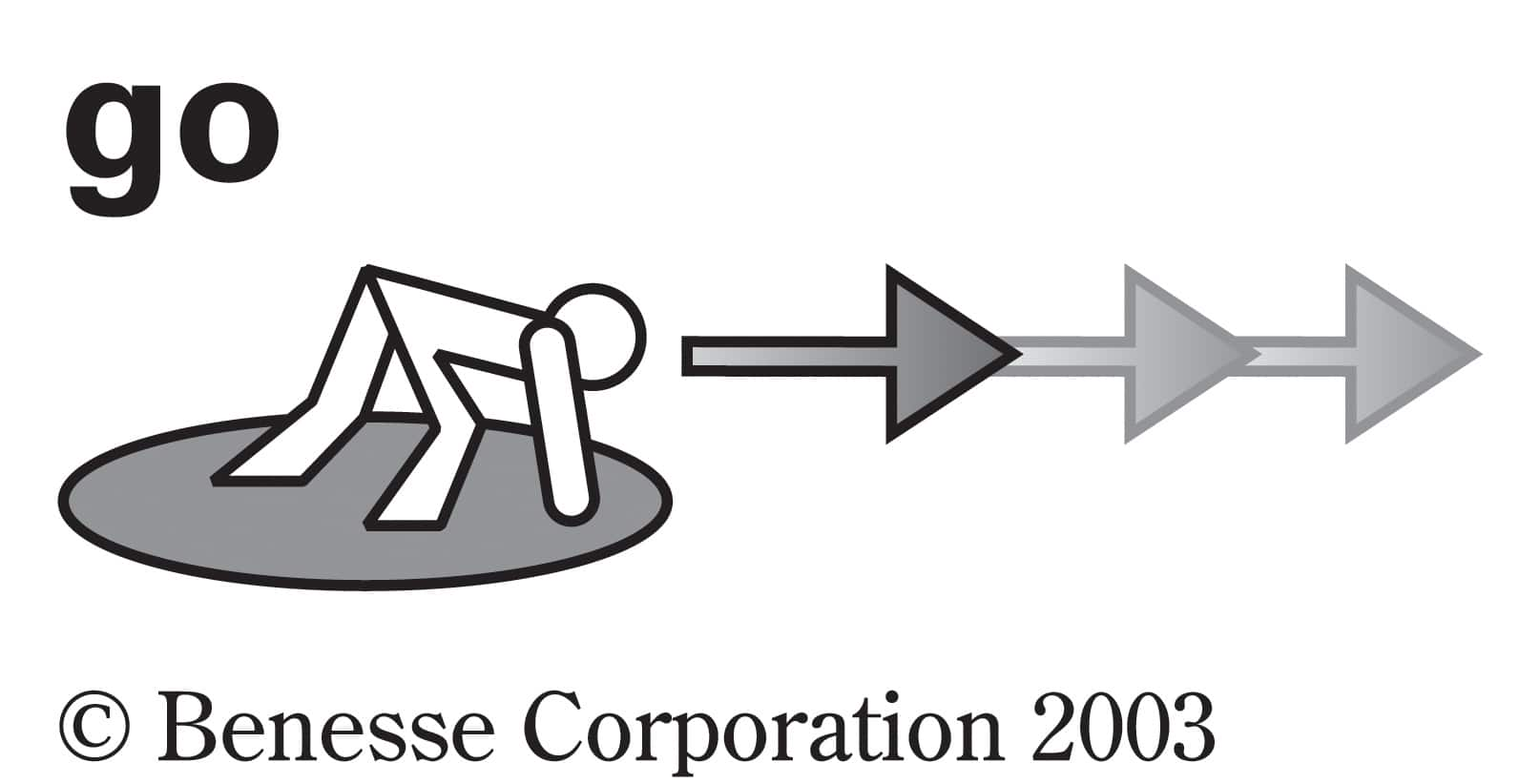
4(競技などの開始を知らせて)(よーい)ドン,スタート
5(鐘・銃などが)鳴る
Ⅱ進行する
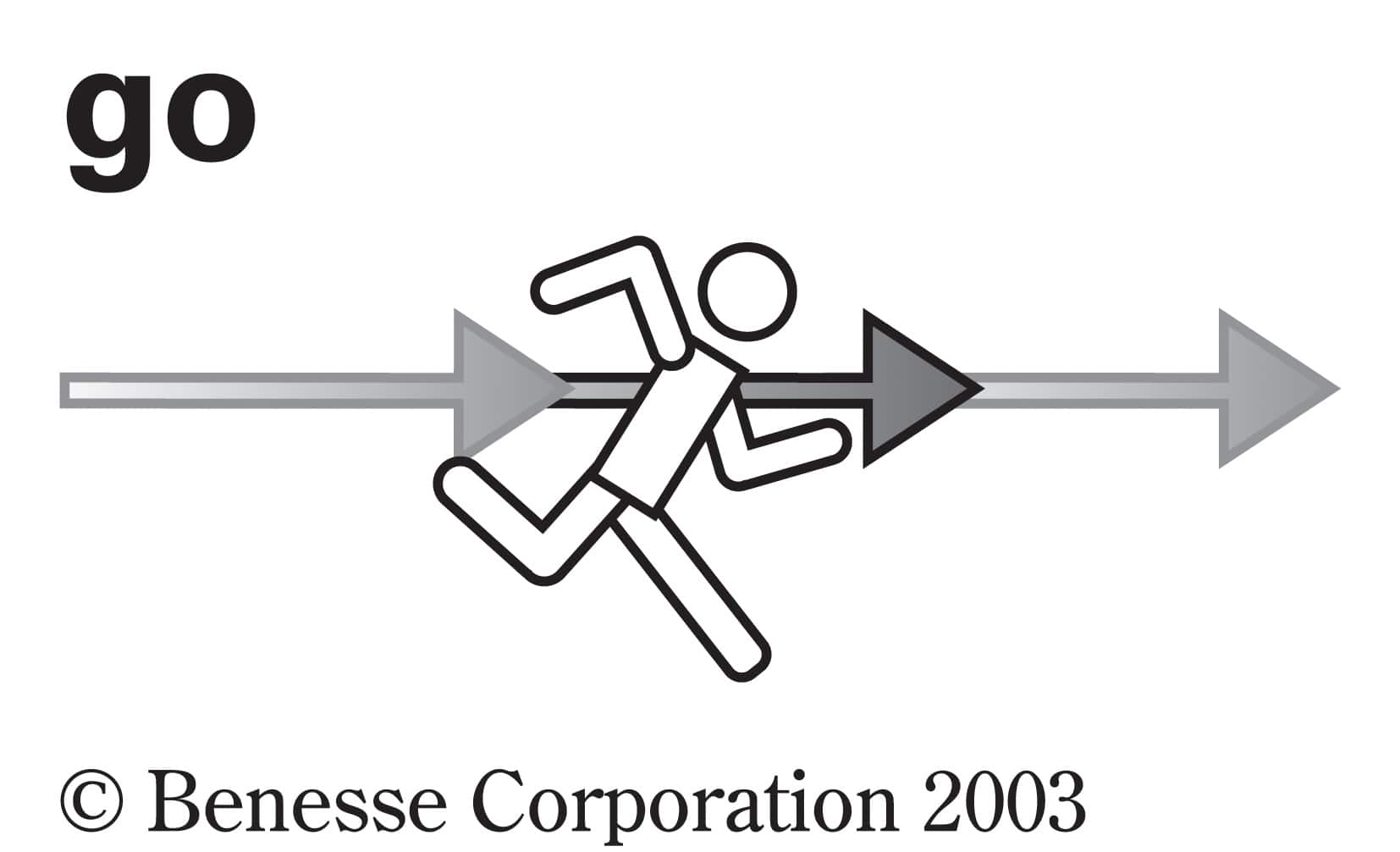
6a(人・乗り物が)走る;《go doing》…しながら進む
b(時が)過ぎる
7(機械・脈などが)動く(operate)
8(うわさ・植物の種などが)広まる,飛び散る
9(事が)進行する
10(ある状態で)いる(形容詞,過去分詞を伴う)
11a(貨幣などが)通用する
b((口))(やり方などが)まかり通る
c(商品などが)出回る,売れる
12(…と)書いてある,(…と)言う(say);(詩・音・歌詞などが)流れる
13((進行形で))(…が)ある
Ⅲある所に向かう
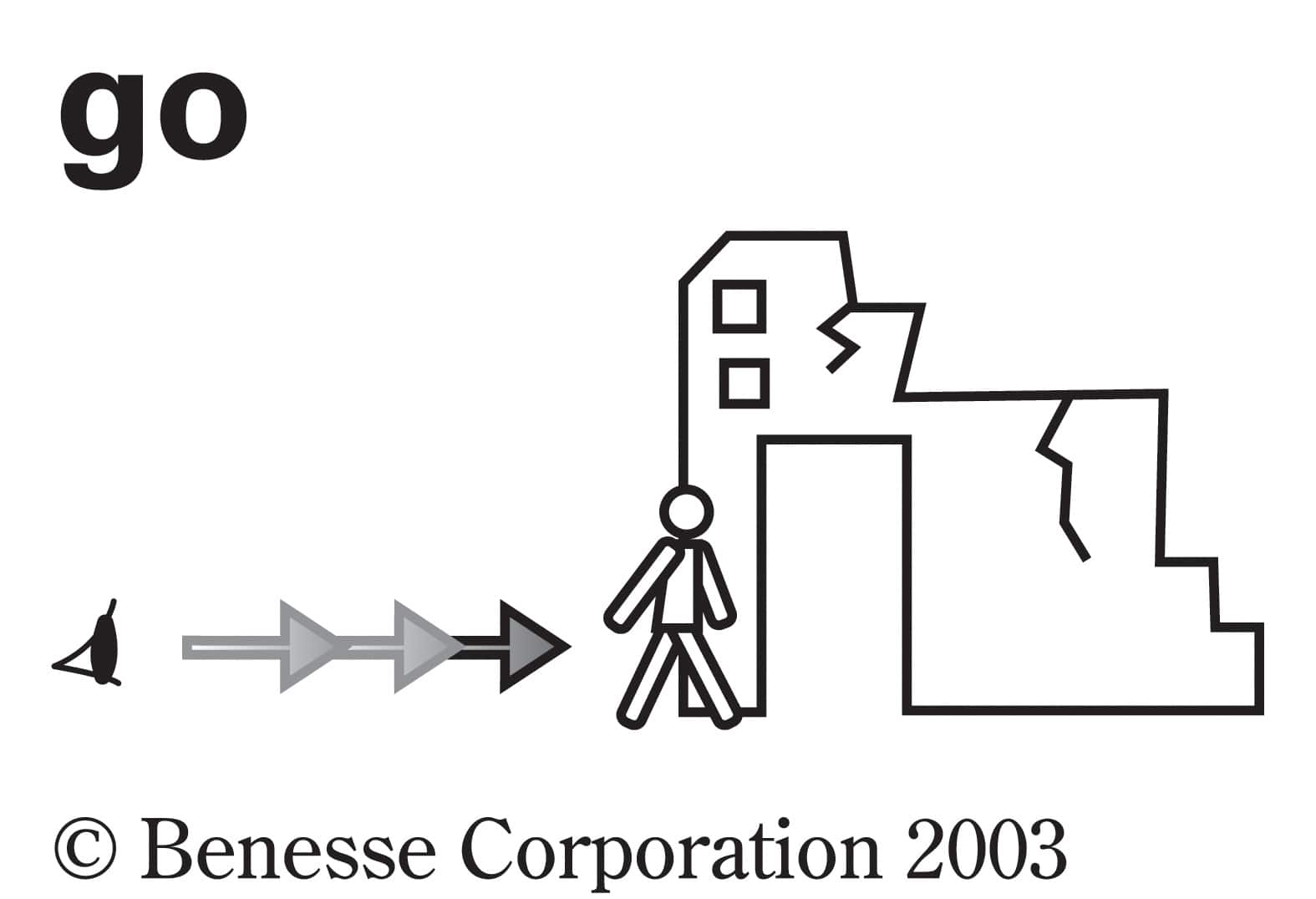
14(…に)行く
![]() |
《go to do》…しに行く
15(ある目的で特定の場所に)行く;通う
16《go for ...》…に行く(行為を表す名詞を伴う);《go doing》…(を)しに行く
17届く,達する;(道などが)通じる
18a(悪い状態に)なる,移行する(形容詞,過去分詞を伴う)
b((命令文で))(ある行為に移行することを表して)…せよ
19(あるべき場所に)しまわれる,置かれる
(所有権などが)移行する
(金銭が)〈…に[…するのに]〉費やされる〈for/on[in doing]〉
〈…するのに〉役立つ,助けとなる〈to do〉
(使えるお金などの限度を示して)〈…までなら〉出す〈to〉
(制度・方式などにおいて)(…に)変わる
他動詞
成句go about
①((go about))あちこち歩き回る②((go about ...))((口))…に取り組む,…をはじめる
|
④((go about))(うわさなどが)広まる
成句go after ...
①…のあとを追う
②…を得ようとする,ねらう
成句go against ...
①…に逆らう,反対する
②…に不利になる③(主義など)に反する
成句go ahead
①(仕事などが)進む,はかどる
②(相手を促して)どうぞ
成句go along
①前に進む
②はかどる(well, badlyなどの副詞(句)を伴う)
成句go along with ...
①(人)といっしょに行く
②…に賛成する;…と協調する
|
成句go around
①((go around ...))…を移動して回る;((go around))あちこち歩き回る
②((go around))〈異性と〉つきあう〈with〉
③((go around))(うわさ・病気などが)広まる
成句go at ...
((口))①…を批判する
②(仕事)に本気でとりかかる
成句go away
去る,行ってしまう
成句go away with ...
…を持ち去る,持ち逃げする
成句go back
〈場所・時・話題などに〉戻る,さかのぼる〈to〉
|
成句go back on ...
(期待など)を裏切る;(約束など)をほごにする,守らない
成句go before ...
①(時間的に)…に先立つ②…の前に現れる
成句go beyond ...
…を超える,…以上のことをする
成句go by
①((go by))通り過ぎる;((go by ...))…のそばを通り過ぎる
②((go by))(時が)過ぎ去る③((go by))(機会などが)失われる(通例letと共に用いる)
成句go down
①((go down))下がる,降りる;((go down ...))…を下る,降りる
②((go down))落ちる,沈む
③((go down))(価格・質・価値などが)下がる
④((go down))(勢いが)弱まる;(熱が)下がる;(空気が)抜ける⑤((go down))倒れる⑥((go down))(食べ物・飲み物が)飲み込まれる⑦((go down))〈歴史に〉記録される〈in〉;〈後世に〉伝わる〈to〉
⑧((go down))((英))〈病気に〉かかる〈with〉
⑨((go down))((米))南に行く;((英))いなかに行く;大学を去る
成句go far
①遠くまで行く②大いに役立つ③(お金などが)使いでがある
成句go for ...
①…が好きである,気にいっている,欲しい
②…を取りに行く,得ようとする;…を呼びに行く③…に当てはまる
④…しに行く⇒自動詞
16
成句go forward
前進する,進む;〈…を〉はかどらせる〈with〉
成句go in
①((go in))(中に)入る;((go in ...))…に入る
成句go in for ...
①…に興味を持つ
②…に携わる③(職業として)…をする
成句go into ...
①…に入る
②…をよく調べる
③(仕事)に就く
④(感情的に)…の状態になる
成句go off
①爆発する;(警報などが)鳴り出す
②立ち去る③(事が)…に運ぶ(well, badlyなどの副詞(句)を伴う)
④((口))(食べ物が)悪くなる;(質が)落ちる⑤(機械が)止まる;(電気が)消える⑥((口))寝入る
⑦(痛みなどが)消える,和らぐ
成句go off with ...
((口))①…を持ち逃げする
②…と駆け落ちする
成句go on
①((go on))〈…を〉し続ける〈doing〉;((go on))〈…を〉続ける〈with〉
②((go on))(時などが)経つ
③((go on))(事件などが)起こる(通例進行形で用いる)
④((go on))〈先に〉進む,移る〈to〉
⑤((go on ...))…をする
成句go on for ...
(時間・数量)に近づく(通例進行形で用いる;年齢に用いるときはforが省略されることがある)
成句go out
①外に出る,外出する②(火・明かりなどが)消える
③〈異性と〉つきあう〈with〉
④(流行などが)すたれる⑤公表される⑥(潮が)引く⑦((遠回しに))死ぬ
⑧ストライキをする
成句go over
①((go over))〈…のところへ〉行く〈to〉
②((go over))〈…へ〉渡る,越える〈to〉;((go over ...))…を渡る,越える③((go over ...))…を綿密に調べる;…を繰り返し行う;…を繰り返し読み返す
④((go over))(事が)うまくいく;〈…に〉受け入れられる〈with〉(通例well, badlyなどの副詞(句)を伴う)
⑤((go over))〈…に〉変える,転向する〈to〉
成句go round
=go around
成句go through
①((go through))通り抜ける;((go through ...))…を通り抜ける;…の手続きをする
②((go through ...))(苦しみなど)を経験する
③((go through ...))…をくまなく調べる
|
⑤((go through ...))(金など)を使い切る
成句go through with ...
(困難にもめげず)…をやり遂げる
成句go to ...
①…に行く,通う⇒自動詞
1415②…に進む,…を見る
③…に訴える
成句go together
①いっしょに行く②合う,調和する③((口))〈…と〉(恋人同士として)付き合う〈with〉
成句go under
①(船などが)沈む②(事業などが)つぶれる③〈…に〉敗れる〈to〉
成句go up
①((go up))上がる,のぼる,高くなる;((go up ...))…を上がる,のぼる
②((go up))(価格・気温などが)上がる③((go up))爆発する
④((go up))〈…に〉近寄る〈to〉
⑤((go up))((米))北へ行く;((英))(ロンドンなどの)都会へ行く;大学に入る
成句go with ...
①…と合う
成句go without
①((go without))なしですませる
|
成句as ... go
一般の…と比べて(...は複数形がくる)
成句be going to do
…するつもりだ,しようと思っている;…のはずだ,…の予定になっている;…するだろう⇒will~1【ネットワーク】
成句Go along with you!
((英口))まさか,とんでもない
成句go and do
…しに行く(しばしばandは省略される)
成句go for it
((口))とにかくやってみる
成句Going, going, gone!
①(野球で)大きい,大きい,入った!②(競売で)売れるぞ,売れるぞ,そら売れた!
成句go it
((口))どんどん[がむしゃらに]やる;((おもに英口))猛スピードで行く
成句go to it
((口))向かって行く,やる(通例命令文で用いる)
成句go where you will
どこに行こうとも
成句have a lot [not much] going for| a person|
(人)についてよいところがいっぱいある[ほとんどない]
成句to go
((名詞の後に用いて))①((米))持ち帰りの
②残るところ,あと
成句What goes?
((米口))何事なんだ,何だ
成句Where does| a person |go from here?
さあどうしようか
名詞
2((a ~))((口))うまくいくこと;成功;取り決め
3((口))精力,元気
4((口))(意外な)成り行き,困ったこと
|
5((口))試み;(ゲームなどの)順番
成句all the go
((今はまれ))流行して
成句at one go
((英口))一回の試みで
成句from the word "go"
((口))しょっぱなから,はじめから
成句have a go (at ... )
((口))(…を)試みる
|
成句it's all go
((英口))フルに稼動している;めちゃくちゃ忙しい
|
成句It's no go.
((口))無駄だ,役にたたない
成句leave go of ...
((口))…を放す
成句on the go
((口))(休む暇がないほど)働きづめで;(子どもが)じっとしていないで
形容詞
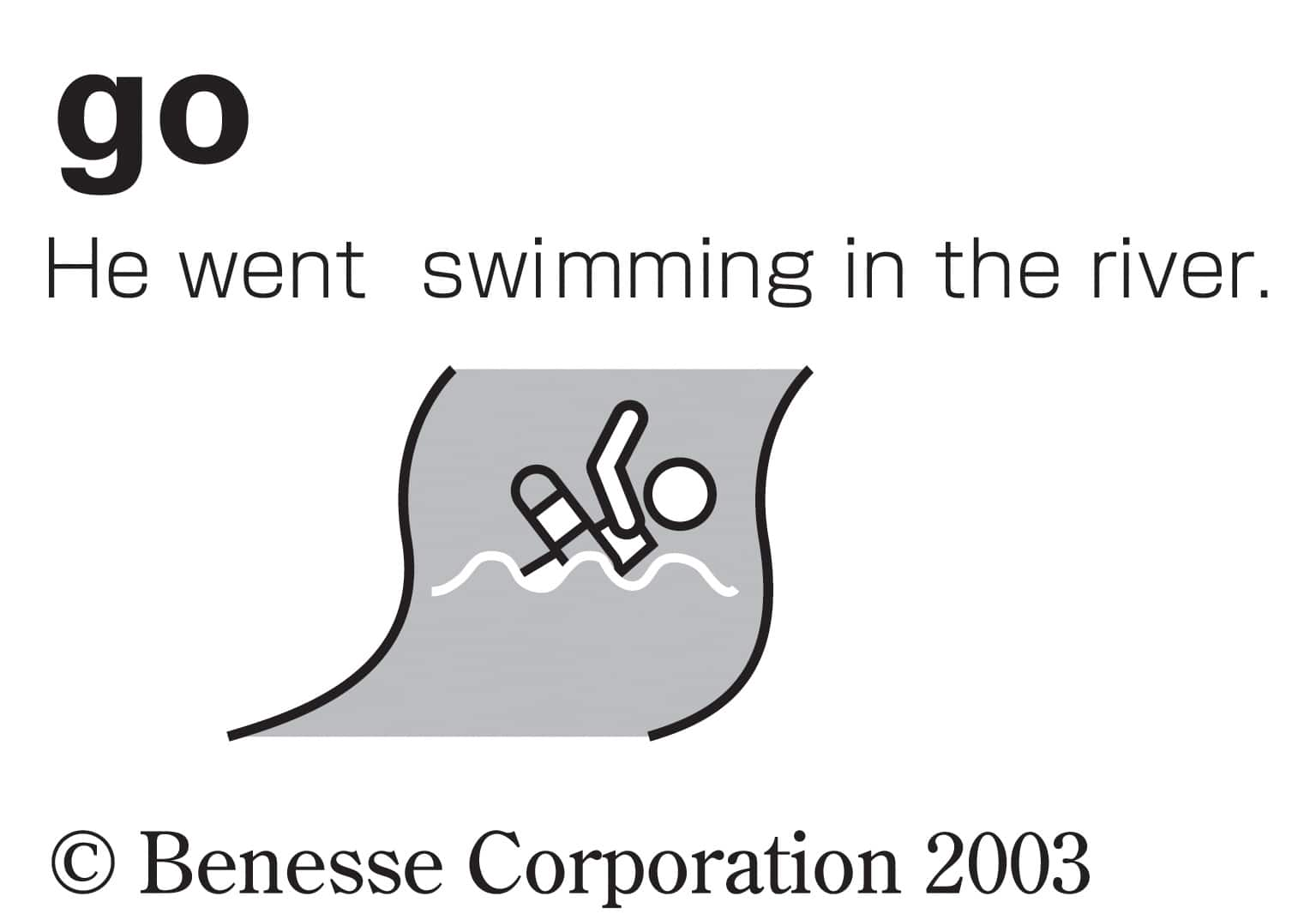
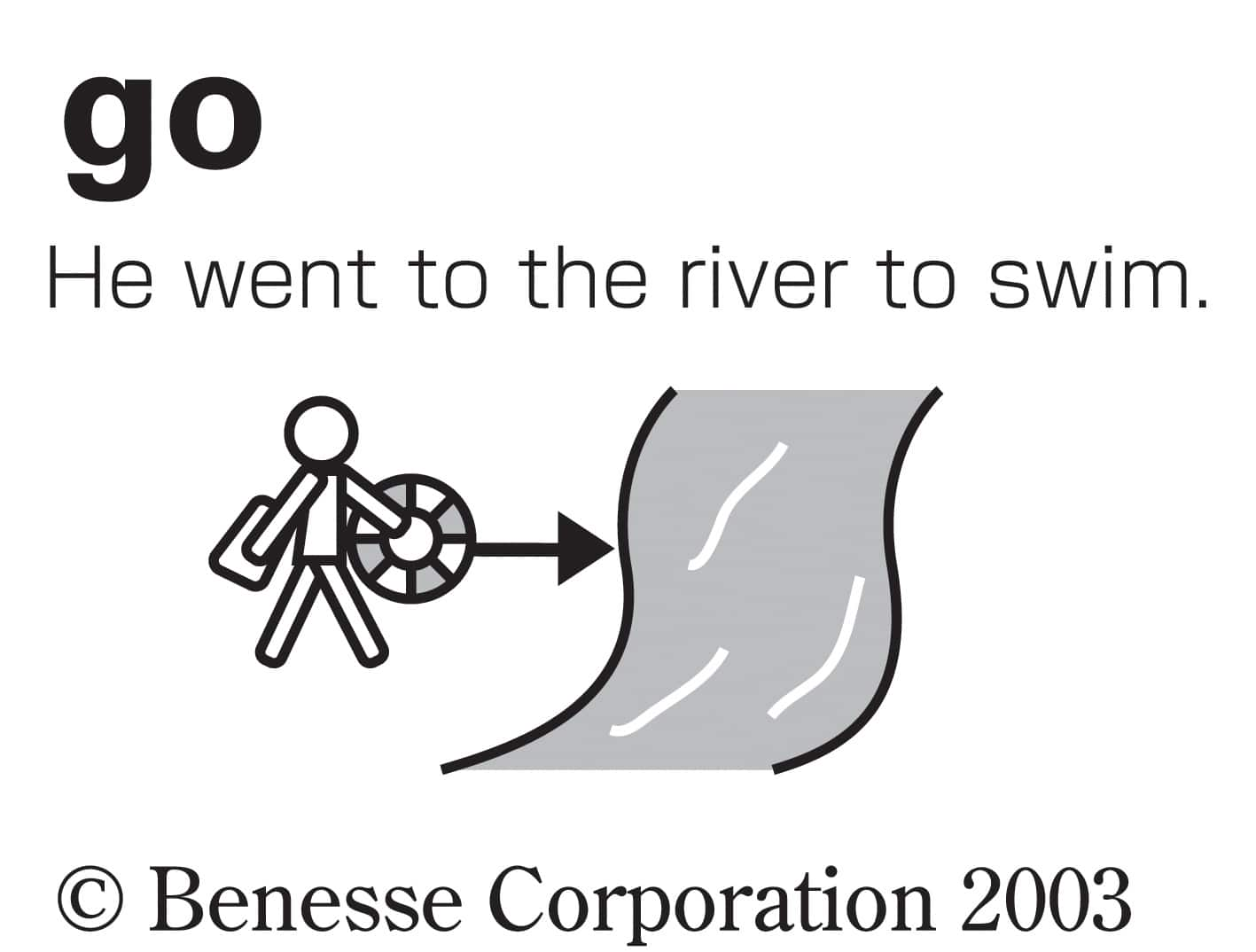
語法 go doingは「…しに行く」と訳されるが,ある目的を持って行くだけでなく,「実際に…をする」という意がある.例えばHe went swimming in the river.にはHe swam in the river.(彼は川で泳いだ)という含意がある.同様にHe went for a swim in the river.でforの対象はa swim in the riverであり,単に「川に行く」ということではなく「川泳ぎに行った」ということまでを表している.一方,He went to the river to swim.は「泳ぐために川に行った」という意で,実際に川で泳ぐところまでは意味しない.図のように,泳ぐという目的を持ったheが,川のほうを向いている(to)といったイメージである |
![]() ![]() |
語法 goには「主体から離れる」という意があるため,否定的な意味合いを伴う状態への変化にはgoが使われる傾向がある/go berserk怒り出す/go mad気が狂う/go baldはげる/go blind失明する/go bankrupt破産する/go pale青くなる |
Weblio実用英語辞典での「Go!」の意味 |
|
go
「go」とは・「go」の意味
「go」は多義的な語であり、主に動詞として使用されるが、名詞や形容詞としても用いられる。
goの用法
動詞
「go」が動詞として使われる場合、場所や状態の移動、あるいはある状態から別の状態への変化を示す。具体的な例を以下に示す。
・例文1. Let's go to the park.(公園に行こう。)
2. The project is going well.(そのプロジェクトは順調に進んでいる。)
3. This color doesn't go with your dress.(この色はあなたのドレスに合わない。)
4. The milk went bad.(牛乳が腐った。)
5. He went to sleep after the movie.(彼は映画の後に寝た。)
名詞
「go」が名詞として使われる場合、試みや進行などの行動の過程を指す。具体的な例を以下に示す。
・例文1. It's your go at the game.(ゲームであなたの番です。)
2. They gave it a good go but failed.(彼らはよく試みたが失敗した。)
3. The go signal was given.(進行の合図が出された。)
4. I have a go at solving this puzzle.(このパズルを解く試みをしてみる。)
5. She asked for the go-ahead from her boss.(彼女は上司からの許可を求めた。)
形容詞
「go」が形容詞として使われる場合、何かが始まる準備ができている状態を示す。具体的な例を以下に示す。
・例文1. Are you all go for the trip?(旅行の準備は全て整いましたか?)
2. The athletes are set and go for the race.(選手たちはレースのために準備ができている。)
3. The project is a go after the final approval.(最終承認後、プロジェクトは始動する。)
4. The team was go for the launch at dawn.(チームは夜明けの打ち上げに向けて準備ができていた。)
5. Once the signal is go, we start the operation.(合図が出たら、私たちは作戦を開始する。)
コア・セオリー英語表現(基本動詞)での「Go!」の意味 |
|
go
| コアとなる意味 | 視点が置かれているところから離れて行く |
- Her eyesight will go in the near future.
彼女の目は近いうちに見えなくなるだろう - He is ninety-two, and his mind is going.
彼は92歳で頭がダメになっている - My jacket has gone at the elbows.
ぼくの上着は肘のところがダメになった - The light bulb has gone.
電球が切れた - I have a terrible sore throat, and my voice has gone.
喉の痛みがひどくて,声がうまくでない - She has gone at the age of 87. 87
歳で彼女は死んだ
⑩(言葉が...と)書いてある,(...と)言う;(詩・音・歌詞などが)流れる
- He went into an abandaned building.
彼は廃墟となった建物に入って行った - My father went to Fukuoka on business.
父は商用で福岡に行った - Mother goes to work by bicycle.
母は自転車で仕事に行く - I'll go to see my aunt tomorrow.
明日叔母に会いに行くつもりだ - There's a party at Ueno Park. Are you going (to the party)?
上野公園でパーティがあるけど,行きますか - I went to the movie with a couple of friends.
友人数人と映画に行った
⑰((go for..., go doingで))...に行く,...(を)しに行く
- go for a walk[a drive, a swim, a run, a drink, a fish]
散歩[ドライブ,ひと泳ぎ,一杯飲み,魚釣り]に行く - go fishing [swimming, jogging, walking, skiing, shopping, climbing, etc.]
魚釣り[泳ぎ,ジョギング,散歩,スキー,買物,山登りなど]に行く
【語法】He went for a swim in the river. は「川に泳ぎに行った」ということだが,for の対象は a swim in the riverであり,「川に行く」ということではない.同様に,go doing は「...しに行く」といってもただ行くだけではなく「実際に...をする」という意がある.そこで We went swimming in the lake. には We swam in the lake. という含意がある.He went for a swim in the river.も同様である.He went to the river to go swimming[to go for a swim]も可能な表現である.
22 (使えるお金などの限度を示して)(...までなら)出す
- If something goes wrong, I'll lose my license.
ひとつ間違えば免許を取り消されてしまう - I would go crazy if I was all alone here.
ずっとここに一人でいたら気が変になっちゃう - Fish soon goes bad.
魚はすぐに腐る - You can invite your friends. But don't go wild.
友達を呼んでもいいけど,大騒ぎするんじゃないぞ b 〔命令文で〕(ある行為に移行することを表して)...せよ - Go jump in a lake!
湖に飛び込め!
【語法】go には「主体から離れる」という意があるため,否定的な意味合いを伴う状態への変化にはgoが使われる傾向がある - go berserk
怒り出す - go mad
気が狂う - go bald
禿げる - go blind
失明する - go bankrupt
破産する - go pale
青くなる
②((go about doingで))...に取り組む,...をはじめる
③((go about with...で))...と行動をともにする
go after...
①後を追う
go against...
- I'll go along with you.
あなたに賛成だね
go at...
go beyond...
③((let ... go byで)) (機会など)を見逃す
①((go downで))下がる,降りる∥((go down...で))...を下がる,降りる
④((go downで))(勢いが)弱まる,(熱が)下がる,(空気が)抜ける
⑦((卑))((go down on...で))...にオーラルセックスをする
go for...
①((go inで))(中に)入る∥((go in...で))...に入る
go into...
②立ち去る
①((go on doing, go on with...で))...を続ける
①外に出る
①((go overで))<(...のところ)へ>行く<to>
③((go over...で))...を綿密に調べる,繰り返し読み返す
④((go overで))(通常様態副詞を伴って)(事が)うまくいく,<...に>受け入れられる<with>
①((go through...で))...を通り抜ける,...の手続きをする
②((go through...で))(苦しみなど)を経験する
③((go through...で))...をくまなく調べる(◇受け身可能)
- The police went through all his belongings.
警察は彼の持ち物をくまなく調べた
④((go throughで))(法案などが)通過する
go to...
①((go upで))上がる,のぼる,高くなる∥((go up...で))...を上がる,のぼる
((go withoutで))(...を)なしですませる
as ... go
...するつもりだ,...しようと思っている;...のはずだ,...の予定になっている;(ど うせ)...するだろう(◇willは「意志」か「推量」の意味合いが強いのに対して,be going to doは「...することになっている」という「予定」の意味合いが強い)
- Let's get going.
さあ出かけよう
go getting
①(野球で)大きい,大きい,入った! ②(競売で)売れるぞ,売れるぞ,そら売れた!
go where you will
have a lot[not much] going for a person
①持ち帰り
What goes?
Where does a person go from here?
さあどうしようか
日本語WordNet(英和)での「Go!」の意味 |
|
go
The inauguration went well 就任式はうまくいった |
Can I go now? 今行ってもいい? |
(go through in search of something)
The policemen went from door to door looking for the suspect 警官は容疑者を一軒一軒捜した |
(have a particular form)
遺伝子名称シソーラスでの「Go!」の意味 |
|
go
| mouse | 遺伝子名 | go |
| 同義語(エイリアス) | angora; fibroblast growth factor 5; Fgf5; HBGF-5; Fgf-5; FGF-5; Fibroblast growth factor 5 precursor | |
| SWISS-PROTのID | SWISS-PROT:P15656 | |
| EntrezGeneのID | EntrezGene:14176 | |
| その他のDBのID | MGI:95519 |
本文中に表示されているデータベースの説明
Weblio英和対訳辞書での「Go!」の意味 |
|
Go
Go
Go (1999 film)
Go (game)
go
go
go
go
go
go (映画)
go!
revolve [go, move, orbit, travel]
Wiktionary英語版での「Go!」の意味 |
-go-
出典:『Wiktionary』 (2012/01/22 05:29 UTC 版)
接中辞
-go-
- (pharmacology) a shortened allomorph of the monoclonal antibody affixes -got- and -gov-, used before the affixes -xi- and -zu- for ease of pronunciation
G.O.
go
出典:『Wiktionary』 (2025/10/09 18:27 UTC 版)
語源 1
From 中期英語 gon, goon, from 古期英語 gān (“to go”), from Proto-West Germanic *gān, from Proto-Germanic *gāną (“to go”), from Proto-Indo-European *ǵʰeh₁- (“to leave”).
The inherited past tense form yode (compare 古期英語 ēode) was replaced through suppletion in the 15th century by went, from 古期英語 wendan (“to go, depart, wend”).
別の表記
発音
- (英国発音) IPA: /ɡoʊ/
- (Black Country) IPA: /ɡu/
- (Northumbria) IPA: /ɡæn/
- (Received Pronunciation) IPA: /ɡəʊ/
- (General American) IPA: /ɡoʊ/
- (Canada) IPA: [ɡoː]
- (General Australian) IPA: [ɡəʉ]
- (New Zealand) IPA: [ɡɐʉ]
- ハイフネーション: go
- Homophone: geaux
- 韻: -əʊ
動詞
go (third-person singular simple present goes, present participle going, simple past went or (obsolete) yode, past participle gone or (nonstandard) went)
- To move, either physically or in an abstract sense:
- Synonyms: move, fare, tread, draw, drift, wend, cross
- Antonyms: freeze, halt, remain, stand still, stay, stop
- (intransitive) To move through space (especially to or through a place). (May be used of tangible things such as people or cars, or intangible things such as moods or information.)
- (intransitive) To move or travel through time (either literally—in a fictional or hypothetical situation in which time travel is possible—or in one's mind or knowledge of the historical record). (See also go back.)
-
2002 September 18, Congressional Record: Proceedings and Debates of the 107th Congress, second session; Senate, page 17033:
-
You have to go all the way back to Herbert Hoover to see a performance in the Standard & Poors 500 equal to what we are experiencing right now.
-
- (intransitive) To navigate (to a file or folder on a computer, a site on the internet, a memory, etc).
-
2012, Glen E. Clarke, Edward Tetz, CompTIA A+ Certification All-in-One For Dummies, →ISBN, page 280:
-
Go to drive C: through My Computer (or Computer in Windows 7 and Vista) and double-click the c:\data folder.
-
- To move (a particular distance, or in a particular fashion).
- (intransitive) To move or travel in order to do something, or to do something while moving.
-
Let's go shopping.
- (intransitive) To leave; to move away.
- To follow or proceed according to (a course or path).
-
1951?, Gunther Olesch et al., Siddhartha, translation of original by Hermann Hesse:
- To travel or pass along.
- (obsolete, intransitive) To walk; to travel on one's feet. [11th–19th c.]
- (intransitive, chiefly of a machine) To work or function (properly); to move or perform (as required).
- (intransitive) To start; to begin (an action or process).
- (intransitive) To take a turn, especially in a game.
- Synonyms: move, make one's move, take one’s turn
- (intransitive) To attend.
- To proceed:
- (intransitive) To proceed (often in a specified manner, indicating the perceived quality of an event or state).
- (intransitive, colloquial, with another verb, sometimes linked by and) To proceed (especially to do something foolish).
- (intransitive) To proceed (often in a specified manner, indicating the perceived quality of an event or state).
- (intransitive) To extend along.
- (intransitive) To extend (from one point in time or space to another).
-
2007, Math for All: Differentiating instruction, grades K-2, →ISBN, page 38:
-
Even though they can give a basic fact such as 4×4, I don't know that this knowledge goes very deep for them.
-
- (intransitive) To lead (to a place); to give access (to).
- To become, move to or come to (a state, position, situation)
- (intransitive) To change (from one value to another).
- To assume the obligation or function of; to be, to serve as.
-
1912, The Bookseller, Newsdealer and Stationer, volume 36, page 17:
-
There is scarcely a business man who is not occasionally asked to go bail for somebody.
-
-
- (intransitive, copulative) To continuously or habitually be in a state.
- To turn out, to result; to come to (a certain result).
- (intransitive) To tend (toward a result)
- To contribute to a (specified) end product or result.
- To pass, to be used up:
- (intransitive, of time) To elapse, to pass; to slip away. (Compare go by.)
- (intransitive) To end or disappear. (Compare go away.)
- (intransitive) To be spent or used up.
-
2011, Ross Macdonald, Black Money, →ISBN, page 29:
-
All I have is a sleeping bag right now. All my money goes to keep up the cars.
-
- (intransitive, of time) To elapse, to pass; to slip away. (Compare go by.)
- (intransitive) To die.
- (intransitive, cricket) To be lost or out:
- (intransitive, cricket, of a wicket) To be lost.
- (intransitive, cricket, of a batsman) To be out.
- (intransitive, cricket, of a wicket) To be lost.
- To break down or apart:
- (intransitive) To collapse or give way, to break apart.
-
2011, Shaunti Feldhahn, The Lights of Tenth Street, →ISBN:
-
Sober-eyed commentators safe in their television studios interviewed engineers about the chances that the rest of the dam could go.
-
-
2012, Carolyn Keene, Mardi Gras Masquerade, →ISBN, page 38:
- (intransitive) To break down or decay.
- (intransitive) To collapse or give way, to break apart.
- (intransitive) To be sold.
- (intransitive) To be discarded or disposed of.
-
1956 May, “Transport in Ulster”, in Railway Magazine, page 280:
-
Preservation of two railway routes between Belfast and Derry could no longer be justified and one of them must go.
-
- (intransitive) To be given, especially to be assigned or allotted.
- (transitive, intransitive) To survive or get by; to last or persist for a stated length of time.
- (transitive, sports) To have a certain record.
- To be authoritative, accepted, or valid:
- (intransitive) Of an opinion or instruction, to have (final) authority; to be authoritative.
- (intransitive) To be accepted.
-
1691, [John Locke], Some Considerations of the Consequences of the Lowering of Interest, and Raising the Value of Money. […], London: […] Awnsham and John Churchill, […], published 1692, →OCLC:
-
The money which remains should go according to its true value.
-
- (intransitive) To be valid or applicable.
- (intransitive) Of an opinion or instruction, to have (final) authority; to be authoritative.
- To say (something), to make a sound:
- (transitive, colloquial) To say (something, aloud or to oneself).
- (transitive) To make the (specified) sound.
- (intransitive) To sound; to make a noise.
-
1992 June 24, Edwina Currie, Diary:
-
At 4pm, the phone went. It was The Sun: 'We hear your daughter's been expelled for cheating at her school exams […] ' / / She'd made a remark to a friend at the end of the German exam and had been pulled up for talking. / / As they left the exam room, she muttered that the teacher was a 'twat'. He heard and flipped—a pretty stupid thing to do, knowing the kids were tired and tense after exams. Instead of dropping it, the teacher complained to the Head and Deb was carpeted.
-
- (transitive, colloquial) To say (something, aloud or to oneself).
- To be expressed or composed (a certain way).
- (intransitive) To resort (to).
- To apply or subject oneself to:
- To apply oneself; to undertake; to have as one's goal or intention. (Compare be going to.)
-
a. 1587, Philippe Sidnei [i.e., Philip Sidney], “(please specify the folio)”, in [Fulke Greville; Matthew Gwinne; John Florio], editors, The Countesse of Pembrokes Arcadia [The New Arcadia], London: […] [John Windet] for William Ponsonbie, published 1590, →OCLC:
- (intransitive) To make an effort, to subject oneself (to something).
- (intransitive) To work (through or over), especially mentally.
- To apply oneself; to undertake; to have as one's goal or intention. (Compare be going to.)
- To fit (in a place, or together with something):
- (intransitive, often followed by a preposition) To fit.
- (intransitive) To be compatible, especially of colors or food and drink.
- (intransitive) To belong (somewhere).
- (intransitive, snooker) Of a ball, to be capable of being potted, not having its path to the pocket obstructed by other balls.
- (intransitive) To date.
- (transitive) To (begin to) date or have sex with (a particular race).
- To attack:
- (intransitive) To fight or attack.
- (transitive, obsolete, US, slang) To fight.
- (transitive, Australian slang) To attack.
- (intransitive) To fight or attack.
- (in phrases with 'as') Used to express how some category of things generally is, as a reference for, contrast to, or comparison with, a particular example.
-
1982, Fernand Braudel, On History, →ISBN, page 40:
-
They are fairly rough and ready as models go, not often driven to the rigor of an authentic scientific law, and never worried about coming out with some revolutionary mathematical language — but models nonetheless, […]
-
- (transitive) To take (a particular part or share); to participate in to the extent of.
- (transitive) To yield or weigh.
- (transitive, intransitive) To offer, bid or bet an amount; to pay; to sell for.
-
ca. 1925, “Letter from Gwendolen Coleridge-Taylor Dashwood to W. E. B. Du Bois”, in (Please provide the book title or journal name) (correspondence):
-
- (transitive, colloquial) To enjoy. (Compare go for.)
-
I could go a beer right about now.
-
- (intransitive, colloquial) To go to the toilet; to urinate or defecate.
- (imperative) Expressing encouragement or approval.
-
Go, girl! You can do it!
-
- (UK, especially MLE, Australia, Singapore, intransitive, colloquial) Clipping of go to the.
- (intransitive, colloquial, euphemistic) To fight, usually with the fists.
- (intransitive, usually followed by with) To pass (a specified time) in gestation; to be pregnant.
- For quotations using this term, see Citations:go.
使用する際の注意点
- Along with do, make, and to a lesser extent other English verbs, go is often used as a substitute for a verb that was used previously or that is implied, in the same way a pronoun substitutes for a noun. For example:
- Some speakers use went for the past participle, especially in informal contexts, though this is considered nonstandard and is proscribed.
- Like other English verbs, the verb go once had an alternative present participle formed with the suffix -and, i.e. goand. Goand is now obsolete, having been replaced by going, except in a few rural dialects in Scotland and Northern England, where it is considered archaic. Even in such dialects, it is never used to form the continuous tenses. These examples are from the Highlands:
- In certain contexts, been is idiomatically substituted for gone as the past participle. For example, one might go to London but later say that one has been to London. One might also say that one will go to the toilet but later say that one has been to the toilet.
Conjugation
| infinitive | (to) go | |||||||||||||||||||||||||||||||||||||||||||||||||||||||||||||||||||||||||||||||||||||||||||||||||||||||||||||||||||||||||||||||||||||||||||||||||||||||||||||||||||||||||||||||||||||||||||||||||||||||||||||||||||||||||||||||||||||||||||||||||||||||||||||||||||||||||||||||||||||||||||||||||||||||||||||||||||||||||||||||||||||||||||||||||||||||||||||||||||||||||||||||||||||||||||||||||||||||||||||||||||||||||||||||||||||||||||||||||||||||||||||||||||||||||||||||||||||||||||||||||||||||||||||||||||||||||||||||||||||||||||||||||||||||||||||||||||||||||||||||||||||||||||||||||||||||||||||||||||||||||||||||||||||||||||||||||||||||||||||||||||||||||||||||||||||||||||||||||||||||||||||||||||||||||||||||||||||||||||||||||||||||||||||||||||||||||||||||||||||||||||||||||||||||||||||||||||||||||||||||||||||||||||||||||||||||||||||||||||||||||||||||||||||||||||||||||||||||||||||||||||||||||||||||||||||||||||||||||||||||||||||||||||||||||||||||||||||||||||||||||||||||||||||||||||||||||||||||||||||
|---|---|---|---|---|---|---|---|---|---|---|---|---|---|---|---|---|---|---|---|---|---|---|---|---|---|---|---|---|---|---|---|---|---|---|---|---|---|---|---|---|---|---|---|---|---|---|---|---|---|---|---|---|---|---|---|---|---|---|---|---|---|---|---|---|---|---|---|---|---|---|---|---|---|---|---|---|---|---|---|---|---|---|---|---|---|---|---|---|---|---|---|---|---|---|---|---|---|---|---|---|---|---|---|---|---|---|---|---|---|---|---|---|---|---|---|---|---|---|---|---|---|---|---|---|---|---|---|---|---|---|---|---|---|---|---|---|---|---|---|---|---|---|---|---|---|---|---|---|---|---|---|---|---|---|---|---|---|---|---|---|---|---|---|---|---|---|---|---|---|---|---|---|---|---|---|---|---|---|---|---|---|---|---|---|---|---|---|---|---|---|---|---|---|---|---|---|---|---|---|---|---|---|---|---|---|---|---|---|---|---|---|---|---|---|---|---|---|---|---|---|---|---|---|---|---|---|---|---|---|---|---|---|---|---|---|---|---|---|---|---|---|---|---|---|---|---|---|---|---|---|---|---|---|---|---|---|---|---|---|---|---|---|---|---|---|---|---|---|---|---|---|---|---|---|---|---|---|---|---|---|---|---|---|---|---|---|---|---|---|---|---|---|---|---|---|---|---|---|---|---|---|---|---|---|---|---|---|---|---|---|---|---|---|---|---|---|---|---|---|---|---|---|---|---|---|---|---|---|---|---|---|---|---|---|---|---|---|---|---|---|---|---|---|---|---|---|---|---|---|---|---|---|---|---|---|---|---|---|---|---|---|---|---|---|---|---|---|---|---|---|---|---|---|---|---|---|---|---|---|---|---|---|---|---|---|---|---|---|---|---|---|---|---|---|---|---|---|---|---|---|---|---|---|---|---|---|---|---|---|---|---|---|---|---|---|---|---|---|---|---|---|---|---|---|---|---|---|---|---|---|---|---|---|---|---|---|---|---|---|---|---|---|---|---|---|---|---|---|---|---|---|---|---|---|---|---|---|---|---|---|---|---|---|---|---|---|---|---|---|---|---|---|---|---|---|---|---|---|---|---|---|---|---|---|---|---|---|---|---|---|---|---|---|---|---|---|---|---|---|---|---|---|---|---|---|---|---|---|---|---|---|---|---|---|---|---|---|---|---|---|---|---|---|---|---|---|---|---|---|---|---|---|---|---|---|---|---|---|---|---|---|---|---|---|---|---|---|---|---|---|---|---|---|---|---|---|---|---|---|---|---|---|---|---|---|---|---|---|---|---|---|---|---|---|---|---|---|---|---|---|---|---|---|---|---|---|---|---|---|---|---|---|---|---|---|---|---|---|---|---|---|---|---|---|---|---|---|---|---|---|---|---|---|---|---|---|---|---|---|---|---|---|---|---|---|---|---|---|---|---|---|---|---|---|---|---|---|---|---|---|---|---|---|---|---|---|---|---|---|---|---|---|---|---|---|---|---|---|---|---|---|---|---|---|---|---|---|---|---|---|---|---|---|---|---|---|---|---|---|---|---|---|---|---|---|---|---|---|---|---|---|---|---|---|---|---|---|---|---|---|---|---|---|---|---|---|---|---|---|---|---|---|---|---|---|---|---|---|---|---|---|---|---|---|---|---|---|---|---|---|---|---|---|---|---|---|---|---|---|---|---|---|---|---|---|---|---|---|---|---|---|---|---|---|---|---|---|---|---|---|---|---|---|---|---|---|---|---|---|---|---|---|---|---|---|---|---|---|---|---|---|---|---|---|---|---|---|---|---|---|---|---|---|---|---|---|---|---|---|---|---|---|---|---|---|---|---|---|---|---|---|---|---|---|---|---|---|---|---|---|---|---|---|---|---|---|---|---|---|---|---|---|---|---|---|---|---|---|---|---|---|---|---|---|---|---|---|---|---|---|---|---|---|---|---|---|---|---|---|---|---|---|---|---|---|---|---|---|---|---|---|---|---|---|---|---|---|---|---|---|---|---|---|---|---|---|---|---|---|---|---|---|---|---|---|---|---|---|---|---|---|---|---|---|---|---|---|---|---|---|---|---|---|---|---|---|---|---|---|---|---|---|---|---|---|---|---|---|---|---|---|---|---|---|---|---|---|---|---|---|---|---|---|---|---|---|---|---|---|---|---|---|---|---|---|---|---|---|---|---|---|---|---|---|---|---|---|---|---|---|---|---|---|---|---|---|---|---|---|---|---|---|---|---|---|---|---|---|---|---|---|---|---|---|---|---|---|---|
| present tense | past tense | |||||||||||||||||||||||||||||||||||||||||||||||||||||||||||||||||||||||||||||||||||||||||||||||||||||||||||||||||||||||||||||||||||||||||||||||||||||||||||||||||||||||||||||||||||||||||||||||||||||||||||||||||||||||||||||||||||||||||||||||||||||||||||||||||||||||||||||||||||||||||||||||||||||||||||||||||||||||||||||||||||||||||||||||||||||||||||||||||||||||||||||||||||||||||||||||||||||||||||||||||||||||||||||||||||||||||||||||||||||||||||||||||||||||||||||||||||||||||||||||||||||||||||||||||||||||||||||||||||||||||||||||||||||||||||||||||||||||||||||||||||||||||||||||||||||||||||||||||||||||||||||||||||||||||||||||||||||||||||||||||||||||||||||||||||||||||||||||||||||||||||||||||||||||||||||||||||||||||||||||||||||||||||||||||||||||||||||||||||||||||||||||||||||||||||||||||||||||||||||||||||||||||||||||||||||||||||||||||||||||||||||||||||||||||||||||||||||||||||||||||||||||||||||||||||||||||||||||||||||||||||||||||||||||||||||||||||||||||||||||||||||||||||||||||||||||||||||||||||||
| 1st-person singular | go | went, yode | ||||||||||||||||||||||||||||||||||||||||||||||||||||||||||||||||||||||||||||||||||||||||||||||||||||||||||||||||||||||||||||||||||||||||||||||||||||||||||||||||||||||||||||||||||||||||||||||||||||||||||||||||||||||||||||||||||||||||||||||||||||||||||||||||||||||||||||||||||||||||||||||||||||||||||||||||||||||||||||||||||||||||||||||||||||||||||||||||||||||||||||||||||||||||||||||||||||||||||||||||||||||||||||||||||||||||||||||||||||||||||||||||||||||||||||||||||||||||||||||||||||||||||||||||||||||||||||||||||||||||||||||||||||||||||||||||||||||||||||||||||||||||||||||||||||||||||||||||||||||||||||||||||||||||||||||||||||||||||||||||||||||||||||||||||||||||||||||||||||||||||||||||||||||||||||||||||||||||||||||||||||||||||||||||||||||||||||||||||||||||||||||||||||||||||||||||||||||||||||||||||||||||||||||||||||||||||||||||||||||||||||||||||||||||||||||||||||||||||||||||||||||||||||||||||||||||||||||||||||||||||||||||||||||||||||||||||||||||||||||||||||||||||||||||||||||||||||||||||||
| 2nd-person singular | go, goest | went, yode, wentest | ||||||||||||||||||||||||||||||||||||||||||||||||||||||||||||||||||||||||||||||||||||||||||||||||||||||||||||||||||||||||||||||||||||||||||||||||||||||||||||||||||||||||||||||||||||||||||||||||||||||||||||||||||||||||||||||||||||||||||||||||||||||||||||||||||||||||||||||||||||||||||||||||||||||||||||||||||||||||||||||||||||||||||||||||||||||||||||||||||||||||||||||||||||||||||||||||||||||||||||||||||||||||||||||||||||||||||||||||||||||||||||||||||||||||||||||||||||||||||||||||||||||||||||||||||||||||||||||||||||||||||||||||||||||||||||||||||||||||||||||||||||||||||||||||||||||||||||||||||||||||||||||||||||||||||||||||||||||||||||||||||||||||||||||||||||||||||||||||||||||||||||||||||||||||||||||||||||||||||||||||||||||||||||||||||||||||||||||||||||||||||||||||||||||||||||||||||||||||||||||||||||||||||||||||||||||||||||||||||||||||||||||||||||||||||||||||||||||||||||||||||||||||||||||||||||||||||||||||||||||||||||||||||||||||||||||||||||||||||||||||||||||||||||||||||||||||||||||||||||
| 3rd-person singular | goes, goeth | went, yode | ||||||||||||||||||||||||||||||||||||||||||||||||||||||||||||||||||||||||||||||||||||||||||||||||||||||||||||||||||||||||||||||||||||||||||||||||||||||||||||||||||||||||||||||||||||||||||||||||||||||||||||||||||||||||||||||||||||||||||||||||||||||||||||||||||||||||||||||||||||||||||||||||||||||||||||||||||||||||||||||||||||||||||||||||||||||||||||||||||||||||||||||||||||||||||||||||||||||||||||||||||||||||||||||||||||||||||||||||||||||||||||||||||||||||||||||||||||||||||||||||||||||||||||||||||||||||||||||||||||||||||||||||||||||||||||||||||||||||||||||||||||||||||||||||||||||||||||||||||||||||||||||||||||||||||||||||||||||||||||||||||||||||||||||||||||||||||||||||||||||||||||||||||||||||||||||||||||||||||||||||||||||||||||||||||||||||||||||||||||||||||||||||||||||||||||||||||||||||||||||||||||||||||||||||||||||||||||||||||||||||||||||||||||||||||||||||||||||||||||||||||||||||||||||||||||||||||||||||||||||||||||||||||||||||||||||||||||||||||||||||||||||||||||||||||||||||||||||||||||
| plural | go | |||||||||||||||||||||||||||||||||||||||||||||||||||||||||||||||||||||||||||||||||||||||||||||||||||||||||||||||||||||||||||||||||||||||||||||||||||||||||||||||||||||||||||||||||||||||||||||||||||||||||||||||||||||||||||||||||||||||||||||||||||||||||||||||||||||||||||||||||||||||||||||||||||||||||||||||||||||||||||||||||||||||||||||||||||||||||||||||||||||||||||||||||||||||||||||||||||||||||||||||||||||||||||||||||||||||||||||||||||||||||||||||||||||||||||||||||||||||||||||||||||||||||||||||||||||||||||||||||||||||||||||||||||||||||||||||||||||||||||||||||||||||||||||||||||||||||||||||||||||||||||||||||||||||||||||||||||||||||||||||||||||||||||||||||||||||||||||||||||||||||||||||||||||||||||||||||||||||||||||||||||||||||||||||||||||||||||||||||||||||||||||||||||||||||||||||||||||||||||||||||||||||||||||||||||||||||||||||||||||||||||||||||||||||||||||||||||||||||||||||||||||||||||||||||||||||||||||||||||||||||||||||||||||||||||||||||||||||||||||||||||||||||||||||||||||||||||||||||||||
| subjunctive | go | went, yode | ||||||||||||||||||||||||||||||||||||||||||||||||||||||||||||||||||||||||||||||||||||||||||||||||||||||||||||||||||||||||||||||||||||||||||||||||||||||||||||||||||||||||||||||||||||||||||||||||||||||||||||||||||||||||||||||||||||||||||||||||||||||||||||||||||||||||||||||||||||||||||||||||||||||||||||||||||||||||||||||||||||||||||||||||||||||||||||||||||||||||||||||||||||||||||||||||||||||||||||||||||||||||||||||||||||||||||||||||||||||||||||||||||||||||||||||||||||||||||||||||||||||||||||||||||||||||||||||||||||||||||||||||||||||||||||||||||||||||||||||||||||||||||||||||||||||||||||||||||||||||||||||||||||||||||||||||||||||||||||||||||||||||||||||||||||||||||||||||||||||||||||||||||||||||||||||||||||||||||||||||||||||||||||||||||||||||||||||||||||||||||||||||||||||||||||||||||||||||||||||||||||||||||||||||||||||||||||||||||||||||||||||||||||||||||||||||||||||||||||||||||||||||||||||||||||||||||||||||||||||||||||||||||||||||||||||||||||||||||||||||||||||||||||||||||||||||||||||||||||
| imperative | go | — | ||||||||||||||||||||||||||||||||||||||||||||||||||||||||||||||||||||||||||||||||||||||||||||||||||||||||||||||||||||||||||||||||||||||||||||||||||||||||||||||||||||||||||||||||||||||||||||||||||||||||||||||||||||||||||||||||||||||||||||||||||||||||||||||||||||||||||||||||||||||||||||||||||||||||||||||||||||||||||||||||||||||||||||||||||||||||||||||||||||||||||||||||||||||||||||||||||||||||||||||||||||||||||||||||||||||||||||||||||||||||||||||||||||||||||||||||||||||||||||||||||||||||||||||||||||||||||||||||||||||||||||||||||||||||||||||||||||||||||||||||||||||||||||||||||||||||||||||||||||||||||||||||||||||||||||||||||||||||||||||||||||||||||||||||||||||||||||||||||||||||||||||||||||||||||||||||||||||||||||||||||||||||||||||||||||||||||||||||||||||||||||||||||||||||||||||||||||||||||||||||||||||||||||||||||||||||||||||||||||||||||||||||||||||||||||||||||||||||||||||||||||||||||||||||||||||||||||||||||||||||||||||||||||||||||||||||||||||||||||||||||||||||||||||||||||||||||||||||||||
| participles | going, goand | gone, yode | ||||||||||||||||||||||||||||||||||||||||||||||||||||||||||||||||||||||||||||||||||||||||||||||||||||||||||||||||||||||||||||||||||||||||||||||||||||||||||||||||||||||||||||||||||||||||||||||||||||||||||||||||||||||||||||||||||||||||||||||||||||||||||||||||||||||||||||||||||||||||||||||||||||||||||||||||||||||||||||||||||||||||||||||||||||||||||||||||||||||||||||||||||||||||||||||||||||||||||||||||||||||||||||||||||||||||||||||||||||||||||||||||||||||||||||||||||||||||||||||||||||||||||||||||||||||||||||||||||||||||||||||||||||||||||||||||||||||||||||||||||||||||||||||||||||||||||||||||||||||||||||||||||||||||||||||||||||||||||||||||||||||||||||||||||||||||||||||||||||||||||||||||||||||||||||||||||||||||||||||||||||||||||||||||||||||||||||||||||||||||||||||||||||||||||||||||||||||||||||||||||||||||||||||||||||||||||||||||||||||||||||||||||||||||||||||||||||||||||||||||||||||||||||||||||||||||||||||||||||||||||||||||||||||||||||||||||||||||||||||||||||||||||||||||||||||||||||||||||||
引用
- For quotations using this term, see Citations:go.
派生語
- absence makes the heart go yonder
- as you go
- at a go
- atgo
- at one go
- away-going
- bego
- carry-go-bring-come
- churchgoer
- church-going
- coming and going
- drive a nail where it will go
- easy-going
- enough to go around
- fermented glutinous rice
- forego
- forgo
- forthgo
- geaux
- get-go
- get going
- get woke, go broke
- git-go
- go about
- go after
- go against
- go-ahead
- go along
- go amiss
- go around
- go around with
- go at
- go at it
- go away
- go back
- goback
- go back to where you came from
- go bad
- go bag
- go balls up
- go begging
- go berserk
- go-between
- go between
- go beyond the pale
- go bush
- go by
- go-cart
- go cheap
- go combo
- go-devil
- go down
- go down on
- go down south
- go down swinging
- go equipped
- goer
- goey
- go face
- gofer
- go for
- go forth
- go forth and multiply
- go for the gold
- go for the jugular vein
- go free
- go fuck yourself sideways
- go great guns
- go green
- go hard in the paint
- go haywire
- go in
- going away
- going away dress
- going barrel
- going concern
- going forward
- going home club
- going on
- going over
- going-over
- going rate
- going-to
- go in on
- go into
- go into detail
- go into the long grass
- go-itis
- go jump off a cliff
- go-kart
- go like the clappers
- go long
- good going
- good to go
- go off
- go off on
- go off the handle
- go off the rez
- go on
- go on by
- go on strike
- go on vacation
- go out
- go out with
- go-ped
- go pedal
- go play in the traffic
- go play with yourself
- go postal
- go rogue
- go round
- go-round
- go-show
- go-slow
- go soft
- go-stop
- go straight
- go the distance
- go the way of the dodo
- go through the attitudes
- go through with
- got it going on
- go-to
- go to earth
- go to ground
- go to heck
- go-to-market
- go to press
- go to ratshit
- go to show
- go to the mattresses
- go to the well
- go to waste
- go tutti-frutti
- go up
- go with
- go without
- go with the flow of traffic
- have it going on
- have someone going
- have something going for one
- have something going with someone
- heavy going
- here goes
- here goes nothing
- here we go
- how are you going
- how's it going
- I'll go to the foot of my stairs
- I'll go to the foot of the stairs
- I'm going to hell for this
- I'm not going to lie
- ingo
- is it going to rain
- is this train going to
- it's going
- keep going
- like it's going out of fashion
- like it's going out of style
- make heavy going of
- misgo
- mosque-going
- not going anywhere
- not know whether one is coming or going
- ongo
- only dead fish go with the flow
- on your mark, get set, go!
- outgo
- overgo
- pay-as-you-go
- ready, set, go!
- sea-going
- snowgo
- someone's driveway doesn't go all the way to the road
- steady-going
- stop-and-go light
- stop-go animation
- synagogue-going
- temple-going
- theatre-going
- the box they're going to bury it in
- the cobbler's children go barefoot
- the fucking you get isn't worth the fucking you're going to get
- the screwing you get isn't worth the screwing you're going to get
- the way things are going
- thoroughgo
- thorough-going
- to be going on with
- togo
- tough going
- umbego
- undergo
- wash and go
- way-going
- wend
- what's going on
- where are we going
- where the puck is going
- whoops, there go my trousers
- withgo
名詞
go (countable and uncountable, plural goes)
- (uncommon) The act of going.
- A turn at something, or in something (e.g. a game).
- An attempt, a try.
- A period of activity.
-
1995, William Noel, The Harley Psalter, →ISBN, page 65:
-
This could mean that the artist traced the illustration in two goes, as it were, or that the Utrecht Psalter slipped while he was tracing, but I do not think that the relative proportions are consistent enough to demonstrate this.
-
- A time; an experience.
- (slang, dated) A circumstance or occurrence; an incident, often unexpected.
- 1839, Charles Dickens, Nicholas Nickleby, in 1868, The Works of Charles Dickens, Volume 2: Nicholas Nickleby, Martin Chuzzlewit, American Notes, page 306,
-
1839, Charles Dickens, Nicholas Nickleby:
-
The images of Mrs. Squeers, my daughter, and my son Wackford, all short of vittles, is perpetually before me; every other consideration melts away and vanishes, in front of these; the only number in all arithmetic that I know of, as a husband and a father, is number one, under this here most fatal go!
-
- An approval or permission to do something, or that which has been approved.
- An act; the working or operation.
- (dated) The fashion or mode.
- (dated) Noisy merriment.
-
a high go
-
- (slang, archaic) A glass of spirits; a quantity of spirits.
- (dated) A portion
- (uncountable) Power of going or doing; energy; vitality; perseverance.
- Synonyms: energy, flair, liveliness, perseverance, pizzazz, spirit, verve, vigour, vim, vitality, zest
-
There is no go in him.
- (cribbage) The situation where a player cannot play a card which will not carry the aggregate count above thirty-one.
- (obsolete, British slang) A dandy; a fashionable person.
-
1881, Pierce Egan, chapter VII, in Tom and Jerry, page 136:
-
That TOM, who was the GO among the GOES, in the very centre of fashion in London, should have to encounter the vulgar stare of this village; or, that the dairy-maid should leave off skimming her cream to take a peep at our hero, as he mounted his courser, is not at all surprising: and TOM only smiled at this provincial sort of rudeness.
-
-
形容詞
go (not comparable)
- (postpositive, chiefly military and space flight) Working correctly and ready to commence operation; approved and able to be put into action.
-
1962, United States. Congress, Congressional Record: Proceedings and Debates of the […] Congress, page 2754:
-
John Glenn reports all systems are go.
-
-
1964, Instruments and Control Systems:
-
"Life support system is go," said the earphone.
-
-
語源 2
From Japanese 碁 (go), shorter variant of Japanese 囲碁 (igo), from Chinese 圍棋 / 围棋 (wéiqí, literally “encirclement board game”).
別の表記
- Go
名詞
go (uncountable)
- (board games) A strategic board game, originally from China and today also popular in Japan and Korea, in which two players (black and white) attempt to control the largest area of the board with their counters.
派生語
- go stone
Further reading
Weblio例文辞書での「Go!」に類似した例文 |
|
Go.
Go.
I'll go.
行きなさい。
Go.
行きなさい.
You can go.
がんばれ.
やめろ.
さあ, 行くぞ.
走れ!
お入り.
そら行くよ.
おどける.
かようかように.
さあ、行っといで。
go
立ち去る.
歩いていくこと
立ち去る.
go stag
退き去る
go awry
取り上げた
外出中です
go aboard
go aboard
「Go!」を含む例文一覧
該当件数 : 49975件
a go game board発音を聞く 例文帳に追加
碁盤 - EDR日英対訳辞書
Go on.発音を聞く 例文帳に追加
続けて。 - 愛知県総合教育センター Classroom English(教室英語集)
1
2
3
|
|
|
Go!のページの著作権
英和辞典
情報提供元は
参加元一覧
にて確認できます。
| Copyright (c) 1995-2025 Kenkyusha Co., Ltd. All rights reserved. | |
| Copyright © Benesse Holdings, Inc. All rights reserved. | |
| Copyright (C) 2025 田中茂範 All rights reserved. | |
| © 2000 - 2025 Hyper Dictionary, All rights reserved | |
| Copyright (c) 1995-2025 Kenkyusha Co., Ltd. All rights reserved. | |
Tatoebaのコンテンツは、特に明示されている場合を除いて、次のライセンスに従います: Creative Commons Attribution (CC-BY) 2.0 France
|
|
|
Copyright(c)2025 総務省 統計局 All rights reserved 政府統計の総合窓口(e-Stat) |
|
| © 2025 Microsoft | |
| All Rights Reserved, Copyright © Japan Science and Technology Agency | |
| ©日本集団災害医学会2025 | |
| Copyright (C) 2025 ライフサイエンス辞書プロジェクト | |
|
日本語ワードネット1.1版 (C) 情報通信研究機構, 2009-2010 License All rights reserved. WordNet 3.0 Copyright 2006 by Princeton University. All rights reserved. License |
|
| Copyright(C)2002-2025 National Institute of Information and Communications Technology. All Rights Reserved. | |
| Copyright © 2025 CJKI. All Rights Reserved | |
| DBCLS Home Page by DBCLS is licensed under a Creative Commons 表示 2.1 日本 License. | |
|
Copyright (C) 1994- Nichigai Associates, Inc., All rights reserved. 「斎藤和英大辞典」斎藤秀三郎著、日外アソシエーツ辞書編集部編 |
|
|
Text is available under Creative Commons Attribution-ShareAlike (CC-BY-SA) and/or GNU Free Documentation License (GFDL). Weblio英和・和英辞典に掲載されている「Wiktionary英語版」の記事は、Wiktionaryの-go- (改訂履歴)、G.O. (改訂履歴)、go (改訂履歴)の記事を複製、再配布したものにあたり、Creative Commons Attribution-ShareAlike (CC-BY-SA)もしくはGNU Free Documentation Licenseというライセンスの下で提供されています。 |
|
| CMUdict | CMUdict is Copyright (C) 1993-2008 by Carnegie Mellon University. |
ピン留めアイコンをクリックすると単語とその意味を画面の右側に残しておくことができます。 |
|
ログイン |
Weblio会員(無料)になると
|
weblioのその他のサービス
|
ログイン |
Weblio会員(無料)になると
|



Creative Commons Attribution (CC-BY) 2.0 France